What a tool presetter does in a deep-hole workshop
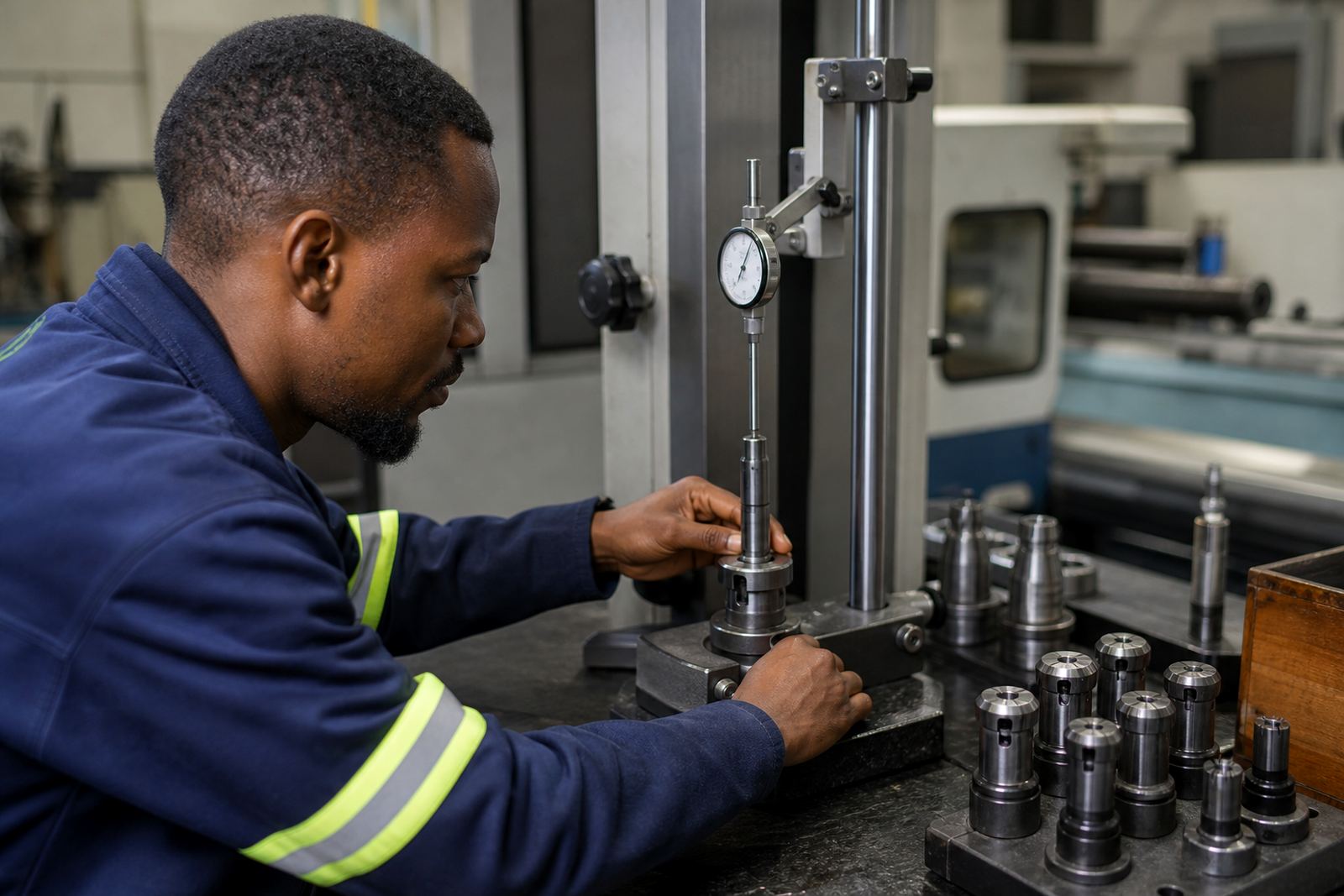
A tool presetter is a workshop station used to check tool length, offset and setup before the tool is loaded into the machine. In gun-drilling and deep-hole boring work, that matters because the first setup often sets the standard for the whole batch. If the tool is prepared properly before it reaches the machine, the operator spends less time correcting basic issues and more time keeping production on target.
For South African manufacturers, this is especially useful where machine time is limited, power interruptions can interrupt a shift, and production teams need repeatable preparation between day and night crews. A presetter gives the applications team or tool room a common point of reference. The operator can verify the cutting edge, gauge the setup, record the setting, and move the tool to the machine with more confidence. It also helps when you are working with short runs, frequent changeovers, or tight hole-position requirements.
Deephole supports workshops from Benoni to Johannesburg, Pretoria, Durban, Cape Town and Gqeberha with tool presetter supply, setup and training. We work with manufacturers and engineering shops that need practical support, not guesswork.
Sizes and options to match your workshop layout
Tool presetters are available in different formats depending on your floor space, tool length and how your team works. Some workshops prefer a compact station near the tool room, while others want a larger stand-alone unit close to the production area. The right choice depends on the size of the tools, the level of repeatability needed, and how often settings must be checked during a shift.
- Benchtop or stand-alone station layouts
- Manual or assisted fine adjustment controls
- Digital measurement display options
- Tool clamping arrangements for different shank styles
- Integrated lighting for clearer edge inspection
- Optional accessories for larger or longer tools
If your shop handles mixed work, we can help you plan a station that suits both standard tools and special jobs. The aim is to avoid a one-size-fits-all setup that slows the team down. A presetter should fit the way your operators actually work, not the other way around.
Where a presetter suits best in South Africa
This equipment suits any workshop where drilling tools must be prepared accurately before entering the machine. It is useful in general engineering, hydraulic component production, automotive supply, mining-related manufacturing, energy-related fabrication and contract shops that change jobs often. It also suits teams that are building more structured tooling control into the process, especially where different operators handle setup and production on separate shifts.
In coastal areas such as Durban and Gqeberha, shops should also think about corrosion control and routine cleaning because humidity can affect exposed parts and measurement surfaces. In Gauteng, where dust and day-to-day handling are common, the station should be kept clean and checked often. If the workshop runs during load-shedding or on generator backup, the presetter still helps by reducing wasted machine time once power is restored.
For jobbing shops in Benoni, the East Rand, Johannesburg and Pretoria, the presetter is often most valuable where turnaround time matters. For larger production lines, it supports consistent setup from one tool setter to another.
Installation, power and workshop requirements
Most presetting stations need a level floor, enough room for operator access and a clean area away from chips, coolant overspray and heavy vibration. If the unit includes digital readout or illumination, it will typically need standard electrical supply suitable for workshop use. Always plan the station where the operator can work comfortably and where tools can be moved in and out without damage.
Before installation, check the available floor space, nearby storage for gauges and holders, and the route the tool will take from the tool room to the machine. A good layout reduces handling damage and keeps the process tidy. If the workshop uses compressed air or vacuum-assisted fixtures, that requirement should be confirmed at the order stage. The station should also be placed where the lighting is good enough for edge inspection and setup confirmation, not only for the measurement display.
Deephole can assist with installation, commissioning and setup optimisation so the station is ready for day-to-day use. Our team in Benoni supports customers across South Africa, including Pretoria, Durban, Cape Town and Gqeberha.
Care, servicing and daily checks
A tool presetter works best when it is treated as a measuring station, not just another bench. Keep the contact surfaces clean, remove swarf after use and protect any indicators or screens from coolant mist. If the workshop runs multiple shifts, assign one person to do the daily check so small errors are picked up early.
- Wipe measuring surfaces before and after use
- Check clamps and holders for wear or looseness
- Confirm lighting and display function before the shift starts
- Keep the station level and free from vibration where possible
- Schedule alignment checks and preventive maintenance at regular intervals
- Store tools in a clean, dry place after presetting
Where there is repeated use on long tools or heavy holders, wear can build up faster than expected. If the display drifts or the setup starts taking longer, it is worth checking alignment and support points before the problem affects production. A small issue ignored early can become a bigger one later and cost a shift.
What to confirm before you order
When ordering a tool presetter, it helps to confirm the tool sizes you work with, the type of holders in use, and how the station will fit into your current process. You should also check whether you need a compact unit for a tool room or a larger setup station for repeated use on the shop floor. If your team uses both standard and special drilling tools, make sure the chosen station can handle the full range.
It is also worth confirming whether you need digital measurement, manual setting, additional fixtures or operator training as part of the package. Ask about installation support, spare parts access and ongoing service so the station remains useful after the initial setup. If your workshop needs help with tooling selection, process troubleshooting or production startup, Deephole can support that as part of the broader gun-drilling and deep-hole boring process.
Our team includes Ayanda Mokoena, Johan Smit, Noluthando Dlamini, Francois du Plessis, Leanne Naidoo and Sibusiso Khumalo, with support coordinated from Benoni for customers across South Africa. Clients reach us through the enquiry form on our contact page.
Key facts
| Type | Workshop tool presetting station for drilling tool preparation |
|---|---|
| Use | Length, offset and setup verification before machine loading |
| Options | Benchtop or stand-alone format, with manual or assisted adjustment |
| Display | Digital readout options available depending on configuration |
| Installation needs | Level floor, clean working area and suitable electrical supply |
| Support | Installation, commissioning, training, servicing and alignment checks |