Hydraulic block work starts with the passage map
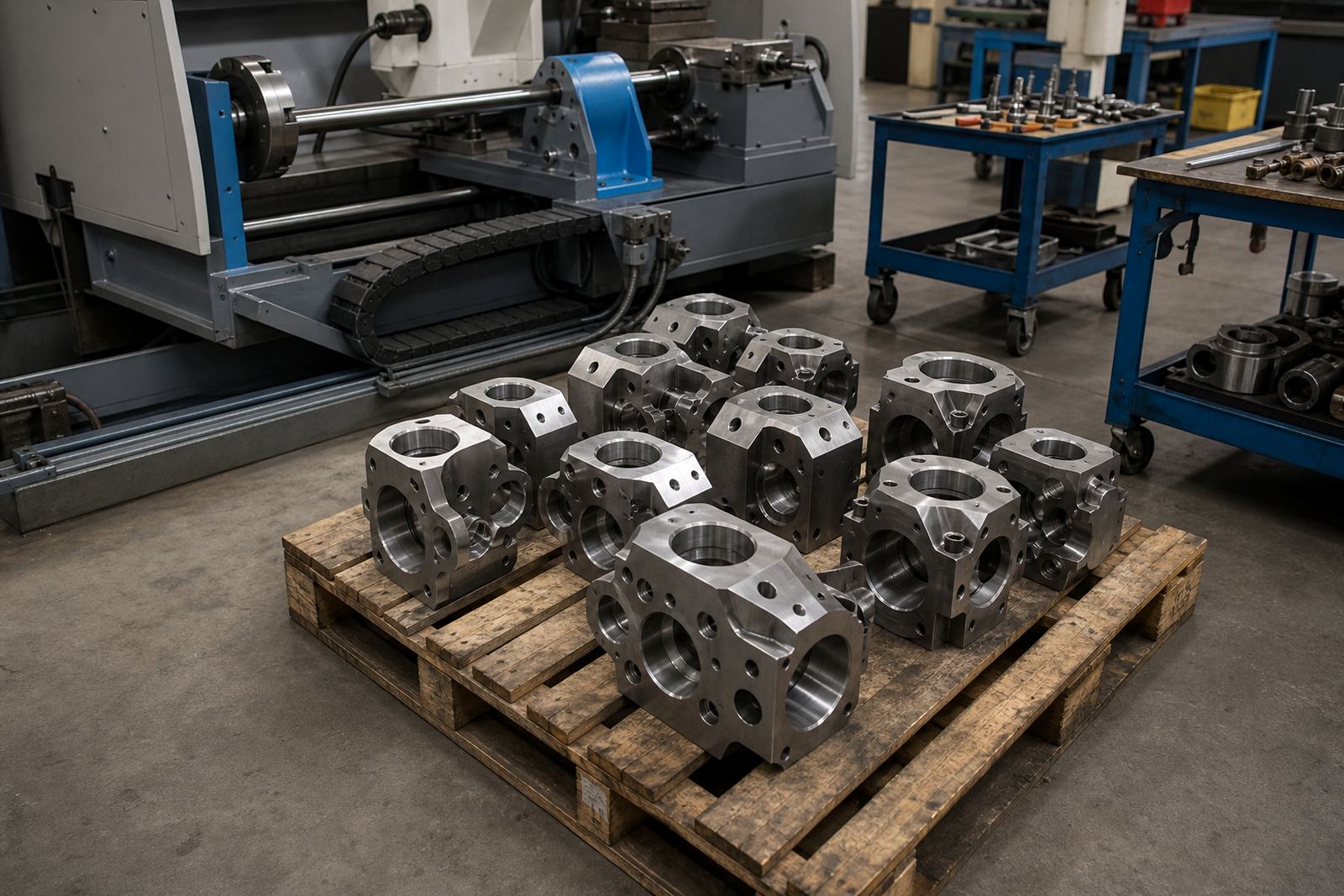
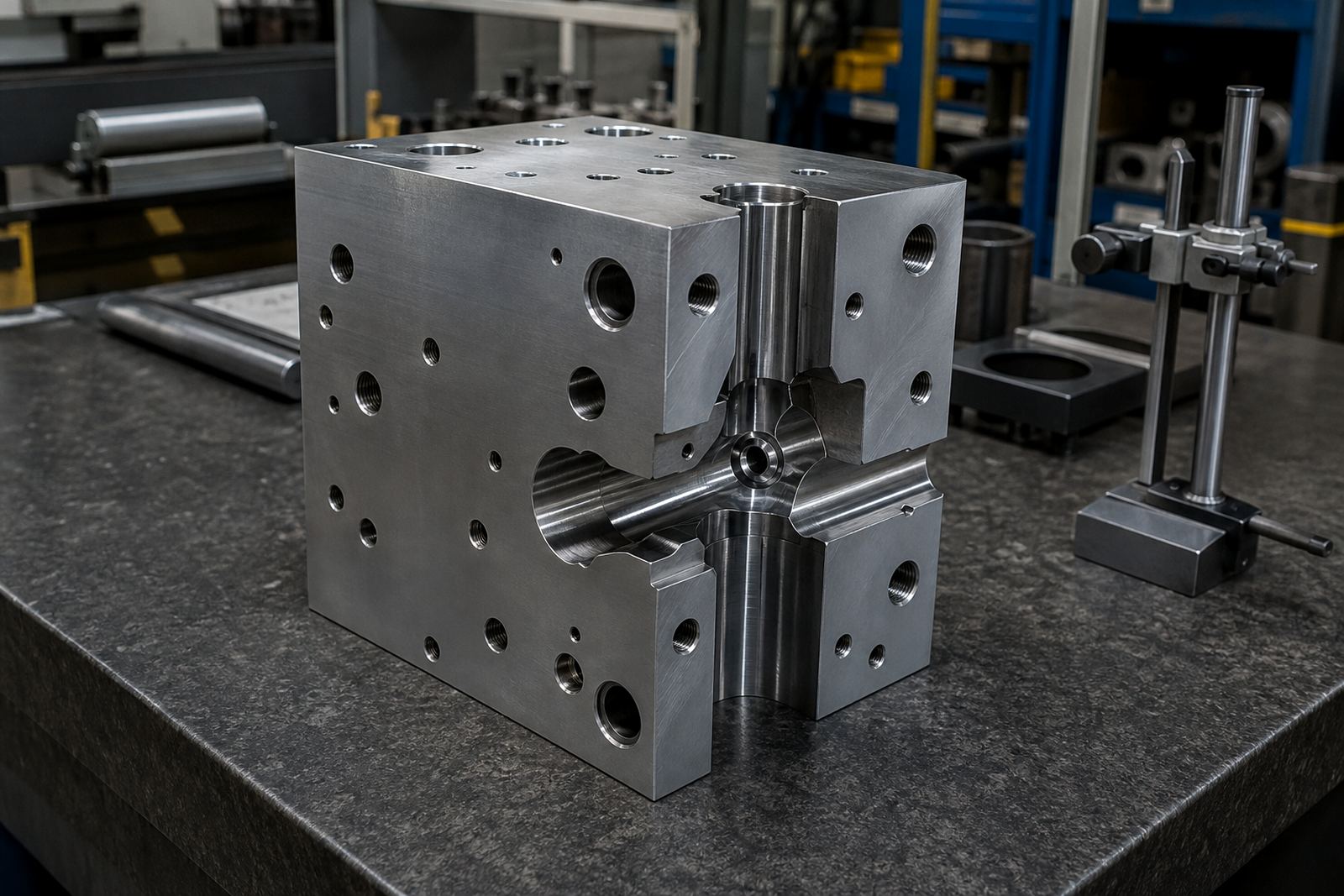
Hydraulic blocks and manifolds are not forgiving workpieces. A small deviation in bore position can upset flow, create pressure loss, or leave a weak wall between passages. In many shops the challenge is less about drilling a hole and more about holding the full passage pattern together through multiple operations, from spotting and pilot work through to final drilling and inspection.
For this type of job, the client situation is usually a mix of volume and pressure. Some workshops need one-off blocks for a machine build, while others need repeat work on production runs with the same port layout. In both cases, the machine setup has to suit the material, the block size, the number of intersecting passages and the surface finish required inside the bore. That is where good tooling choice and proper fixturing save time and scrap.
We work with manufacturers and engineering shops in Johannesburg, Pretoria, Durban, Cape Town and Gqeberha that need practical support on hydraulic passages. The goal is to keep the drilling line straight, the cycle stable and the block ready for final machining without extra rework.
Typical equipment set for hydraulic passages
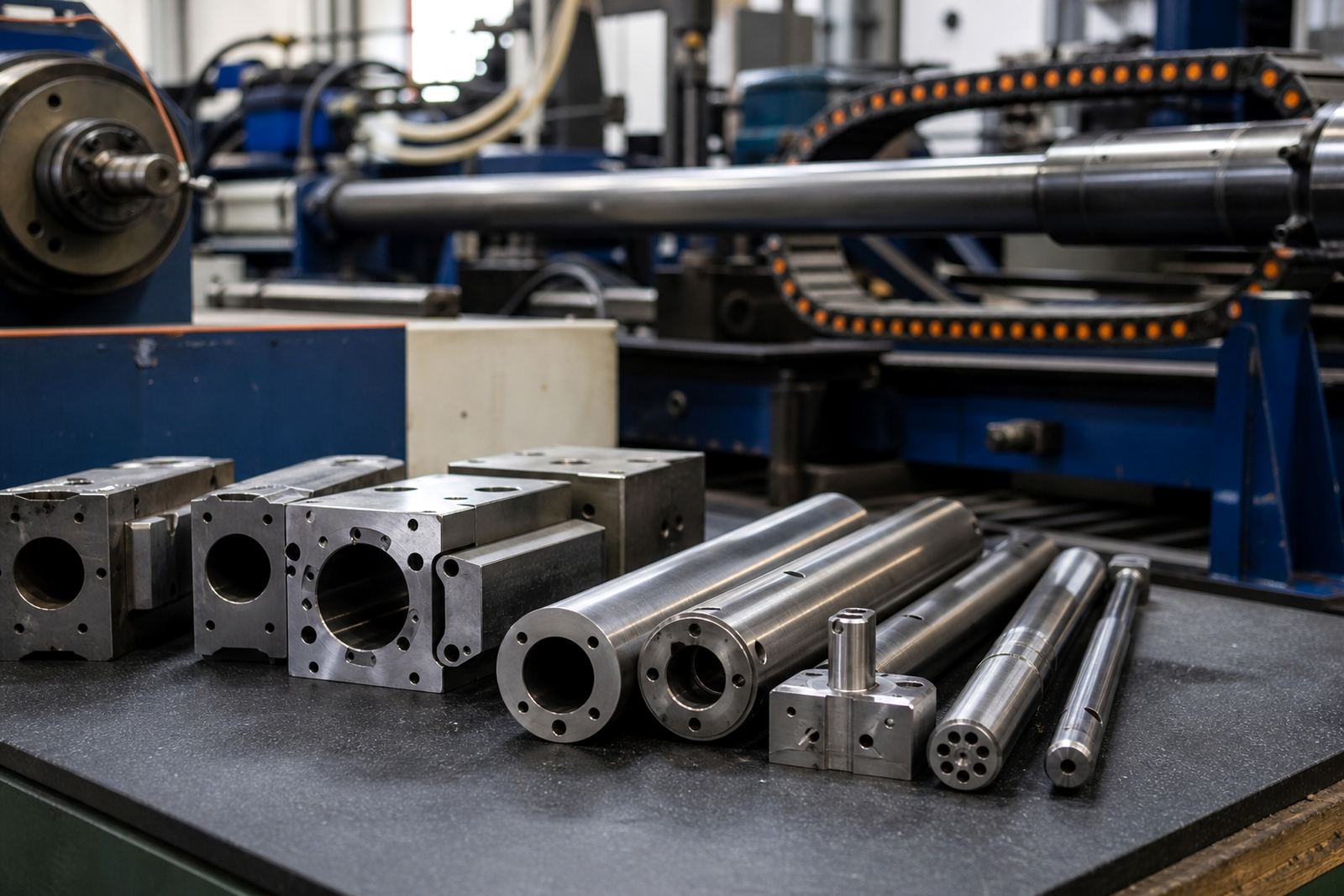
Hydraulic block work usually calls for more than one machine setup or tool type. A deep-hole drilling machine may be used for the long straight passages, while a separate boring or finishing stage handles larger bores, stepped holes or close tolerance finishing. The exact arrangement depends on the block design, material and production rate. There is no single answer that suits every workshop.
Typical equipment in the set-up can include:
- Gun-drilling or deep-hole boring machine matched to the passage length and diameter range
- Rigid fixturing, tombstones or dedicated jigs for repeatable block location
- Guides, drill heads and consumable tooling for the required bore size
- Coolant delivery and filtration suited to long-chip evacuation
- Measuring tools for setup verification, alignment checks and bore confirmation
- Support equipment for chip control, workholding and safe loading
Where a shop is starting from a more general machining environment, it is common to underestimate coolant quality, chip removal and operator access. Those three points matter as much as the machine itself. If the chips recut, or the block cannot be loaded consistently, the process becomes unreliable very quickly.
Layout advice for a clean and repeatable job
Planning the layout before the first hole is drilled helps avoid a lot of trouble. On hydraulic blocks, passage entry points should be reviewed against wall thickness, intersecting bores and clamping zones. The fixture must support the block without hiding ports that still need machining or inspection. If the shop is doing more than one variant, it helps to build in adjustment points rather than forcing every job into the same location.
Good layout practice also includes machine access. Operators need enough space to load the block, set the datum and clear chips without rushing. In South African workshops, load-shedding adds another layer, so stable startup and safe stop procedures should be part of the plan from day one. If a machine loses power mid cycle, the recovery process must be clear to everyone on the floor.
A practical hydraulic block layout usually considers the following:
- Base datum and repeat location for every block size
- Clamping points that do not distort machined faces
- Coolant return paths and chip escape routes
- Access for bore gauging, flush checks and tool changes
- Future service space for alignment checks and maintenance
Common mistakes that cost time and scrap
One common mistake is treating the block as if it were a simple drilling job. Hydraulic passages often run long, intersect other bores, or need a clean breakout into galleries. If the setup is rushed, the first sign of trouble may only appear after the block is almost complete. At that stage rework can be awkward and expensive.
Another issue is tool selection. Too much optimism on feed, unsupported boring lengths, or poor chip control can create wander, chatter or blocked passages. We also see shops relying on worn fixturing or old alignment habits. If the machine and support system are not checked regularly, the process slowly moves off target. It may still run, but the parts start needing attention they should not need.
Common problems we help shops avoid include:
- Misaligned entry points between pilot drilling and final bore
- Poor coolant flow that leaves chips packed in the passage
- Fixture movement caused by weak clamping or uneven support
- Using the wrong tooling for the material or bore depth
- Skipping alignment checks after maintenance or a machine move
In a busy production shop, these problems often show up as delay rather than a single dramatic failure. The block still gets made, but the cycle time drifts and the operator spends too long recovering each part.
Support for setup, training and process stability
Hydraulic block work benefits from steady support after installation, not just when a machine is first delivered. Deephole assists with machine installation, commissioning, tooling selection, setup optimisation, operator training, process troubleshooting, preventive maintenance and breakdown support. That matters when a workshop is trying to get a new line running or bring an older setup back into proper condition.
For hydraulic passages, the support work often includes alignment checks, coolant system service, spare parts support and production startup. If the operator understands the bore sequence, the recovery steps and the tool condition limits, the shop avoids a lot of avoidable stoppages. That is especially important where one machinist might handle both general machining and deep-hole work on the same shift.
Our team in Benoni works with manufacturers and engineering shops across Gauteng and beyond. Marius Jacobus van Rensburg leads the business, with support from Ayanda Mokoena, Johan Smit, Noluthando Dlamini, Francois du Plessis, Leanne Naidoo and Sibusiso Khumalo. The focus is practical: keep the job running, keep the passages within spec, and keep the machine ready for the next order.
Budget ranges for hydraulic block drilling in Rand
Budgets for hydraulic block work vary widely because the real cost sits in the full system, not only the machine. A shop may need tooling, coolant handling, fixtures, measuring support and training before production can start properly. It is better to budget for the working package than to buy the machine first and sort the rest out later.
As a practical guide, entry-level setup costs for smaller hydraulic block applications can start in the low hundreds of thousands of Rand, while more specialised production systems with stronger automation, better control and dedicated support can move into the higher Rand range. Tooling, coolant filtration, fixturing and installation should be included in any discussion from the start. After that, the cost to keep the line productive depends on bore count, material type and service intervals.
For larger workshops in Johannesburg, Pretoria, Durban, Cape Town and Gqeberha, the smartest budget is usually the one that protects uptime. A cheaper setup that needs constant correction is not really cheaper. If the block is critical to a hydraulic assembly, steady output matters more than chasing the lowest headline figure.