When mining parts need deep holes that stay on size
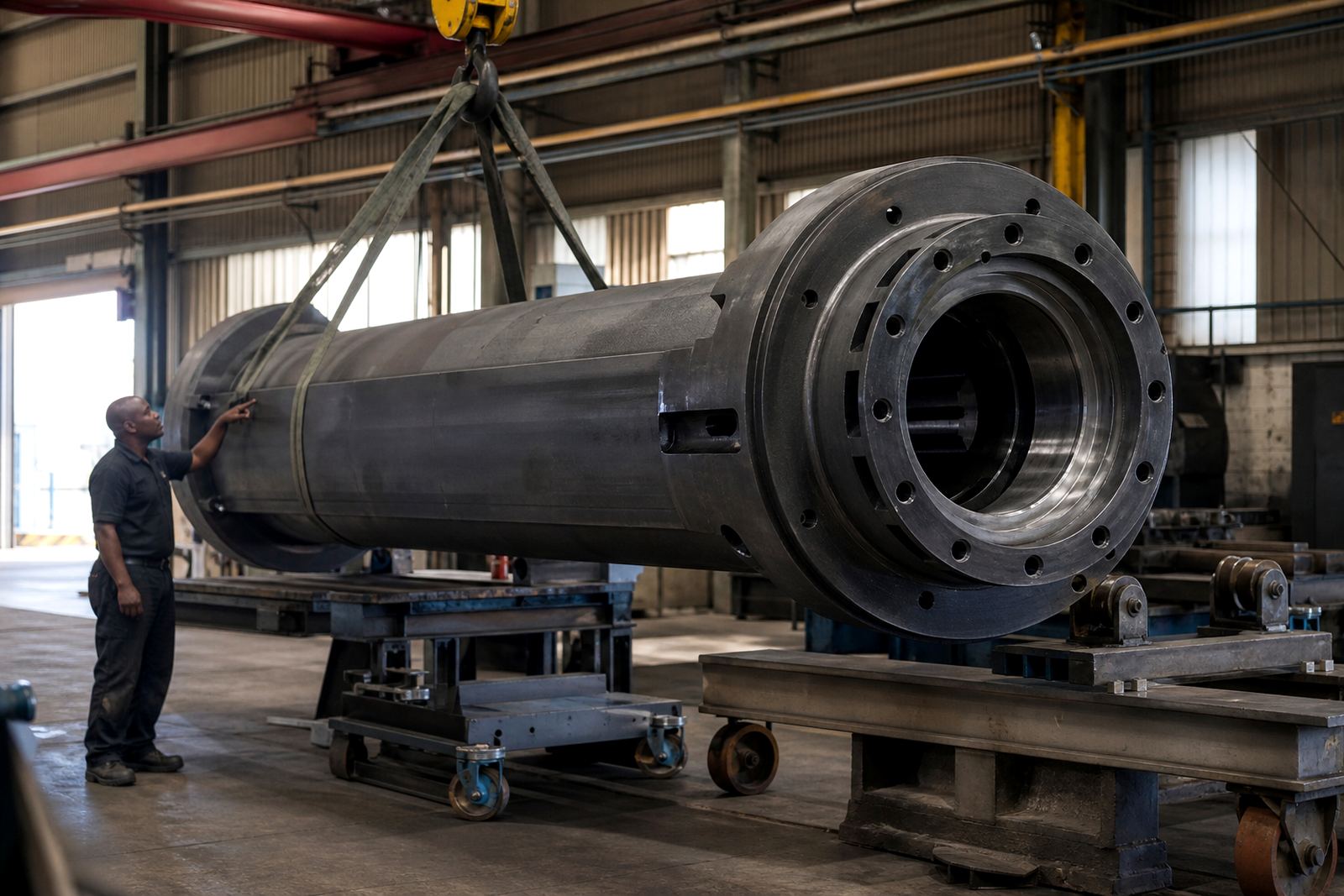
Mining environments put real pressure on parts such as shafts, cylinders, manifolds, drill bodies, wear components and large housings. These jobs often need long, accurate holes through hard material, with clean chip control and predictable finish. If the hole wanders, the part can be scrapped or sent back for rework, which pushes up cost and delays the next shutdown or build.
That is where deep-hole machining matters. Deephole helps workshops choose the right gun-drilling or deep-hole boring setup for the part, the material and the production rate. We work from Benoni and support customers across Johannesburg, Pretoria, Durban, Cape Town and Gqeberha, with setup and service suited to local shop conditions, including load-shedding planning and coastal humidity where needed.
Typical machine set-up for mining components
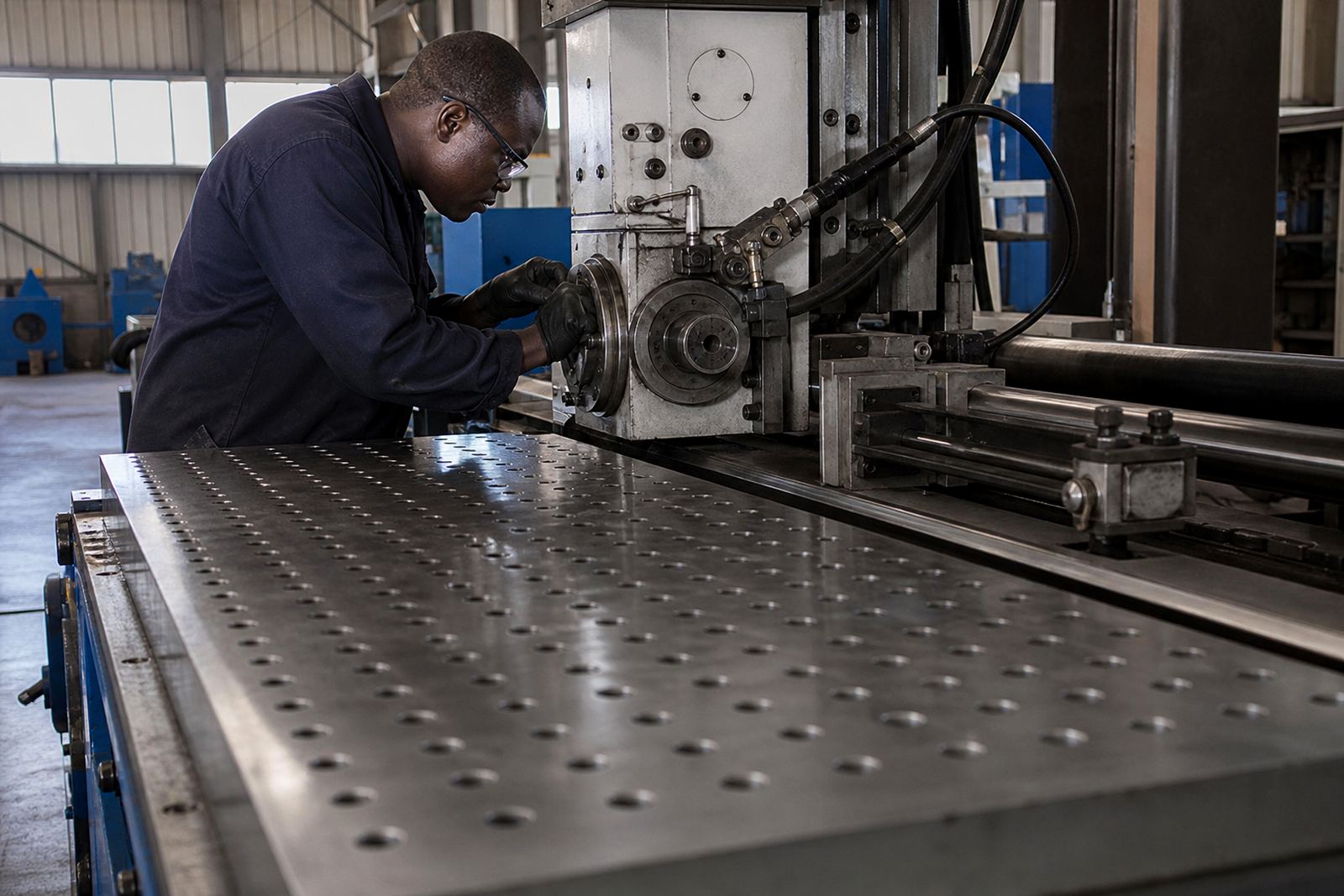
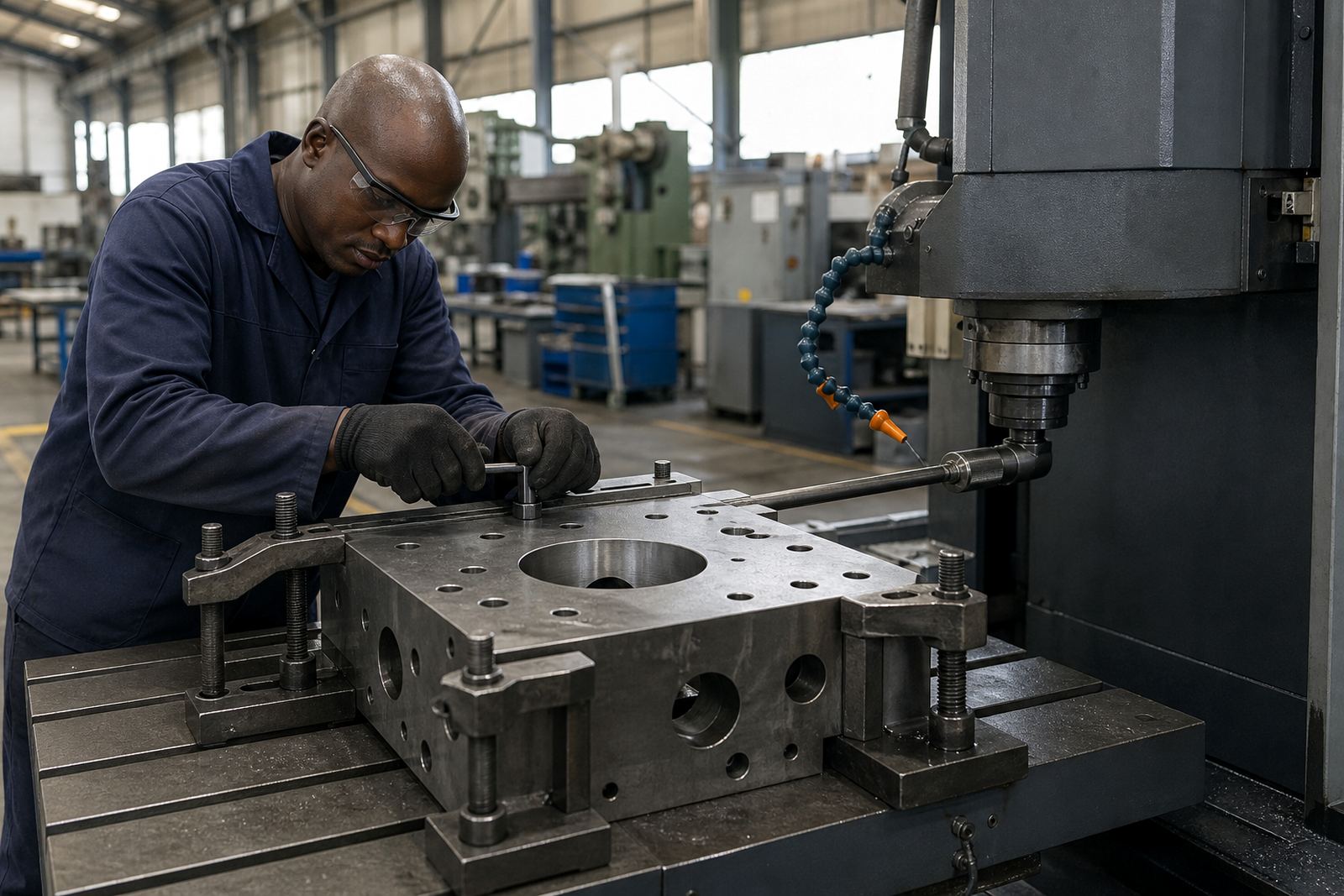
For mining work, the machine choice depends on the hole depth, diameter range, part length and how the component is held. A typical set-up may include a gun-drilling machine for smaller diameter, high-accuracy holes, or a deep-hole boring machine where larger bores and heavier removal are needed. The full system also needs the right workholding, coolant delivery, filtration and tool support.
- Gun-drilling machine for deep, straight holes in long or slender parts
- Deep-hole boring machine for larger diameter bores and heavy components
- Tooling suited to the material, hole size and depth ratio
- Coolant system with proper filtration and chip management
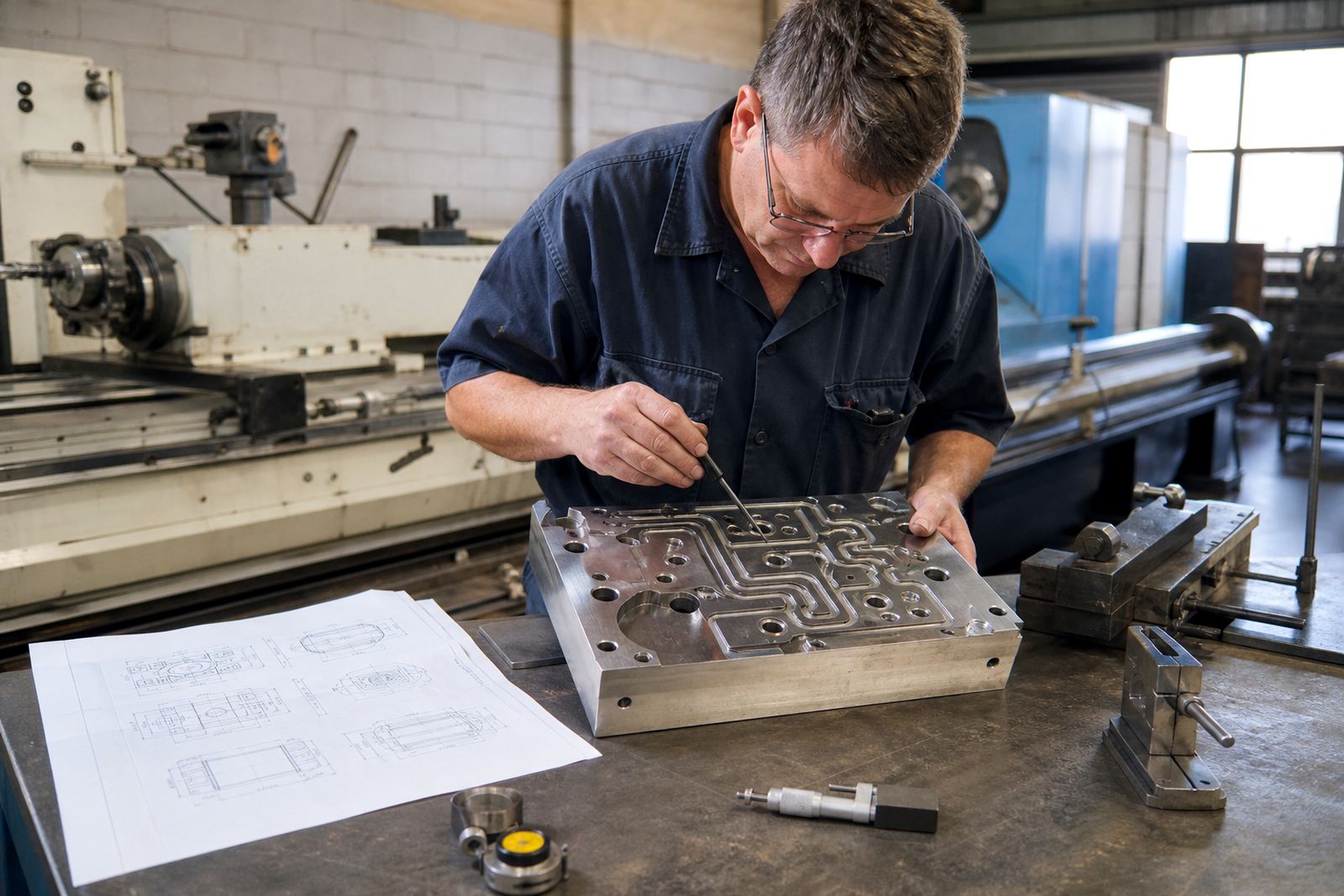
- Alignment checks and setup fixtures for repeatable positioning
- Spare parts support to keep the machine running during busy periods
In many cases, the machine is only half the answer. The rest is in the tooling, the setup sequence and the way the operator manages feed, coolant and inspection through the job.
Layout and planning advice for a mining workshop
Before any machine is installed, the workshop needs a clear plan for material flow, crane access, floor loading, power supply and coolant handling. Heavy mining parts take space, and if the machine is placed too close to storage, finishing areas or delivery routes, the team ends up working around the job instead of through it. Good planning also allows room for maintenance access and safe chip removal.
For South African workshops, it is worth planning for uneven power supply and backup procedures. A stable installation with proper electrical protection and coolant system support can save a lot of downtime. In coastal areas such as Durban or Gqeberha, corrosion control and storage discipline matter too, especially for tooling and exposed machine parts.
- Leave enough space for loading, alignment and part rotation where needed
- Keep coolant handling and filtration easy to access for cleaning
- Separate incoming raw material from finished parts to avoid damage
- Plan for power interruptions so the machine can stop safely
- Allow room for operator movement and inspection of long workpieces
Common mistakes that cost time and money
Most machining problems on mining components start with setup errors, not the machine itself. A hole can drift if the fixture is not secure, if the tool is not matched to the material, or if coolant delivery is not doing its job. Another common issue is underestimating the time needed for first-off setup, which leads to rushed decisions and scrap.
We also see shops trying to use one process for every job. Deep-hole boring and gun-drilling are not interchangeable, and the wrong choice can make the operation slower and less accurate. Training and process troubleshooting help operators understand when to change tooling, when to check alignment, and when to stop and inspect before the next pass.
- Poor workholding that allows vibration or movement
- Wrong tooling selection for the hole depth or material
- Insufficient coolant pressure or poor chip evacuation
- No alignment check after installation or after a crash
- Skipping operator training and relying on trial and error
Budget ranges for mining component work
Budget depends on whether the workshop needs a new machine, a retrofit, a tooling package or ongoing support. A smaller tooling and setup package can be planned from a modest starting point, while a full deep-hole machine investment sits in a much higher bracket. Installation, commissioning, training and spare parts support should also be included in the total project cost.
For planning purposes, many customers start with a tooling and setup budget in the tens of thousands of Rand, while a complete machine project can run into the hundreds of thousands or more depending on the application. The best way to control cost is to define the part family first, then match the machine and tooling to the actual work instead of buying more capacity than needed.
Support from first installation to production startup
Deephole supports the full path from machine installation through commissioning and production startup. That includes tooling selection, setup optimisation, operator training, alignment checks, preventive maintenance, breakdown support and coolant system service. For mining component work, that support is especially useful when the workshop is under pressure to get parts out fast and cannot afford repeat failures.
Our team includes Marius Jacobus van Rensburg and specialists who handle sales, applications, service coordination, machine work, training and tooling support. Clients contact us through the enquiry form on the contact page, and we help from Benoni, Gauteng with support across South Africa. If your workshop is making parts for mining use and needs better hole quality, more consistent setup or a clearer machine plan, we can help you get there without guesswork.