Project brief for a Rosslyn production line
The brief came from a component manufacturer in Rosslyn that was under pressure to keep drilling and boring work on schedule while meeting strict quality checks. The team needed practical support on a deep-hole process, not theory, and they wanted one supplier who could help with machine setup, tooling choices and day-to-day production questions.
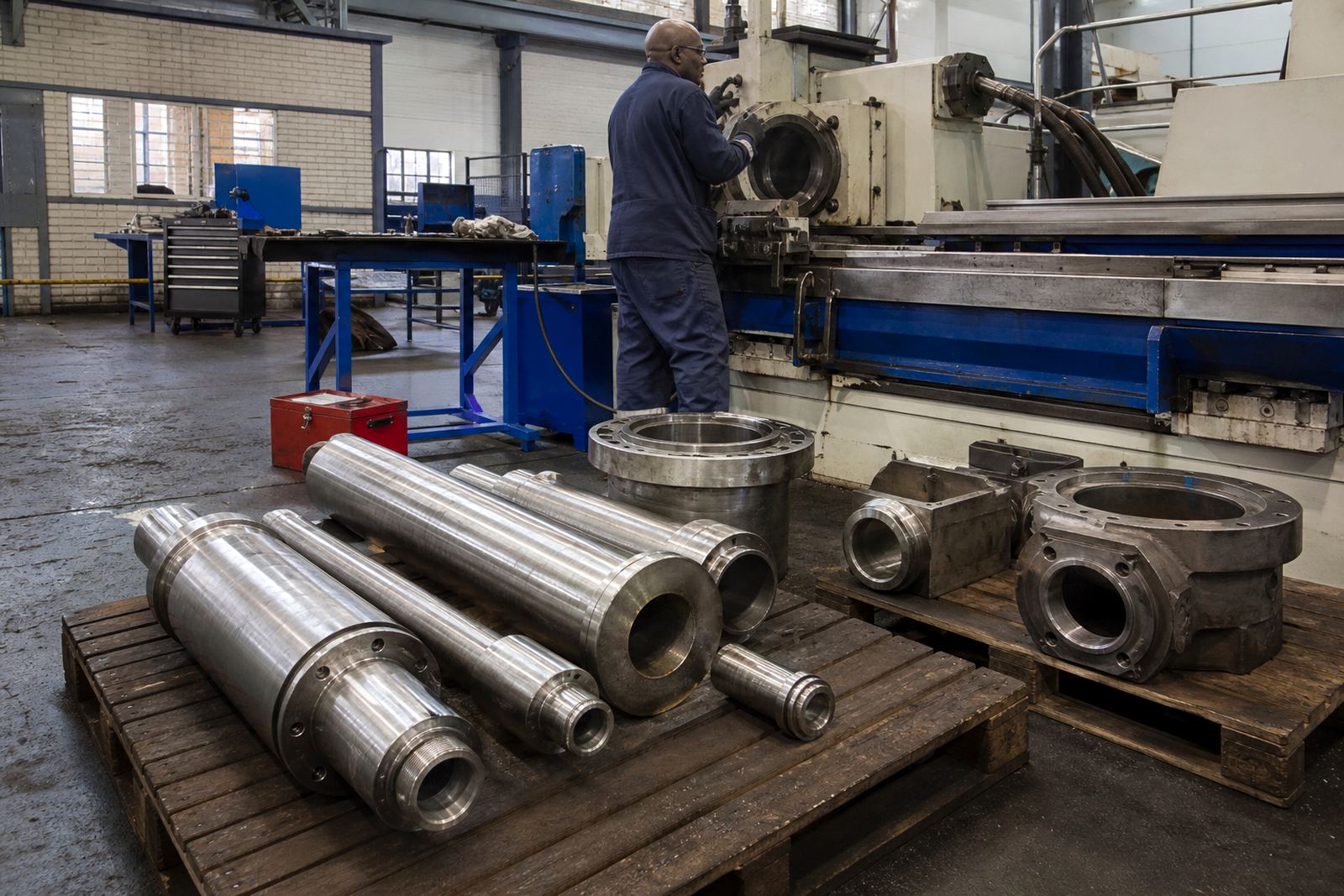
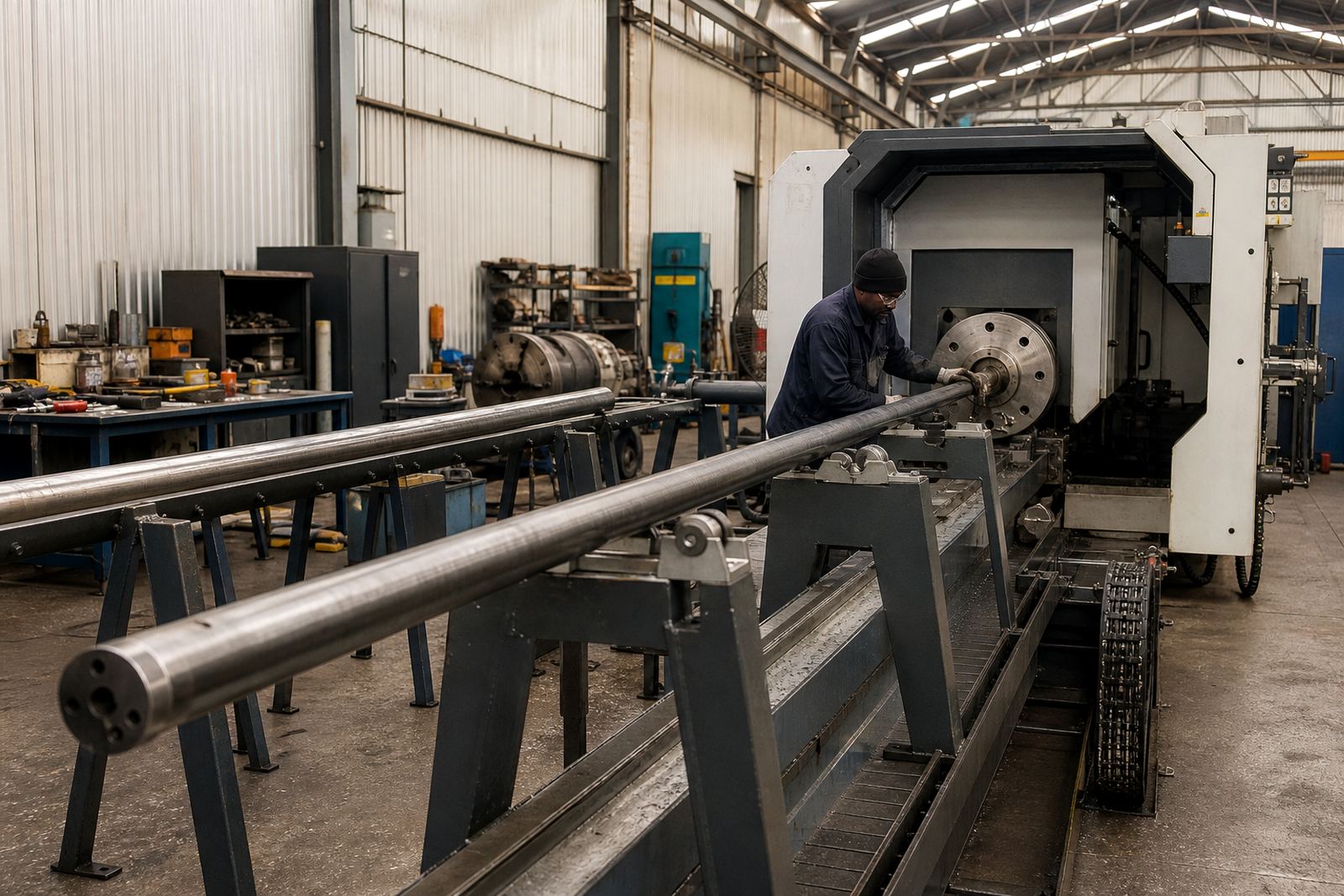
The work centred on gun-drilling and deep-hole boring for long, straight bores where consistency matters from the first part to the last. The client needed a setup that could be repeated by the shop floor team, with fewer stoppages and clearer control over the process. They were also working around normal plant issues such as shift handovers, material movement and power interruptions, so the support had to fit real conditions on the floor.
- Client type: component manufacturer
- Area: Rosslyn, Pretoria North
- Need: deep-hole process support for production output
- Main concern: repeatable quality under deadline pressure
What was holding production back
The main challenge was not one single fault. It was a mix of setup drift, tooling wear, operator uncertainty and the time lost when a process is not fully standardised. In a busy production environment, a small mismatch in alignment or feed control can turn into scrap, extra rework or a machine standing idle while someone checks the next step.
The client also needed support that would work with their existing production rhythm. That meant practical guidance on coolant flow, tool condition, alignment checks and how to make handover between operators more reliable. There was no room for vague advice. The team wanted a clear method they could follow on each shift, and they needed it fast because the order book was already committed.
- Constraint 1: deadlines could not slip
- Constraint 2: shop-floor team needed simple, repeatable steps
- Constraint 3: support had to fit existing plant conditions
- Constraint 4: the process needed to be stable, not just workable
Our supply and support plan
We supplied the deep-hole process support around the machine, the tooling and the operator handover. That included machine installation guidance, commissioning support, tooling selection, setup optimisation and process troubleshooting. We also helped with preventive maintenance planning, coolant system service and alignment checks so the client could keep the process in control during the production run.
Where needed, our team explained the practical parts of the work in plain terms. Ayanda Mokoena handled the commercial side, Johan Smit supported applications, Francois du Plessis assisted with machine condition and setup, and Leanne Naidoo arranged training sessions so the operators had one clear method to follow. It was a hands-on job, and the aim was to keep the process steady from start-up through to handover.
- Machine installation and commissioning support
- Tooling selection for the application
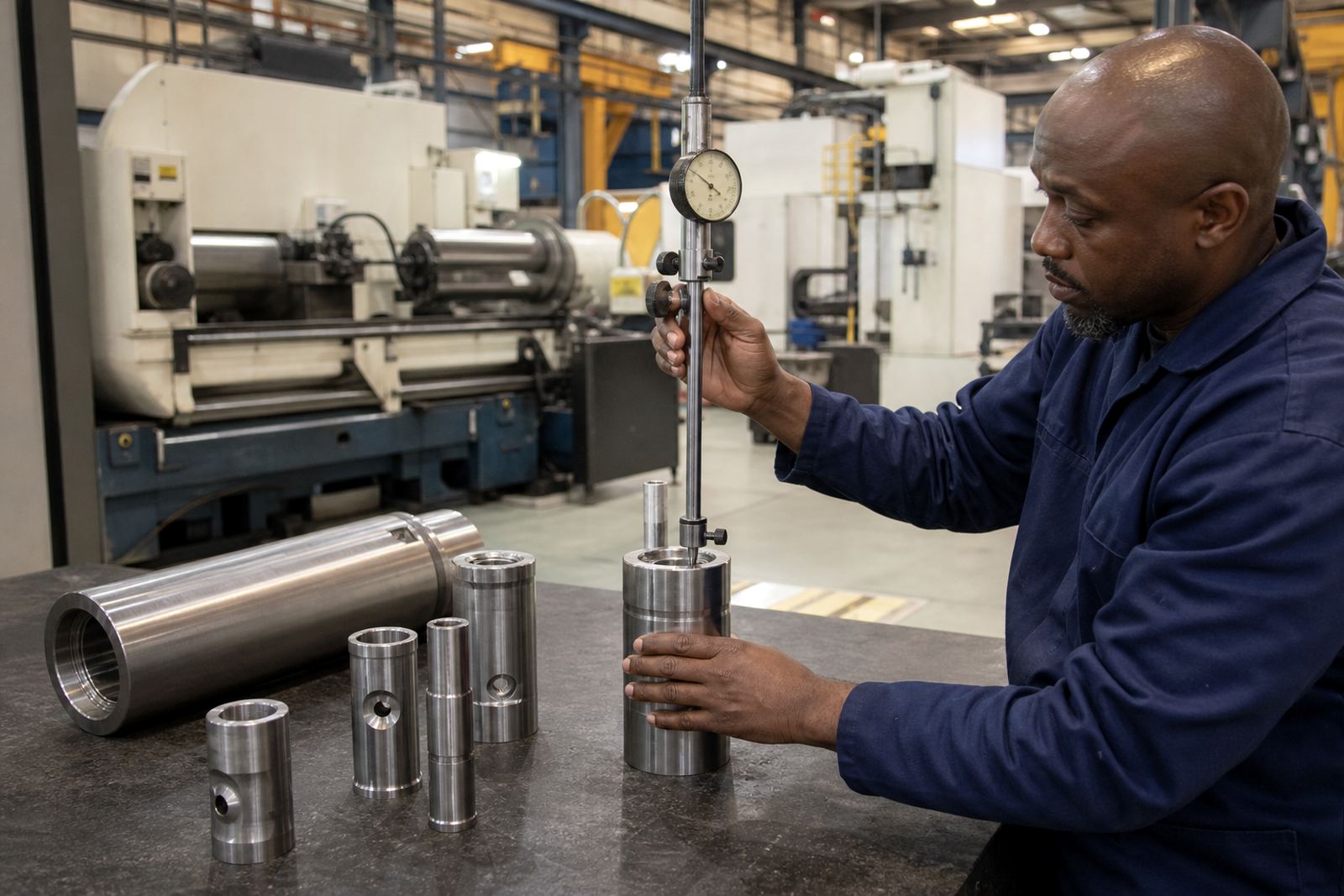
- Setup optimisation and alignment checks
- Operator training for shift consistency
- Breakdown support and spare parts support if needed
Timeline and on-site sequence
The project moved over a short, planned timeline of 3 weeks. The first week focused on checking the existing setup and confirming what the process needed to achieve. The second week covered tooling, machine setting and trial runs. The third week was used for operator training, process verification and fine-tuning before the client went back into full production.
Because the team was working against production deadlines, the support had to be sequenced carefully. We did not want to interrupt the line more than necessary, so the work was arranged around available windows and machine time. That approach helped the client keep moving while the process was being tightened up. There was a bit of pressure, but the shop floor handled it well once the steps were set out clearly.
- Week 1: review and process checks
- Week 2: tooling and setup work
- Week 3: training, verification and handover
Results on the shop floor
Once the setup was aligned and the operators had a clearer method, the process became easier to manage. The client had better control over the deep-hole operation, fewer interruptions during changeovers and a more confident team on shift. The biggest practical gain was that the work could be repeated with less guesswork, which matters when the order is already booked into the schedule.
For a component maker, that kind of support has a direct effect on delivery planning. Parts can move through the machine with fewer hold-ups and the maintenance team knows what to look for before a small issue becomes a breakdown. It is not about flashy machinery talk, it is about keeping production predictable and reducing the number of things that can go wrong.
- More consistent setup across shifts
- Clearer operator responsibility on the machine
- Better control of tooling wear and process checks
- Less time lost to avoidable troubleshooting
What we would repeat on the next project
If we were doing the same type of job again, we would follow the same approach: start with a site review, confirm the process target, select the right tooling, then train the operators before the line goes into steady production. That sequence works because it keeps the practical parts of the job in the right order and gives the client a method they can carry forward after the initial support period.
For manufacturers in Rosslyn, Pretoria, Gauteng and other industrial areas, the lesson is simple. Deep-hole work needs more than a machine on the floor. It needs the right tooling, proper alignment, a trained team and support that can step in when the process needs attention. That is how the job stays on track when deadlines are tight and loadshedding or planned stoppages make the day unpredictable.
- Start with the process, not just the machine
- Keep tooling and alignment under regular review
- Train the operators before full production starts
- Plan support around real plant conditions
Key facts
| Founded | 2008 |
|---|---|
| Base | Benoni, Gauteng |
| Project area | Rosslyn, Pretoria North |
| Core focus | Gun-drilling and deep-hole boring machines |
| Support included | Installation, commissioning, tooling, training and maintenance |
| Service areas | Johannesburg, Pretoria, Durban, Cape Town, Gqeberha and the East Rand |