Pump Component Work in a Coastal Workshop
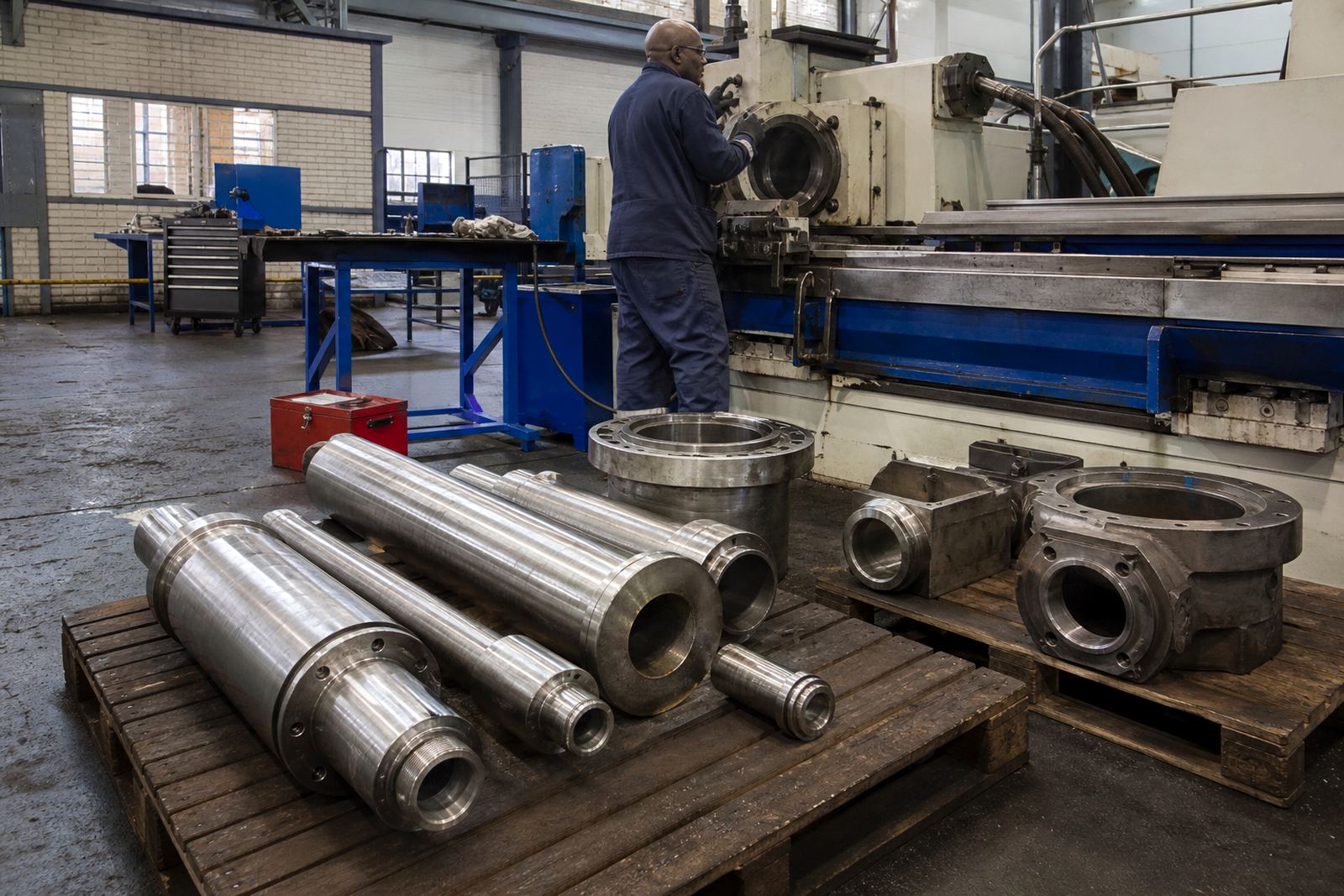
The project came from a pump workshop in Gqeberha that machines components for local industrial repair work and production runs. The site needed dependable gun-drilling and deep-hole boring support for pump parts that had to stay accurate through the full length of the bore, with the workshop team able to keep working in a coastal environment where humidity, salt air and daily production pressure can all affect results.
The brief was straightforward. Improve hole quality, reduce variation from part to part, and set up a process that the operators could repeat without chasing the job all day. The workshop also wanted close monitoring on the first runs so that small issues could be caught early and corrected before they affected the full batch. That is the kind of work we are used to in South Africa, where downtime can throw off a whole week's schedule very quickly.
What the Client Needed Fixed
The parts were for pump assemblies, so consistency mattered more than speed alone. The team needed support with tooling selection, setup optimisation and process control on a mix of component lengths and bore requirements. The workshop could already machine the parts, but they wanted a more stable drilling and boring method that would hold alignment better and cut down on time spent reworking finished pieces.
- Better bore consistency across repeat jobs
- Cleaner chip control during long-hole work
- More predictable setup between shifts
- Practical support for the operators on the shop floor
- Process checks before production moved into volume work
Because pump components often move between machining, washing and assembly, the finish and alignment of the bore has a direct effect on the next stage. If the bore is off even slightly it can create sealing trouble, poor fitment or extra handwork later on. The workshop wanted to prevent that rather than sort it out afterwards.
Tooling, Setup and Close Monitoring
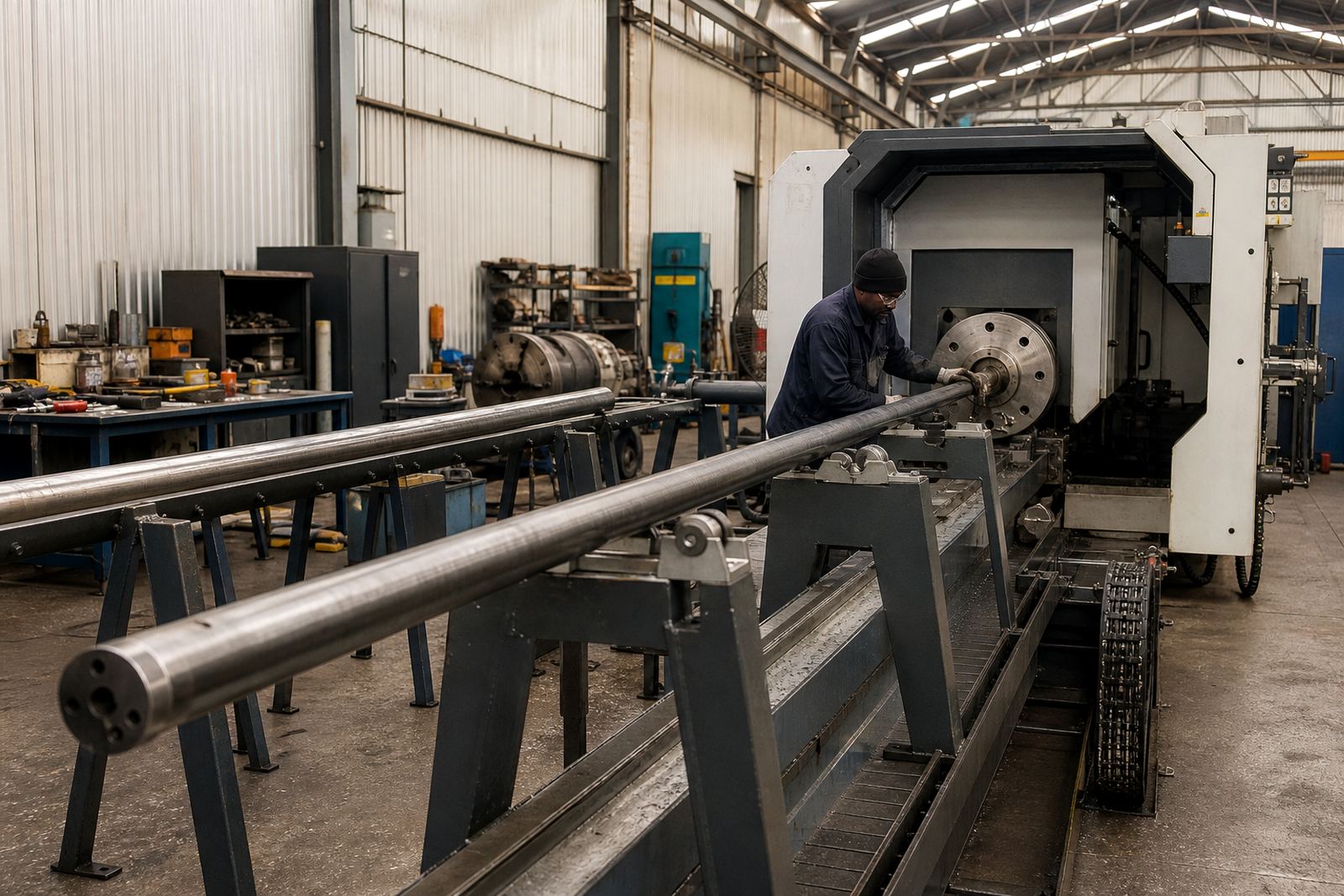
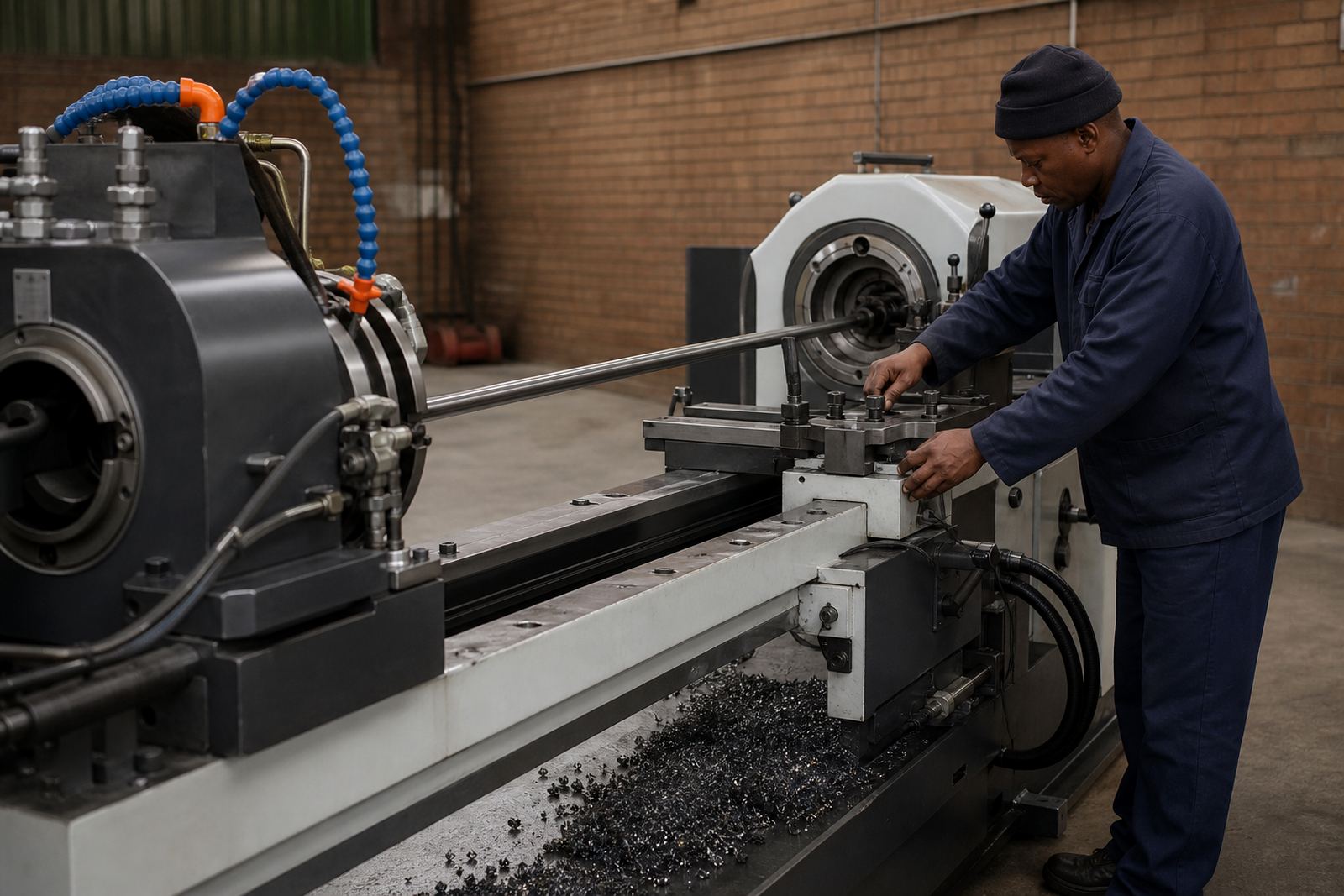
We supplied tooling guidance and hands-on setup support for the drilling and boring process, then stayed close to the first production runs to keep an eye on feed behaviour, chip evacuation and alignment. The work included checking the setup sequence, confirming the tooling choice for the material and bore depth, and helping the team settle on a process that suited their machine and production flow.
Process monitoring was an important part of this job. Instead of treating it as a quick install, we watched the cut pattern and the repeatability of the first parts, then adjusted the setup where needed. That kind of attention is often what makes the difference between a job that runs once and a job the workshop can repeat with confidence. It also gives the operators a better feel for what to watch when they are under pressure or working late during load-shedding recoveries.
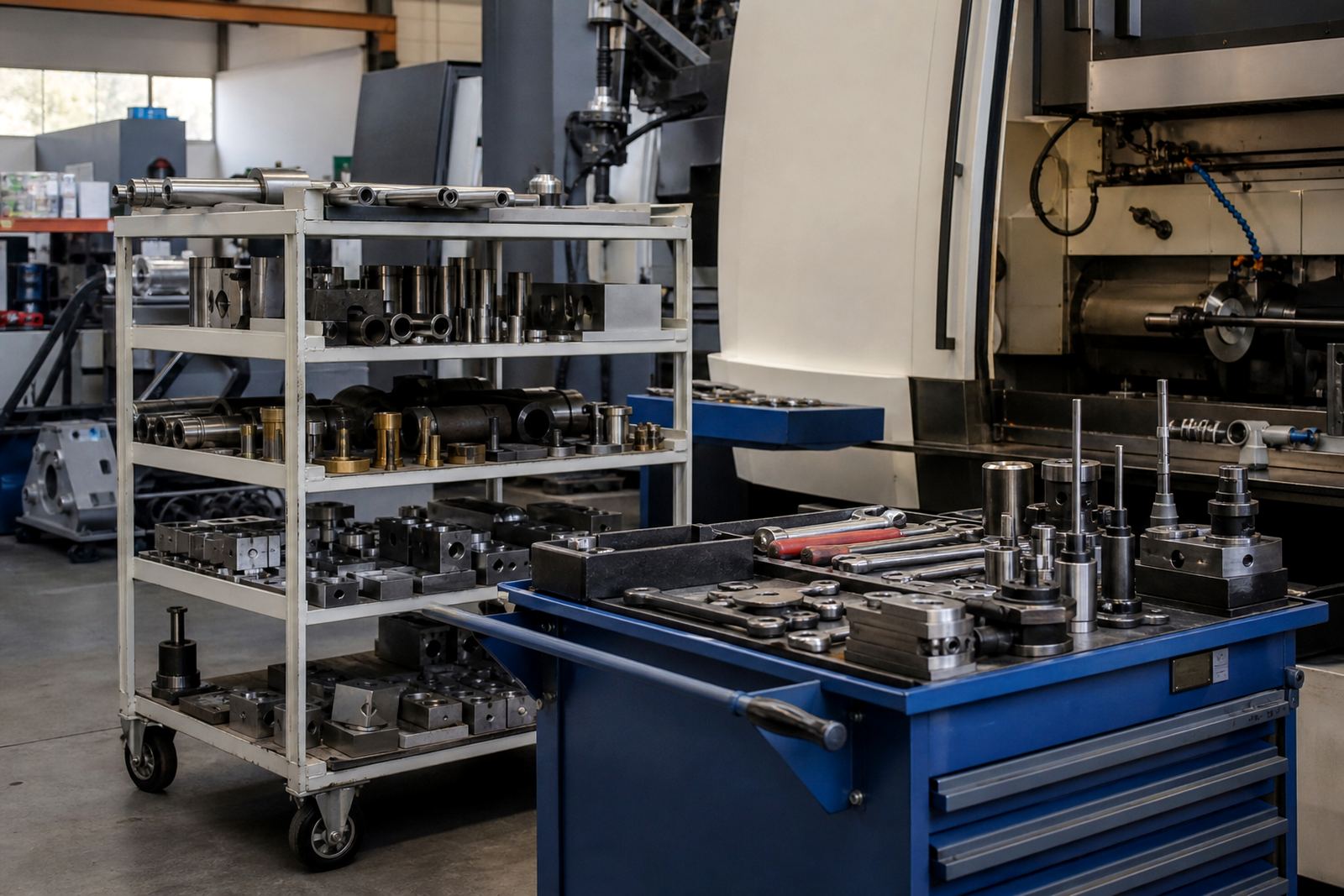
We also worked through practical shop-floor points such as coolant flow, chip clearing and tool handling. In a coastal city like Gqeberha, it is worth keeping equipment clean and protected, because moisture and fine residue can build up quickly around tooling and fixtures if maintenance is left too long.
Timeline and Workshop Support Over the Job
The project ran over three weeks from initial site review to final process handover. Week one focused on the brief, the machine condition and the bore requirements. Week two covered tooling setup, alignment checks and test runs. Week three was used for process fine-tuning, operator support and confirming that the method held up under normal workshop conditions.
- Week 1: review of parts, machine condition and process needs
- Week 2: tooling setup, alignment checks and first test runs
- Week 3: optimisation, operator training and final handover
That pacing suited the workshop because it let production continue while the process was improved step by step. It also gave the team enough time to ask questions and make sure the settings were practical, not just good on paper. The result was a better fit between the machine, the tooling and the job at hand.
Results on the Floor
By the end of the job the workshop had a more controlled drilling and boring process for the pump components, with better repeatability from setup to setup. The operators had clearer guidance on what to monitor, and the team could move into production with less uncertainty around bore quality and alignment. That matters in pump work because a small fault can lead to extra assembly time or a part being rejected further down the line.
The client also gained a cleaner support process for future work. Instead of treating each run as a fresh problem, the workshop now has a practical reference for tooling, setup and maintenance checks. That makes it easier to bring the job back later and get on with it without starting from scratch.
What We Would Repeat on a Similar Job
If we were doing the same type of project again, we would approach it the same way: begin with the component requirements, watch the first runs closely, and keep the setup practical for the people who have to use it every day. For pump workshops, the details matter, and it is usually the small checks on alignment, coolant flow and tool condition that save time later.
We would also keep the handover simple and make sure the operators know what good cutting looks like, what warning signs to watch for, and when to call for support. That gives the workshop a stronger base for future production, repairs and urgent turnaround work. It is not flashy, but it works.
- Start with component needs, not assumptions
- Check process stability on the first pieces
- Keep tooling and coolant checks part of the routine
- Train the operators on practical warning signs
Key facts
| Project location | Gqeberha, Eastern Cape |
|---|---|
| Client type | Pump workshop |
| Scope | Pump component drilling and deep-hole boring support |
| Services supplied | Tooling selection, setup optimisation, process monitoring, operator training |
| Timeline | 3 weeks |
| Support focus | Alignment checks, coolant system service, troubleshooting and production handover |