
What the Witbank repair centre needed from us
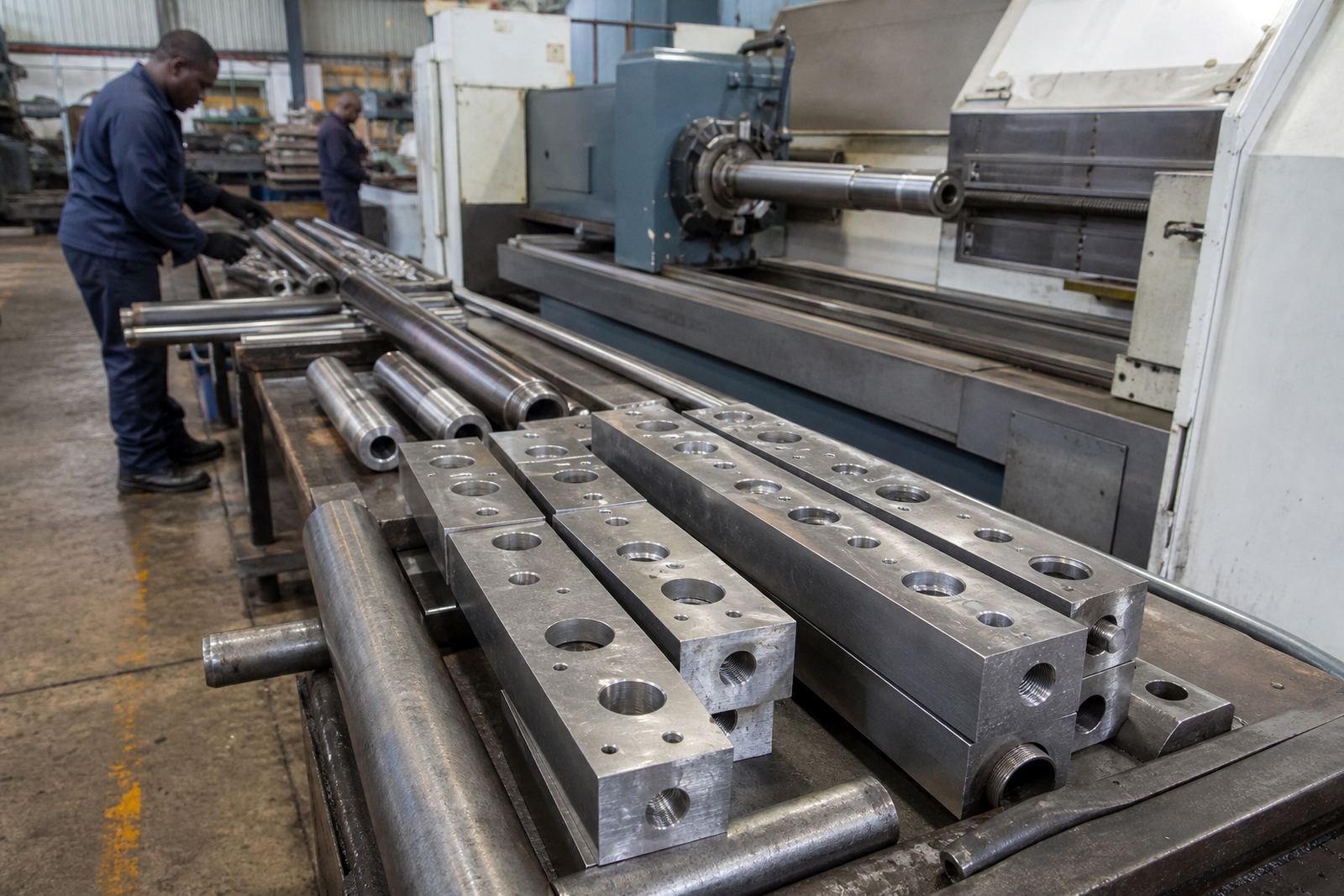
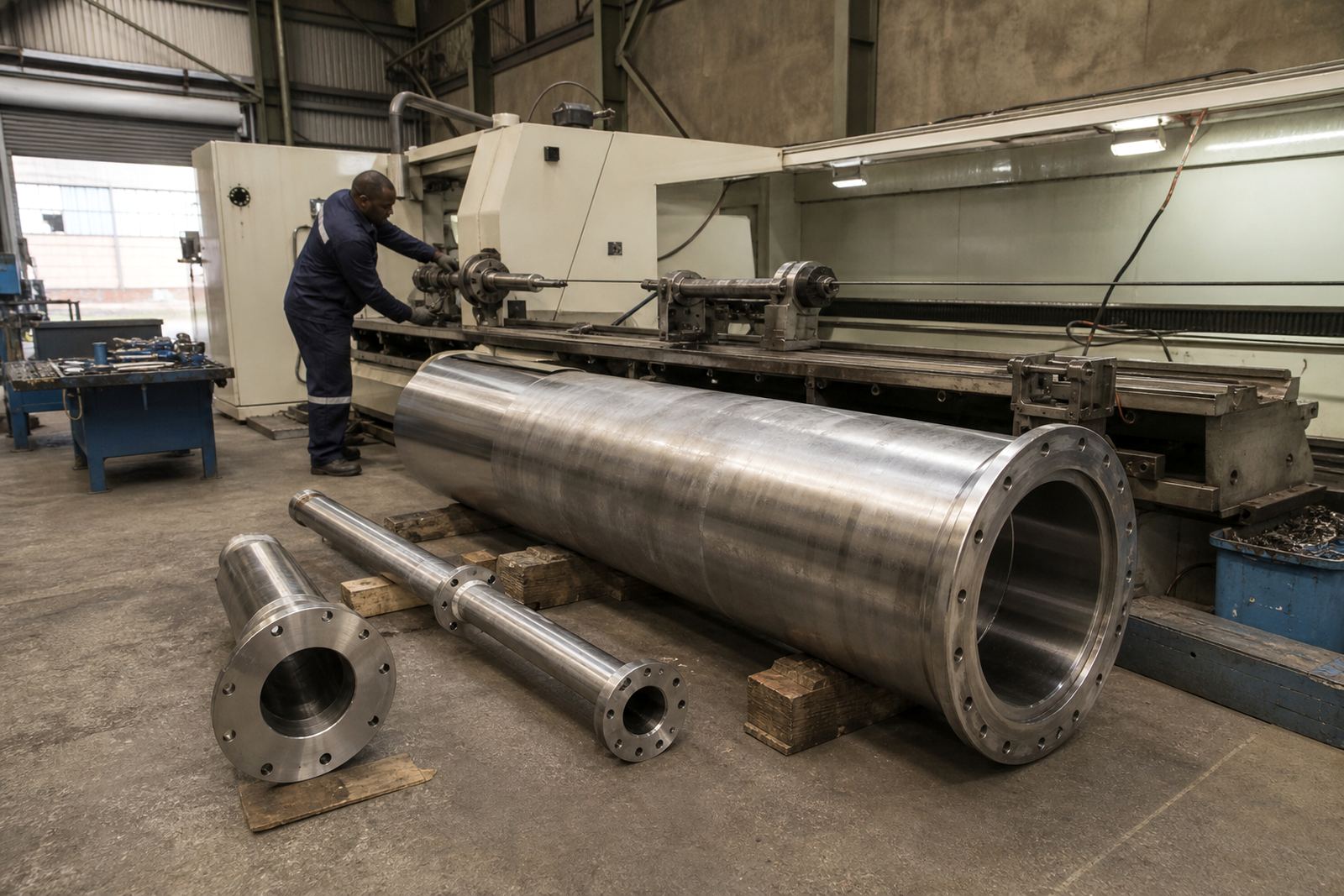
The client was a repair centre in Witbank handling urgent maintenance work for heavy plant and production equipment. Their team needed gun-drilled and deep-hole bored replacement parts for service work, with repeatable hole quality and a clean finish that would not slow assembly. The brief was practical: get the parts machined to the required layout, support the setup, and help the workshop keep the job moving without wasting stock.
They did not need a long lesson, they needed answers on tool choice, workholding and coolant flow. Our role was to help the team get the hole path right from the start, then keep the process steady through the batch. That meant checking alignment, advising on tooling selection and making sure the operator had clear steps for the run.
- Work type: repair and replacement parts for industrial maintenance
- Location: Witbank, Mpumalanga
- Main need: deep-hole accuracy and repeatability
- Support required: tooling, setup and process guidance
Constraints on the job and why they mattered
Repair work always comes with pressure. The parts were needed for maintenance turnaround, so there was limited time for trial cuts or rework. The workshop also had to manage normal local constraints such as power interruptions and the usual stop start rhythm that many South African sites know well. In a repair centre, one missed dimension can hold up a whole maintenance line, so the drilling process had to be controlled properly.
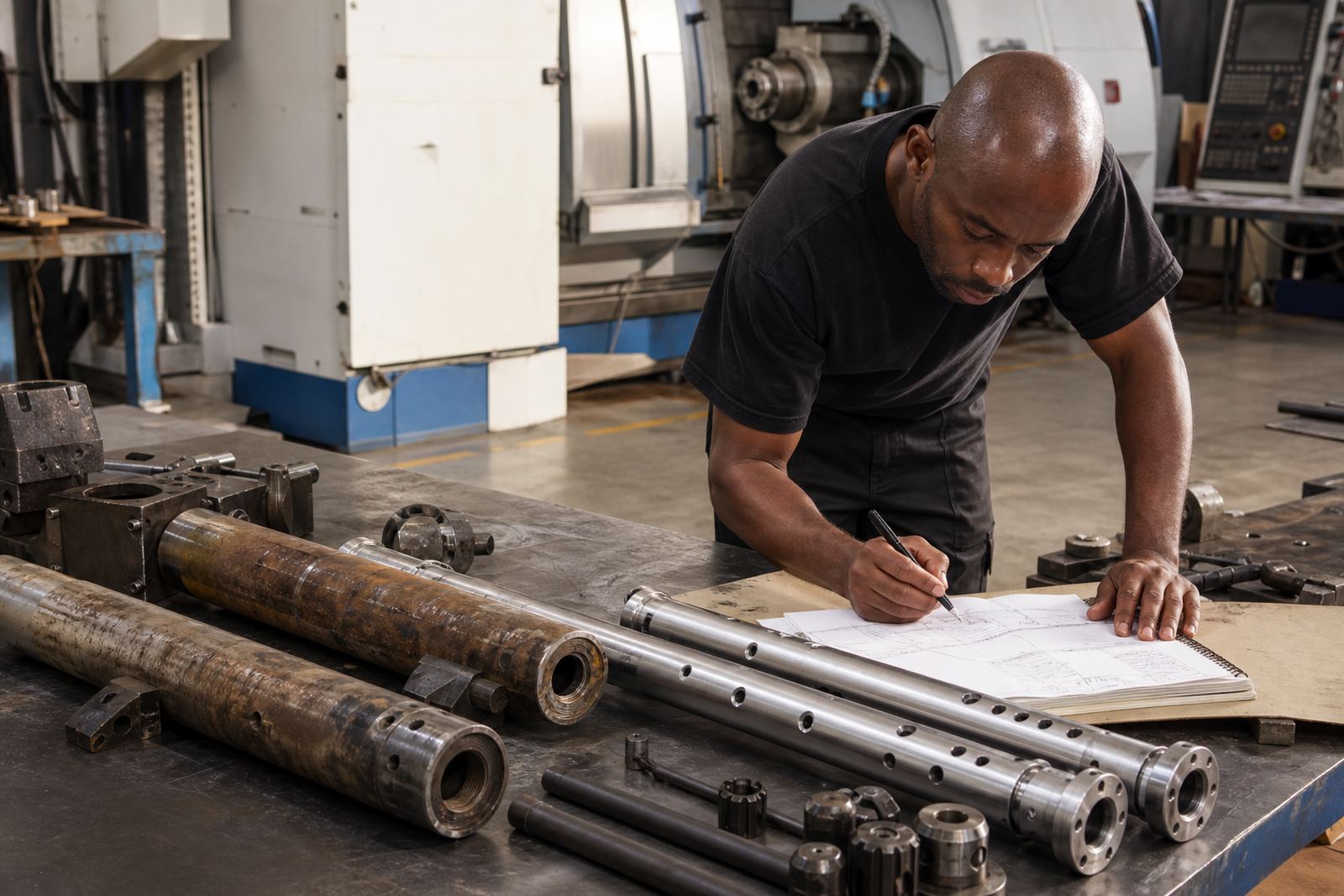
There was also the usual practical issue of machining parts that are not brand new castings off a shelf. Some replacement pieces arrive with variation in surface condition or setup faces, so the team needed a method that would cope with that without sacrificing hole quality. We kept the approach simple: confirm the datum, check the setup, match the tooling to the material and keep the coolant delivery consistent. A small slip in setup can cost a full shift, so we stayed close to the process.
- Short turnaround on maintenance parts
- Need for consistent hole position and finish
- Local load shedding risk and workshop interruptions
- Variable stock condition on replacement parts
What Deephole supplied and how we set it up
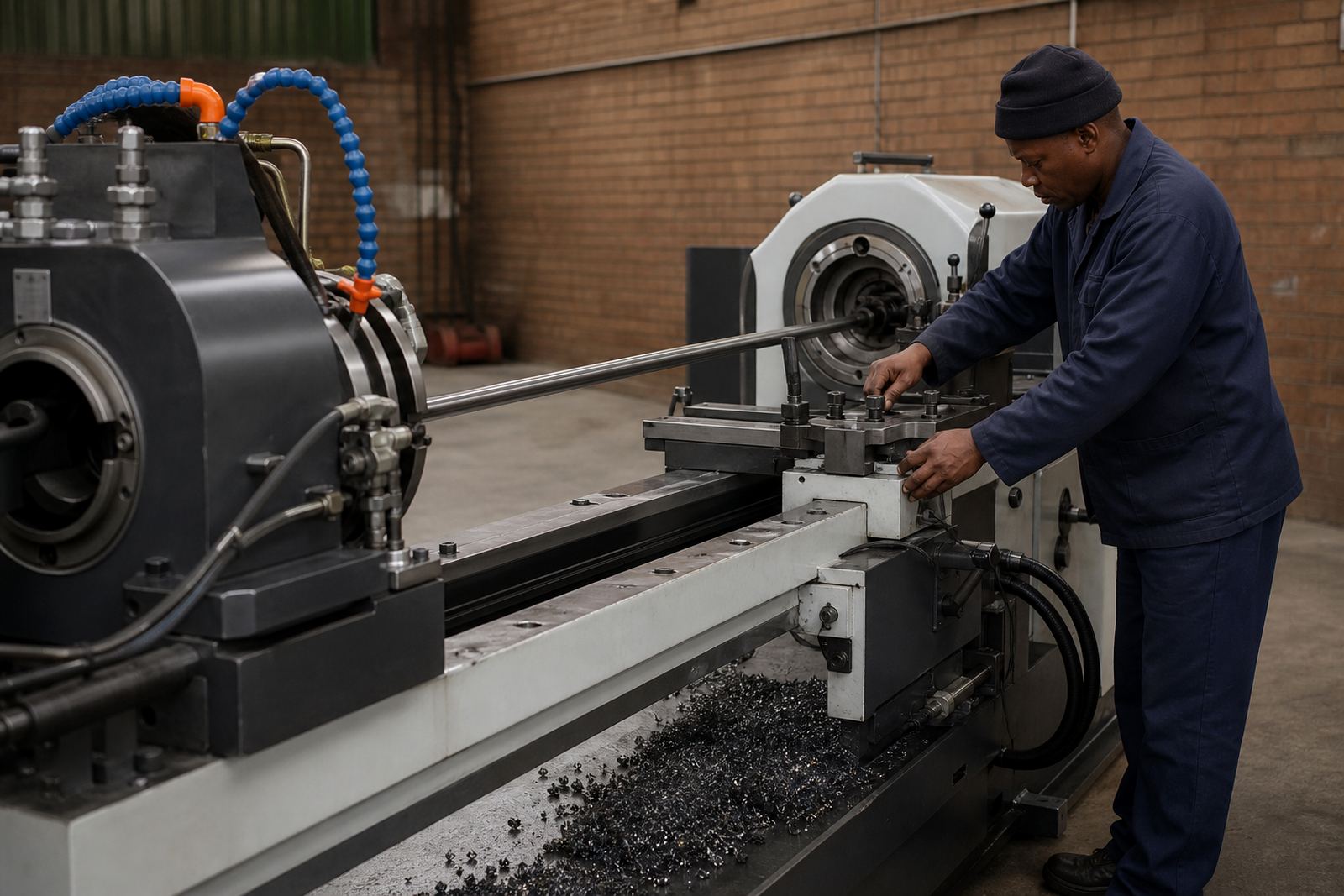
We supplied the gun-drilling and deep-hole boring support needed for the job, together with tooling advice suited to the part geometry and the repair centre’s production pace. The team from Benoni worked through the setup with the customer, then helped confirm the alignment before cutting started. Our focus was not on fancy talk, only on getting the machine, tooling and coolant arrangement working together properly.
Marius Jacobus van Rensburg oversaw the job with support from Ayanda Mokoena, Johan Smit and Noluthando Dlamini, while Francois du Plessis handled machine-side checks and Leanne Naidoo supported operator training. Sibusiso Khumalo assisted with tooling choices and consumables. The repair centre’s team had direct guidance on feed control, chip evacuation and when to stop and inspect rather than push on.
- Tooling selection matched to the part and hole depth
- Machine installation and commissioning support
- Alignment checks before production drilling
- Operator training on setup steps and inspection points
Timeline from first call to completed parts
The job ran over a short, controlled timeline of three weeks. Week one covered the brief, part review and tooling plan. Week two focused on installation support, setup optimisation and first articles. Week three was used for production drilling, process checking and handover notes for the workshop team. Because the parts were for maintenance use, the aim was to keep the schedule tight without forcing the job faster than the material and setup would allow.
That timeline gave the client enough room to correct small setup points before the full batch ran. It also meant the operater on site had time to ask questions and settle into the process, which matters on deep-hole work where a minor change in alignment or coolant delivery can show up quickly. The result was a cleaner run with less back and forth.
- Week 1: brief, part review and tooling plan
- Week 2: setup optimisation and first articles
- Week 3: production drilling and handover
Results for the maintenance workshop
The repair centre ended with replacement parts that were ready for assembly and suitable for ongoing maintenance work. The main win was control. The team had a stable drilling process, better confidence in setup and a clear way to repeat the job when the next batch came through. That is what matters in industrial maintenance: parts that fit, holes that stay true and fewer delays at assembly.
We also left the workshop with a cleaner process than we found. The client had clearer steps for pre-run checks, chip control and coolant maintenance, which helps when the site is dealing with long shifts and changing workloads. In practical terms, that means fewer surprises when a similar repair job comes in again.
- Parts completed for maintenance use
- Better repeatability on hole quality
- Clearer setup routine for the workshop team
- Less risk of delay on the next repair batch
What we would repeat on the next Witbank repair job
If we were doing the same type of repair centre work again, we would keep the same approach. Start with the part and the hole path, confirm the setup before cutting, and make sure the tooling is right for the material from the outset. We would also keep the commissioning and operator training close to the first run, not after the job is already under pressure.
For workshops in Witbank and the wider Highveld, that approach saves time. It also suits sites that have to work around municipal scheduling, power cuts or a mixed maintenance calendar. Deephole’s support is built for that kind of environment: direct, practical and focused on getting the parts out the door.
- Confirm the part layout before machining starts
- Lock in tooling and coolant settings early
- Train the operator during the first run
- Keep spare parts and maintenance support in place
Key facts
| Project | Witbank Repair Centre |
|---|---|
| Location | Witbank, Mpumalanga |
| Work type | Repair focused gun-drilling and deep-hole boring |
| Timeline | 3 weeks from brief to handover |
| Support supplied | Tooling selection, setup optimisation, commissioning and training |
| Typical output | Replacement parts for industrial maintenance use |