What Our Coolant System Service Covers
Coolant systems on gun-drilling and deep-hole boring equipment do a hard job. They must deliver clean coolant at the right pressure, keep chips in suspension and protect tools, seals and pumps from unnecessary wear. When a system starts blocking, foaming or dropping pressure, cutting quality suffers quickly and operators spend more time clearing faults than making parts.
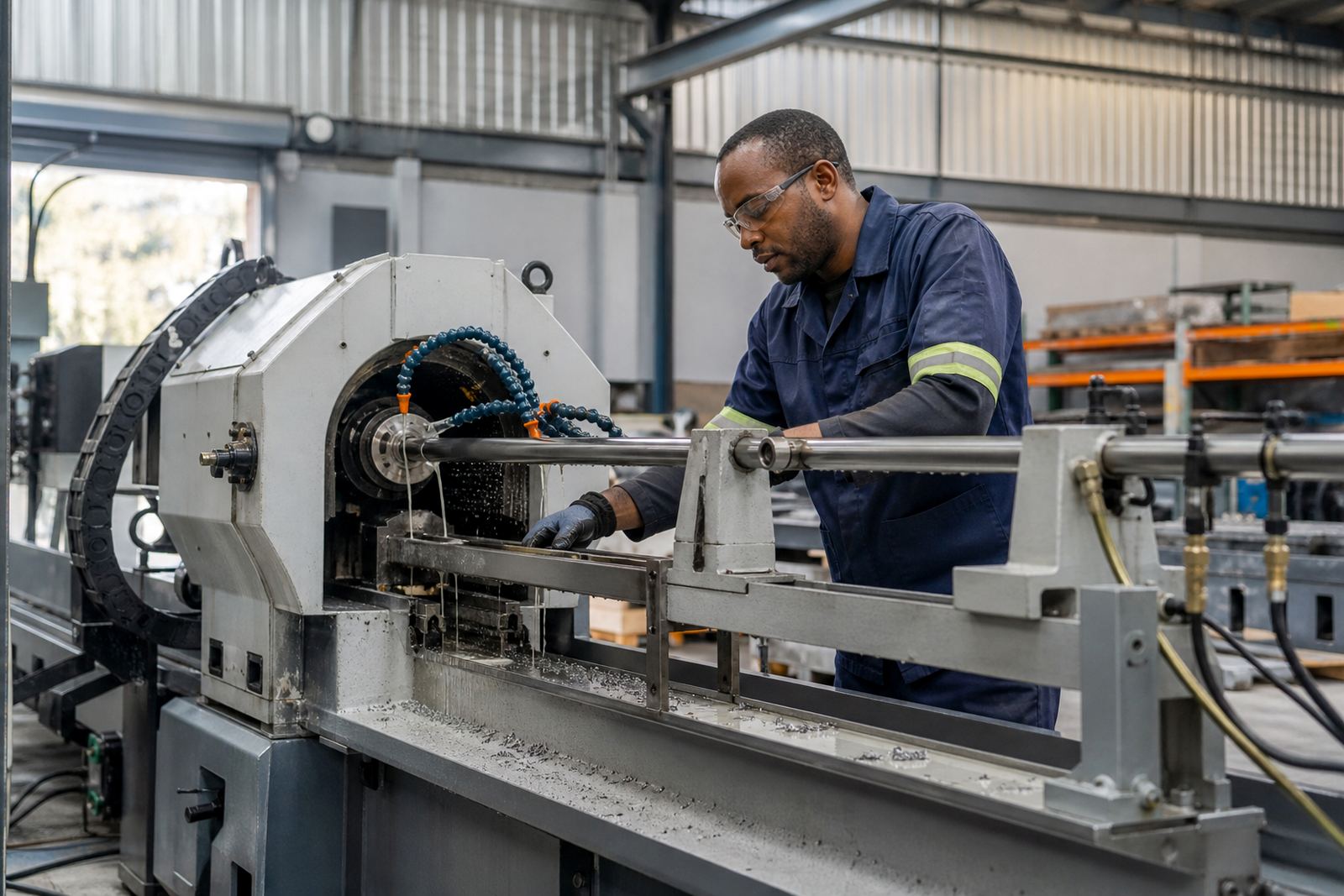
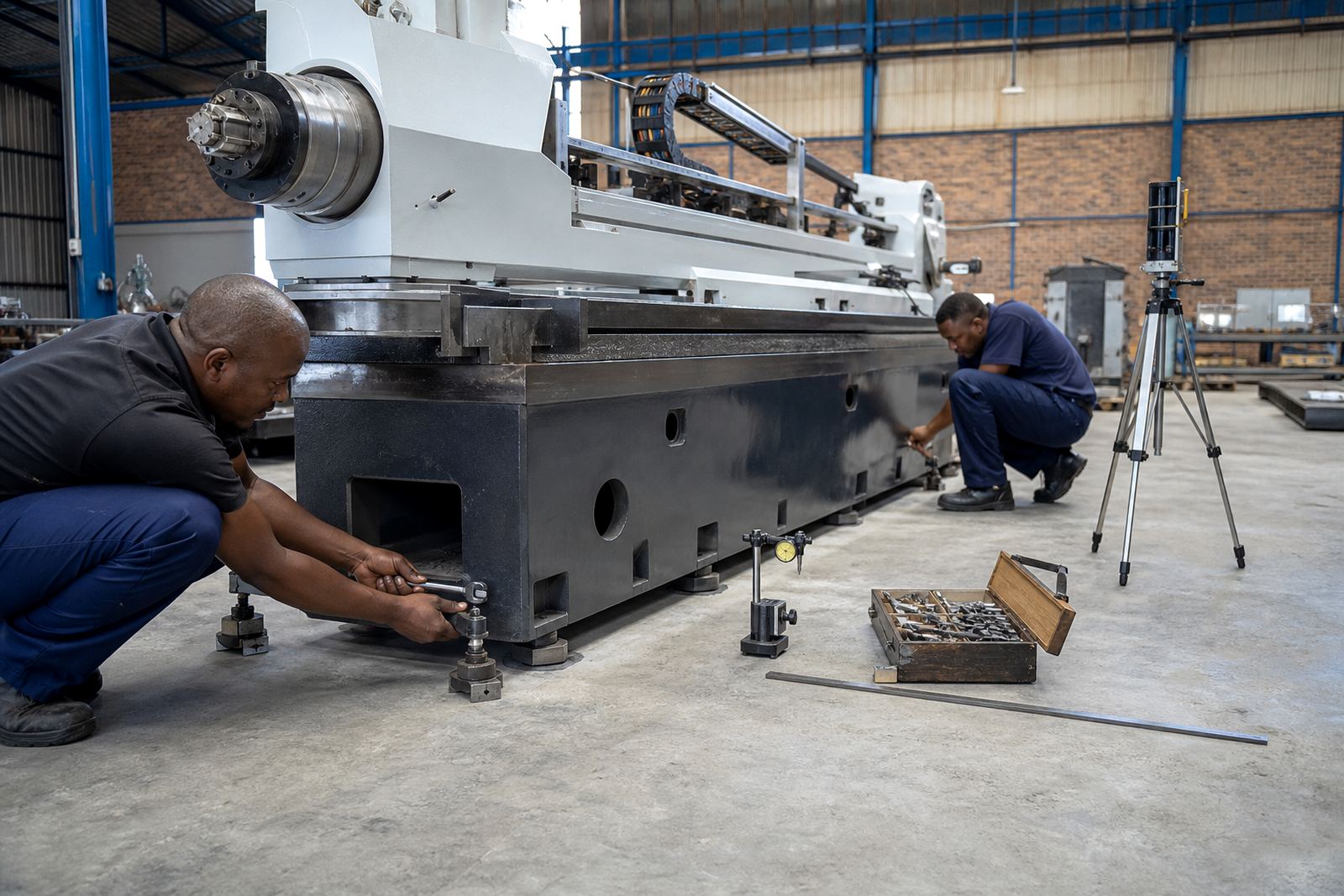
Our service work covers filtration units, coolant delivery lines, pressure units, return systems, tanks, strainers, hoses, nozzles and related controls. We clean, inspect and test the full coolant path so the machine can run with consistent delivery. Where needed, we also help with coolant system setup on new installs or after major maintenance. This is practical support for shops that need fewer stoppages and less mess at the machine, especially when load-shedding and stop-start production put extra strain on equipment.
Signs Your Coolant System Needs Attention
Many coolant problems start small. A pump may still run, but flow can be uneven, pressure may fluctuate or fines may collect in the tank. On deep-hole drilling work, that can cause poor chip removal, heat build-up and premature tool wear. If the system is already making strange noise or the coolant looks dirty faster than usual, it is best to act before the machine starts cutting badly.
We often see service calls after operators notice blocked nozzles, dirty filters, low pressure alarms or coolant that smells stale and looks milky. Coastal humidity can also shorten the life of electrical parts and seals if systems are left unattended for long periods. If your workshop runs multiple shifts or handles mixed material grades, small faults can become a regular problem rather than a one-off issue.
How We Carry Out the Service
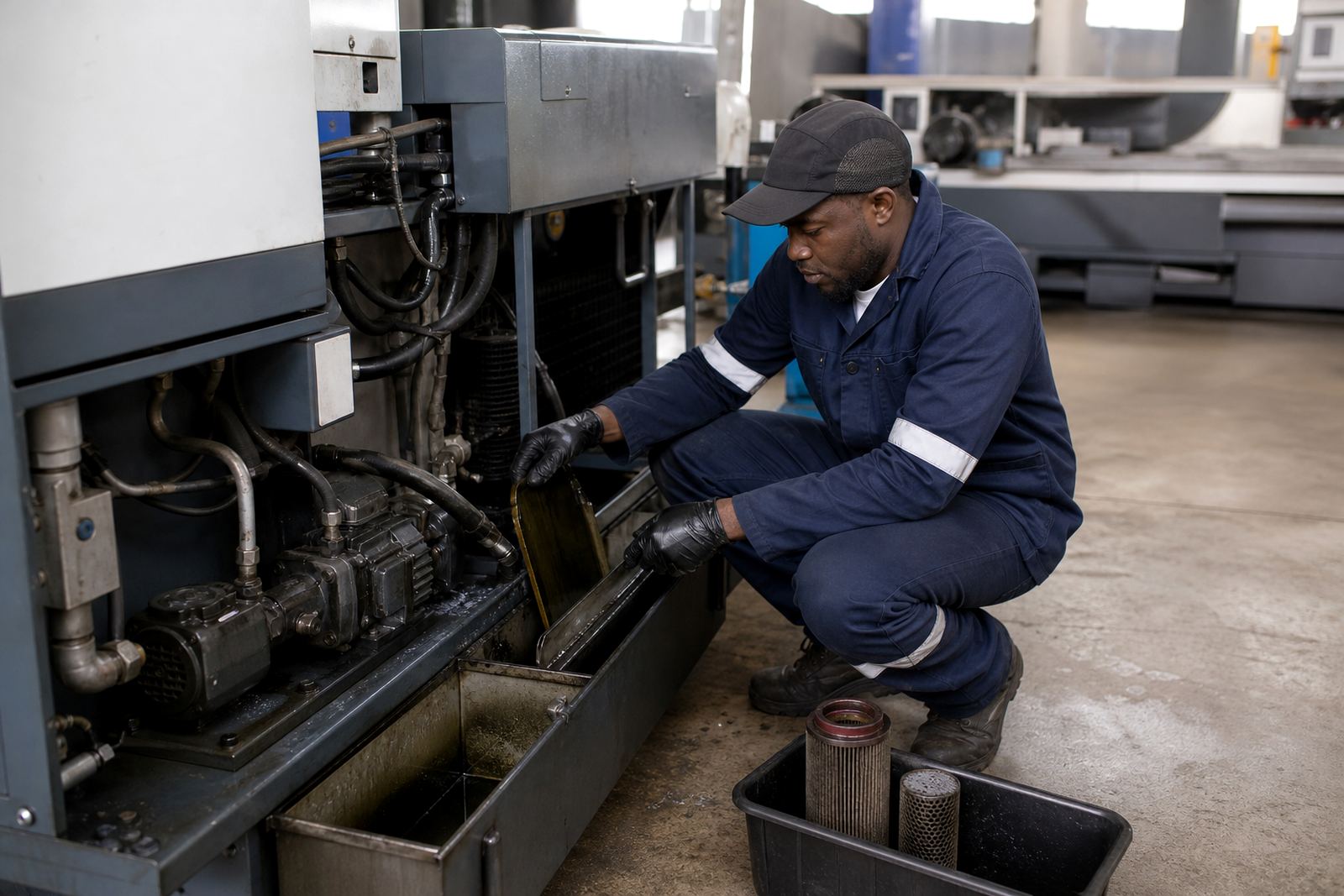
We start with a visual check and a practical discussion with the operator or maintenance team. That tells us how the machine is being used, what material is being drilled and where the main problems are showing up. From there, we isolate the system where needed, inspect the filtration stages and check the condition of pumps, valves, hoses and fittings.
The service process is organised so the machine can return to production as soon as the work is complete. We clean the tank, remove sludge and chips, check delivery paths and confirm that pressure and flow are behaving as expected. If we find worn parts or recurring blockages, we will explain the cause and recommend the next step. The aim is not just to get the system moving again, but to reduce repeat faults and improve day-to-day reliability.
Turnaround for Workshops That Cannot Wait
In a production environment, coolant faults can shut down a machine fast. We therefore plan service visits around the urgency of the job, the condition of the system and the parts needed. Straightforward cleaning and inspection work is usually quicker than a full strip and fault investigation, while systems with severe contamination or damaged components may need more time on site or in the workshop.
Turnaround also depends on access, machine type and how much coolant must be drained and handled. For shops in Benoni, Johannesburg, Pretoria and the wider Gauteng area, we can often arrange a quicker response for support calls that affect production. Where parts or extra components are required, we will explain the lead time upfront so you can plan around the outage rather than guessing.
Pricing Based on the Actual Condition of the System
We price coolant system service according to the work required, not by guesswork. A system that only needs inspection and cleaning will be costed differently from one with a failed pump, blocked pressure unit or contaminated tank that needs more extensive attention. That keeps the quote fair and tied to the real condition of the equipment.
Before work starts, we confirm the scope, likely labour time and any replacement items that may be needed. If the system has hidden wear or a fault only becomes clear after stripping, we stop and discuss the next step before continuing. This helps avoid surprise costs and gives maintenance teams a proper view of where the money is going. Clients from Durban to Cape Town often prefer this approach because it makes budgeting easier across planned service intervals and emergency callouts.
Recommended Maintenance Intervals
There is no single interval that suits every coolant system, because usage, material type and shift pattern all matter. A machine running every day on demanding deep-hole work will need more regular checks than a unit used occasionally. Shops that cut hard materials, run long cycles or operate in dusty areas should inspect the system more often, while coastal sites may need closer attention to corrosion, seals and electrical connections.
As a practical guide, we recommend regular visual checks by the operator, scheduled filter inspection and a deeper service at planned maintenance intervals. If coolant is changing colour too quickly, pressure is falling or chips are not clearing properly, the interval is already too long. It is better to service the system before the machine starts giving trouble rather than after a stoppage has already cost a shift.
Support Across South Africa
Deephole is based in Benoni, Gauteng and supports manufacturers and engineering shops across South Africa. Our coolant system service forms part of broader support for gun-drilling and deep-hole boring machines, tooling, setup and production stability. Whether the issue is filtration, pressure delivery or coolant circulation, we work with the people who need the machine back in operation, not just the fault report.
Our team includes sales, applications, service coordination, machine support, training and tooling assistance. That means the person handling your call can bring the right technical help to the job. For shops in Johannesburg, Pretoria, Durban, Cape Town and Gqeberha, the priority is simple: keep the coolant system doing its job so the machine can keep doing yours.
Key facts
| Service focus | Filtration units, pressure units and coolant delivery systems |
|---|---|
| Typical support method | On-site inspection, cleaning, testing and fault finding |
| System checks | Flow, pressure, seals, hoses, fittings and tank condition |
| Turnaround basis | Depends on fault severity, access and parts required |
| Pricing method | Quoted to actual scope and condition |
| Maintenance guidance | Daily, weekly and planned shutdown intervals based on usage |