
What A Chip Conveyor Does On A Deep-Hole Machine
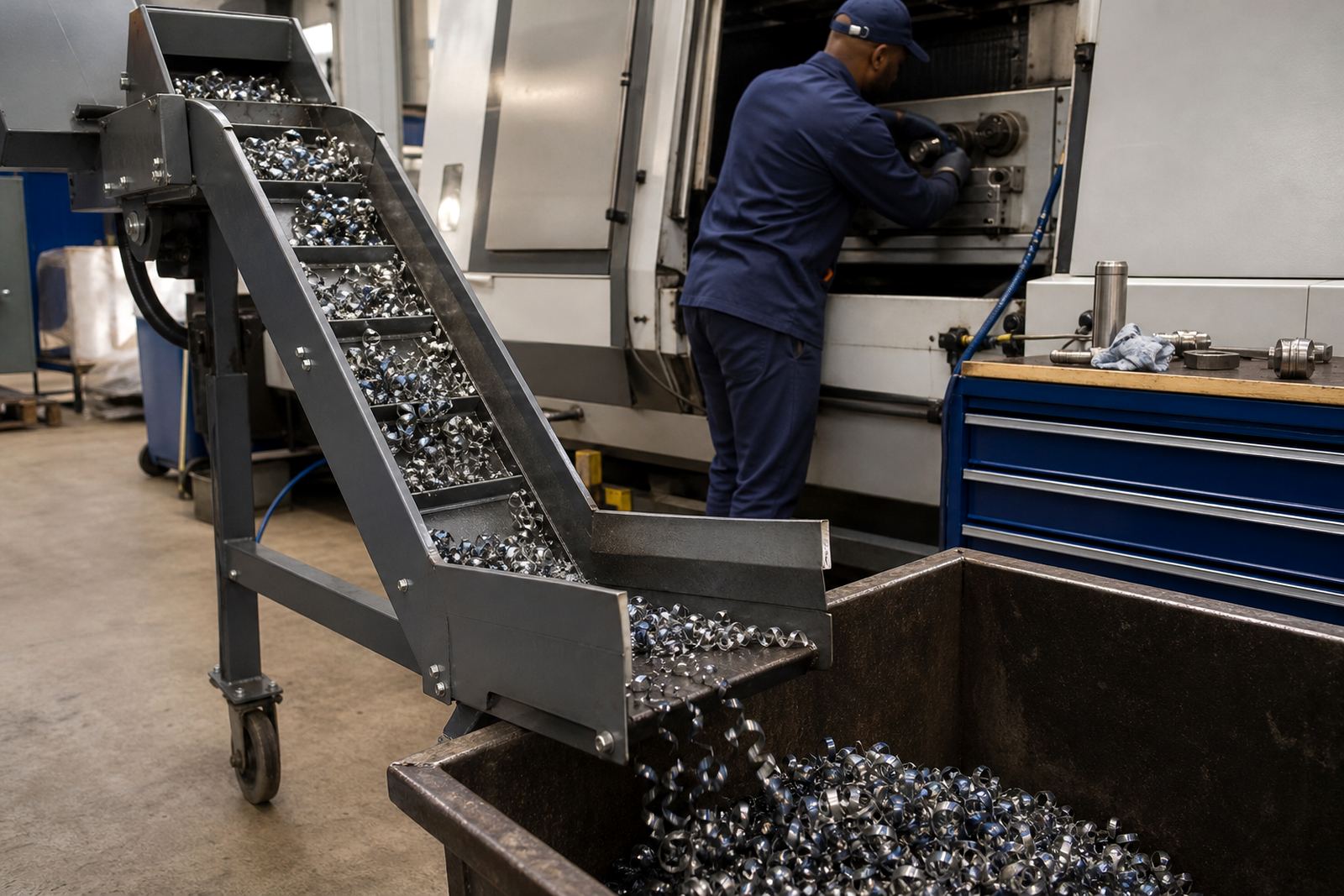
A chip conveyor is a chip handling unit that carries swarf away from the machine and into a collection point, instead of letting it build up around the drill head, boring area or coolant tank. On gun-drilling and deep-hole boring work, that matters because long chips and fine swarf can block flow, foul the coolant system, and create extra cleaning between jobs.
In a South African workshop, cleaner chip removal also helps when staff are working around load-shedding interruptions, shift changes, and tight production windows. Less manual clearing means less risk of hot chips on the floor, less downtime, and easier housekeeping under municipal and factory safety rules.
Sizes And Options For Different Machines
Chip conveyors are selected to suit the machine footprint, chip load and the way your workshop handles coolant and scrap. Some setups need a compact unit for a smaller machine base, while others need a longer discharge route or a stronger collection arrangement for continuous production.
- Conveyor length and width matched to the machine frame and chip outlet
- Straight discharge or angled discharge, depending on space behind the machine
- Scraper, belt or auger style handling, depending on chip form and volume
- Coolant return arrangement for wet swarf handling
- Collection bin or tipping point for easier scrap removal
The right option depends on whether you are running short production batches, high-volume boring, or precision drilling where chip control is part of the process setup. We help match the unit to the machine and the floor space you have available.
Where A Chip Conveyor Suits Best
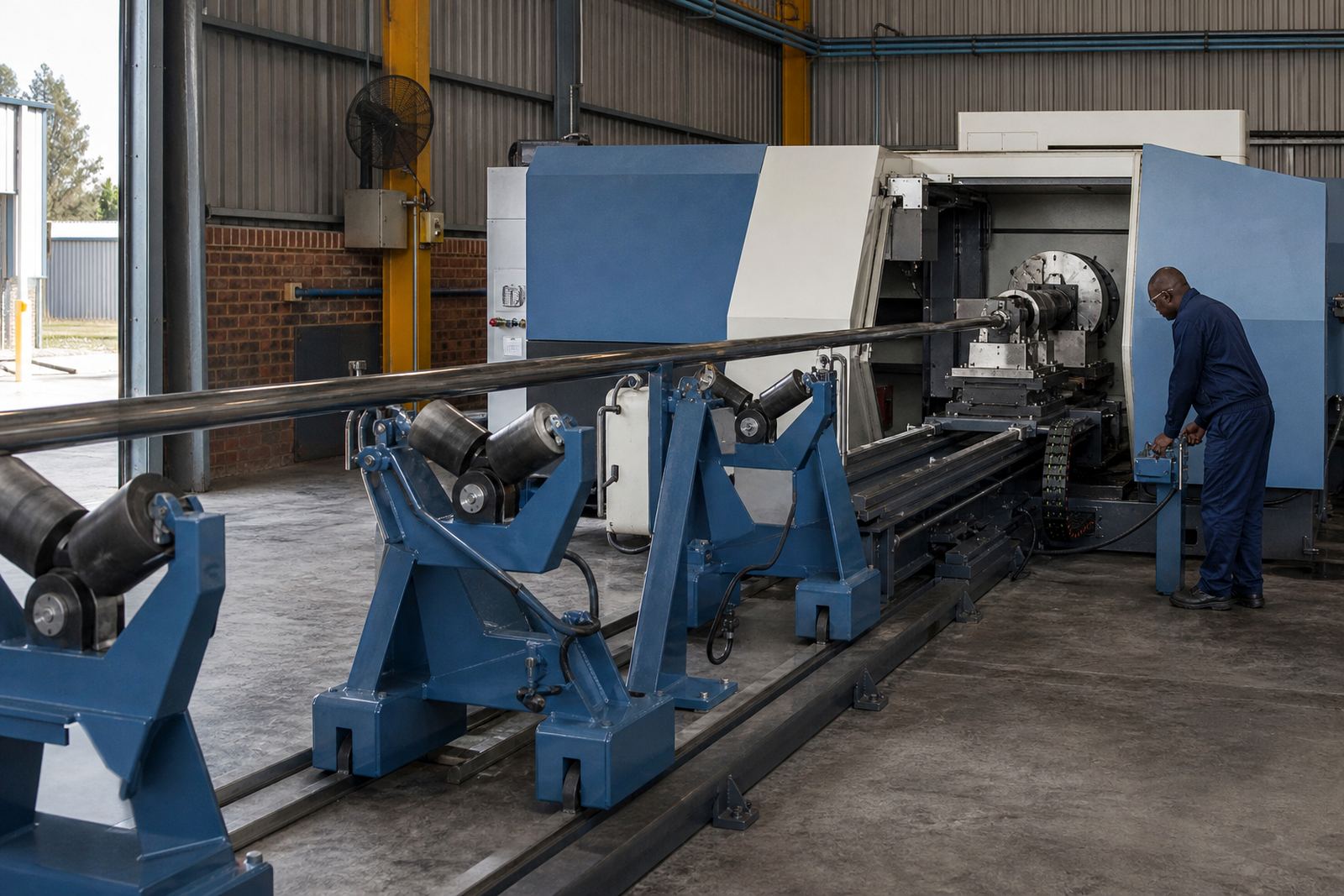
This product suits manufacturers and engineering shops that run deep-hole processes on steels, alloys and other materials where chip evacuation is part of the daily routine. It is especially useful in plants that run for long hours, because chip build-up usually shows up fastest during repeat production and after operator changes.
It suits machining areas in Johannesburg, Pretoria, Durban, Cape Town, Gqeberha and the East Rand where floor space is often tight and uptime matters. If the machine is in a warm plant near the coast, or in a dusty inland workshop, clean chip handling helps protect coolant quality and keeps the working area easier to manage.
- Gun-drilling lines
- Deep-hole boring machines
- General engineering shops
- Production cells with limited cleaning time
- Areas where coolant recovery is important
Installation, Power Needs And Plant Set-Up
Installation should be planned alongside the machine layout, chip outlet height, coolant return route and scrap collection point. Most units need proper alignment to the machine base, clear access for maintenance, and enough room for chip discharge without blocking walkways or emergency access. If the conveyor is fitted after the machine is already in service, the floor layout may need small changes to get the best flow.
Power needs depend on the selected drive and control arrangement, so it is important to confirm the available supply before ordering. In South African plants, we also check for stable isolation, safe cable routing and practical restart conditions after power cuts. Where compressed air or process cooling is part of the wider machine setup, we confirm how the conveyor will work with the rest of the line.
Our team can assist with installation, commissioning and alignment checks. That includes the sort of hands-on support that helps avoid noisy running, poor chip carry, or coolant spill at the first startup.
Care, Servicing And Daily Checks
A chip conveyor works best when it is checked regularly and kept free of build-up around the discharge end, return path and drive area. Small chips, stringy swarf and sticky coolant residue can cause wear if they are left to accumulate.
- Check the discharge area daily for blockages
- Inspect the drive and bearings during routine service
- Keep the coolant return clean to avoid pump strain
- Look for unusual noise, vibration or slipping
- Remove wrapped swarf before it starts to damage moving parts
We can help with preventive maintenance, breakdown support and spare parts support, which is useful for shops that cannot afford long stoppages. If the conveyor starts loading unevenly or runs hard, it is better to check the whole chip path early rather than wait for a full failure.
What To Check Before You Order
Before ordering, gather the machine model details, the available mounting space and the type of chips produced by your process. This helps us confirm the best conveyor style and avoid fitting problems later.
- Machine make and model
- Available length, width and mounting height
- Chip type: short, stringy, wet or mixed
- Coolant return requirements
- Electrical supply available on site
- Preferred discharge point and scrap handling method
If you are upgrading an older machine, we can also review whether the current layout needs a new support frame, revised outlet position or a better cleaning routine. For many workshops, the right chip conveyor is a practical addition that improves production flow and keeps the machine area tidy without adding extra labour.
Key facts
| Product type | Chip handling unit for deep-hole drilling and boring machines |
|---|---|
| Typical use | Swarf removal, coolant recovery and cleaner machine operation |
| Compatible applications | Gun-drilling, deep-hole boring and related machining setups |
| Configuration options | Scraper, belt or auger style, depending on chip form and layout |
| Installation | Mounted to suit the machine base and discharge point, with alignment support |
| Utilities | Electrical drive required; coolant return arrangement depends on the machine setup |