What loading supports do on the shop floor
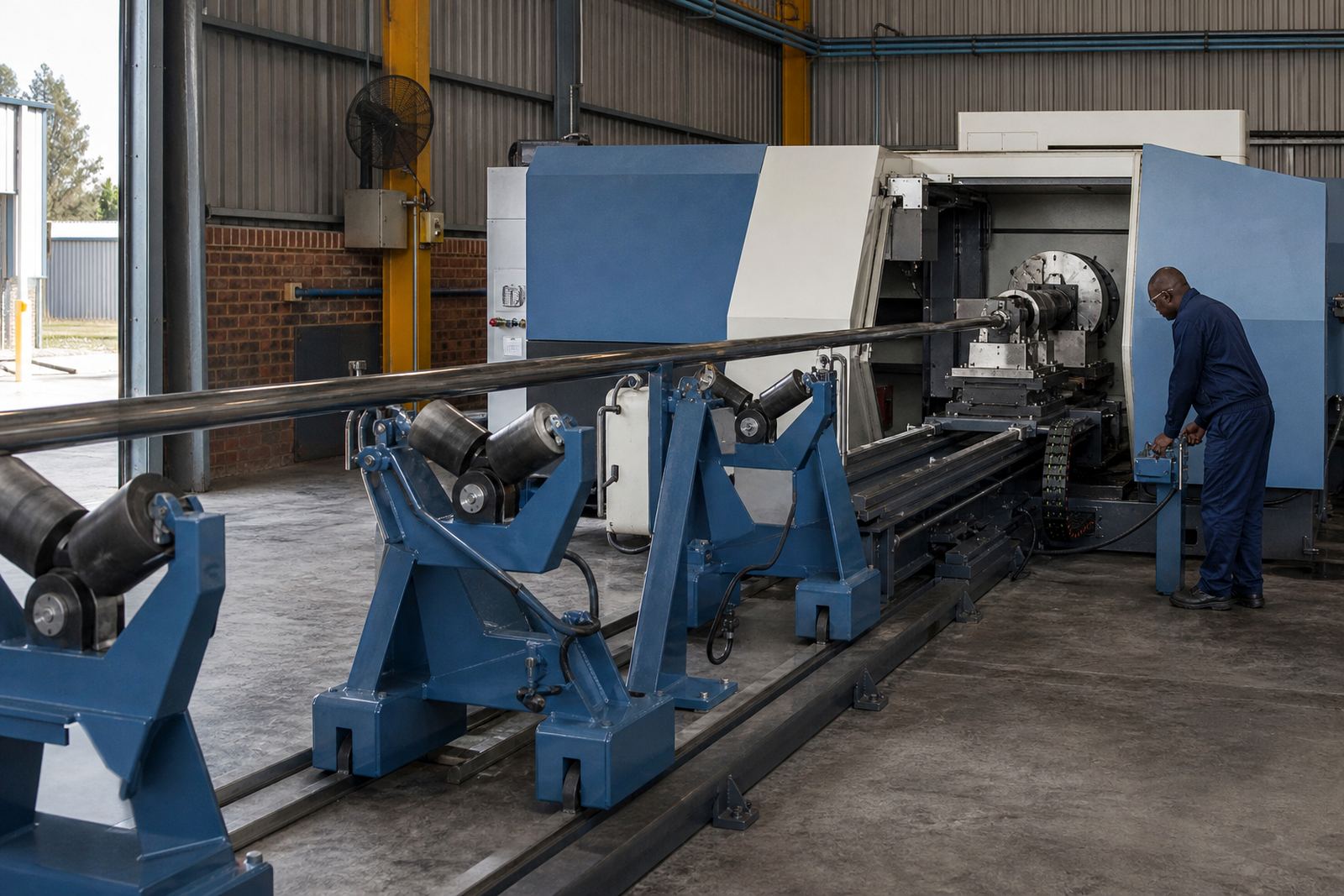
Loading supports are fitted to help carry and guide long shafts, tubes and similar workpieces before they enter the machine. In gun-drilling and deep-hole boring work, the loading point is often where the first mistakes happen, so a support that keeps the part level and controlled is worth having on hand. It makes manual handling easier and helps the operator keep the workpiece centred while clamps, rests or transfer equipment take over.
For South African workshops working with long components, a loading support can suit production lines, jobbing shops and maintenance environments alike. It is commonly used where one person cannot safely manage the full length of the part, or where repeated loading needs a steady routine. The right support also helps reduce knocks to finished surfaces, which is important on parts that already carry a tight tolerance.
Sizes, load ranges and support options
Loading supports are usually selected around the length, diameter and mass of the workpiece rather than a one-size-fits-all approach. For that reason, Deephole can help you match the support to the machine, the part and the way your team loads material. Some setups use a simple fixed stand, while others need adjustable height, roller support or a guided cradle for longer sections.
- Adjustable height options for different machine bed levels and loading heights
- Roller or cradle style support for smooth movement of long parts
- Fixed support frames for repeat jobs with the same component size
- Wide base options where floor stability matters in busy production areas
- Guided entry support to help present the part in line with the bore axis
When ordering, it helps to know the minimum and maximum workpiece diameter, the working length, and whether the part is loaded by hand, crane or mechanical assist. If the support must sit beside an existing machine, the footprint and access clearances matter too, especially where floor space is tight in older factories around Benoni, Johannesburg or Pretoria.
Where loading supports suit best
These supports are useful anywhere long stock must be moved into a gun-drilling or deep-hole boring setup without sagging or twisting. They suit shaft work, tubular sections, hydraulic components, sleeves and other elongated parts that need a stable presentation before machining starts. In many shops, the support becomes part of the normal loading sequence and speeds up each changeover.
They are also practical for workshops dealing with mixed batches. If one day you are loading a short run of parts and the next day a heavier shaft, a properly chosen support makes the change less awkward. In coastal areas like Durban, the workshop may also want a simple surface finish and care routine that stands up to humidity and regular use.
- Gun-drilling and deep-hole boring shops
- General engineering and precision machining
- Hydraulic and pneumatic component production
- Repair workshops handling long shafts or tubes
- Batch production where repeatable loading is needed
Installation, floor needs and utility requirements
Most loading supports do not need power or gas on their own, but they do need correct placement and stable anchoring or positioning. If the support is being used with a machine line, the floor must be level enough to keep the part presented straight to the machine. Where a support is mobile, the wheels, brakes and moving parts must suit the site conditions and the weight it will carry.
Installation is usually straightforward, but alignment matters. The top surface or roller line should match the machine loading height as closely as practical, otherwise operators end up lifting and correcting the workpiece by hand. That creates wear on the support and slows production. In sites with load-shedding, it also helps to keep manual handling simple so the team can continue safely when other equipment is off line.
- Check floor level and available space before placement
- Confirm loading height against the machine centre line
- Allow enough clearance for cranes, trolleys or fork movement
- Secure the frame if the job requires fixed positioning
- Make sure the operator has clear access from both loading and unloading sides
Care, inspection and servicing to keep it steady
A loading support does not need complicated upkeep, but regular checks keep it safe and usable. The bearing surfaces, rollers, locking points and adjustment mechanisms should be inspected for wear, dirt and damage. If the support is used near coolant mist, metal fines or outdoor access areas, cleaning becomes more important because grit and moisture can affect movement and finish.
For workshops already doing preventive maintenance on drilling equipment, it makes sense to include the loading support in the same routine. That can mean checking bolts, lubricating moving points where applicable, and making sure the support still tracks square to the machine. If the floor moves, the support is knocked, or the loading routine changes, get it checked before the next production run.
- Inspect rollers, pads and hinges for wear
- Keep surfaces clean from swarf, coolant and dust
- Check fasteners after relocation or heavy use
- Verify the support remains level after floor changes or impacts
- Replace worn contact parts before they mark finished components
What to check before ordering
Before placing an order, measure the longest and heaviest workpiece you plan to load, then confirm the machine height and the route the part will take into position. If the support must work alongside a deep-hole boring machine or a gun-drilling line, the bore centre line and approach angle are just as important as the overall size. It is better to sort this out upfront than to modify the loading routine later.
Deephole can help you work through the details from Benoni and support customers across South Africa, including Johannesburg, Pretoria, Durban, Cape Town and Gqeberha. If you are not sure which style fits best, the team can assist with tooling selection, setup optimisation and production startup so the support matches the actual job. A small miss in the loading stage can affect the rest of the process, so it pays to get the basics right.
- Workpiece diameter, length and approximate mass
- Loading height and machine centre line
- Manual, crane or mechanical loading method
- Required adjustment range or fixed height preference
- Available floor space and access around the machine
Key facts
| Product type | Loading supports for long workpieces before machining |
|---|---|
| Typical use | Positioning shafts, tubes and similar parts for gun-drilling and deep-hole boring |
| Adjustment options | Fixed or adjustable height, depending on application |
| Support style | Roller, cradle or guided support, depending on loading method |
| Utility needs | Usually no power or gas required on the support itself |
| Installation | Placement, levelling and alignment to the machine loading height |