Multi spindle drilling for repeat hole patterns
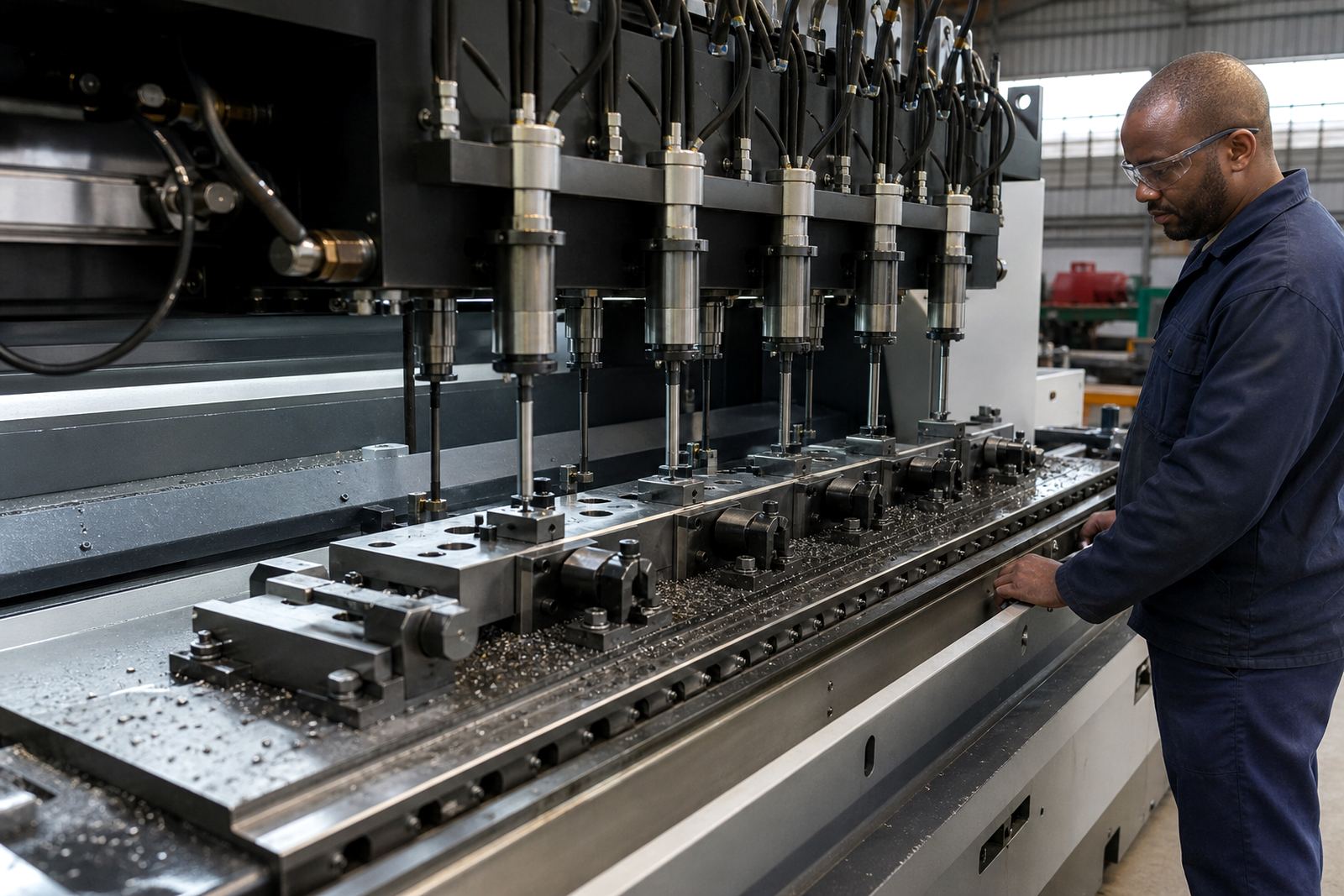
A multi spindle drilling unit is built for jobs where the same hole pattern must be produced again and again across a batch of similar parts. Instead of drilling one hole at a time, the unit works with several spindles set out to suit the part pattern, which helps shorten cycle times and keep hole positions consistent. It is commonly used where output matters, but the drilling task still needs control, repeatability and proper support at setup stage.
In South African workshops the unit is often considered for production runs where a single spindle machine is slowing things down. The main benefit is not only speed, but also reduced handling between operations when the hole layout remains fixed. That can be useful in Johannesburg job shops, Pretoria production lines, Durban engineering plants and Cape Town or Gqeberha facilities working with repetitive components.
We supply multi spindle drilling units with attention on practical use, tooling fitment and the way the machine will sit within your current process. If the hole pattern, material type or batch size changes often, we help assess whether a multi spindle setup is the right choice or whether another deep-hole process will be more suitable.
Options, sizes and tooling choices
Multi spindle units are usually selected around the workpiece pattern rather than by one fixed standard. The spindle count, spacing and head arrangement must suit the part, the material and the depth-to-diameter requirement. In practice this means the unit is ordered to support the job, not the other way around. That is why tooling selection matters so much on this type of machine.
We assist with the practical side of the order, including spindle layout, drill head suitability, fixturing needs and how the unit will be loaded and cleared during production. For some work, a compact arrangement is enough. For other jobs, the layout may need more clearance, a different support arrangement or better chip evacuation. If your team works with parts that have similar but not identical patterns, we can talk through what can be standardised and what needs a dedicated setup.
- Spindle count matched to the hole pattern
- Head spacing set to suit the component layout
- Tooling selected for the material and hole depth
- Fixture and clamping requirements reviewed before order finalisation
Where a multi spindle unit suits the work
This type of unit suits manufacturers and engineering shops that repeat the same drilling job across many pieces. It is a practical option for automotive components, general engineering parts, brackets, manifolds, hydraulic-related components and other work where several holes must stay aligned and positioned the same way from part to part. If the job is batch based and the part geometry is stable, a multi spindle unit can reduce operator handling and improve output planning.
It also suits workshops that want to move from manual drilling methods to a more controlled process without changing the whole production floor. In places like Benoni, the East Rand and wider Gauteng, many shops need equipment that can work through long shifts, cope with load shedding planning and keep output moving when power is restored. A properly set up multi spindle drilling unit can form part of that approach, provided the installation and support are handled correctly.
For coastal areas such as Durban, Gqeberha and Cape Town, care around corrosion, coolant maintenance and storage conditions becomes especially important. Humidity and airborne moisture can affect tooling, guide surfaces and electrical components if routine checks are missed.
Installation, power and workshop requirements
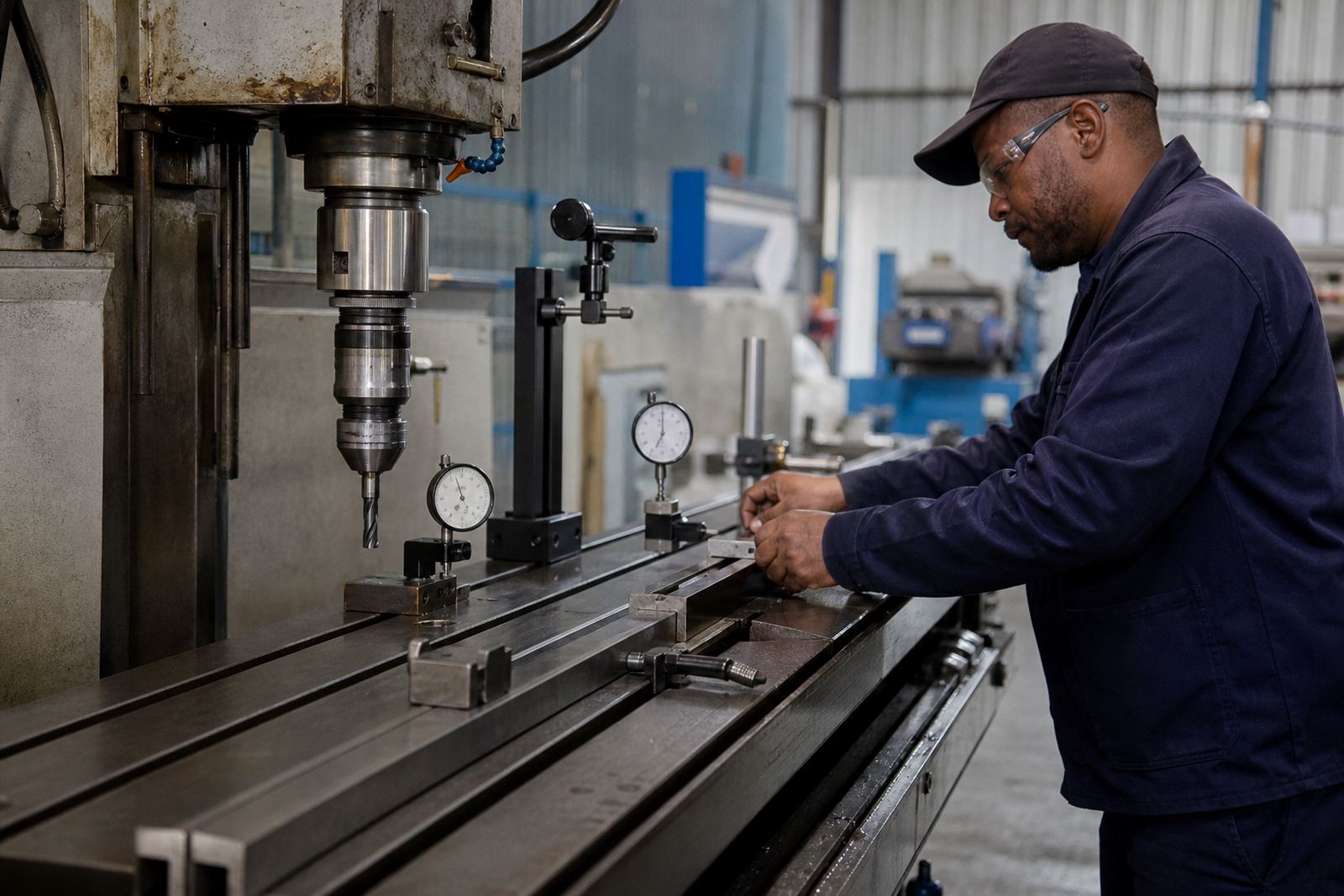
Before installation, we check the available floor space, access route, lifting arrangements and whether the machine can be positioned for safe loading. The foundation or base arrangement must suit the machine and the duty expected of it. Alignment at installation is important because a multi spindle unit depends on the correct relationship between the head, the fixture and the workpiece. If the setup is off, hole location and finish can suffer.
Power requirements must be checked against the machine supplied and the site conditions. We do not assume a workshop is ready just because the machine can be delivered. The supply must be confirmed, the isolator arrangement must suit the installation, and any support equipment required for the process needs to be ready. Where compressed air or another support utility is needed, we will flag that early so there are no delays at commissioning. In South Africa, it is also worth planning around load shedding by checking how the machine and its support systems will restart safely after an outage.
Our installation and commissioning support covers setup optimisation, operator familiarisation and production start-up. If the machine is going into an existing line, we work through the sequence with your team so that the unit can be brought into service without unnecessary stoppages.
Care, servicing and day-to-day support
Multi spindle drilling equipment works best when the machine, tooling and coolant system are kept in good condition. Chip build-up, worn tools and poor alignment can all affect hole quality. Regular checks help prevent unnecessary wear and reduce the chance of an avoidable breakdown. On these machines, small issues can show up quickly across multiple holes, so early attention is worth it.
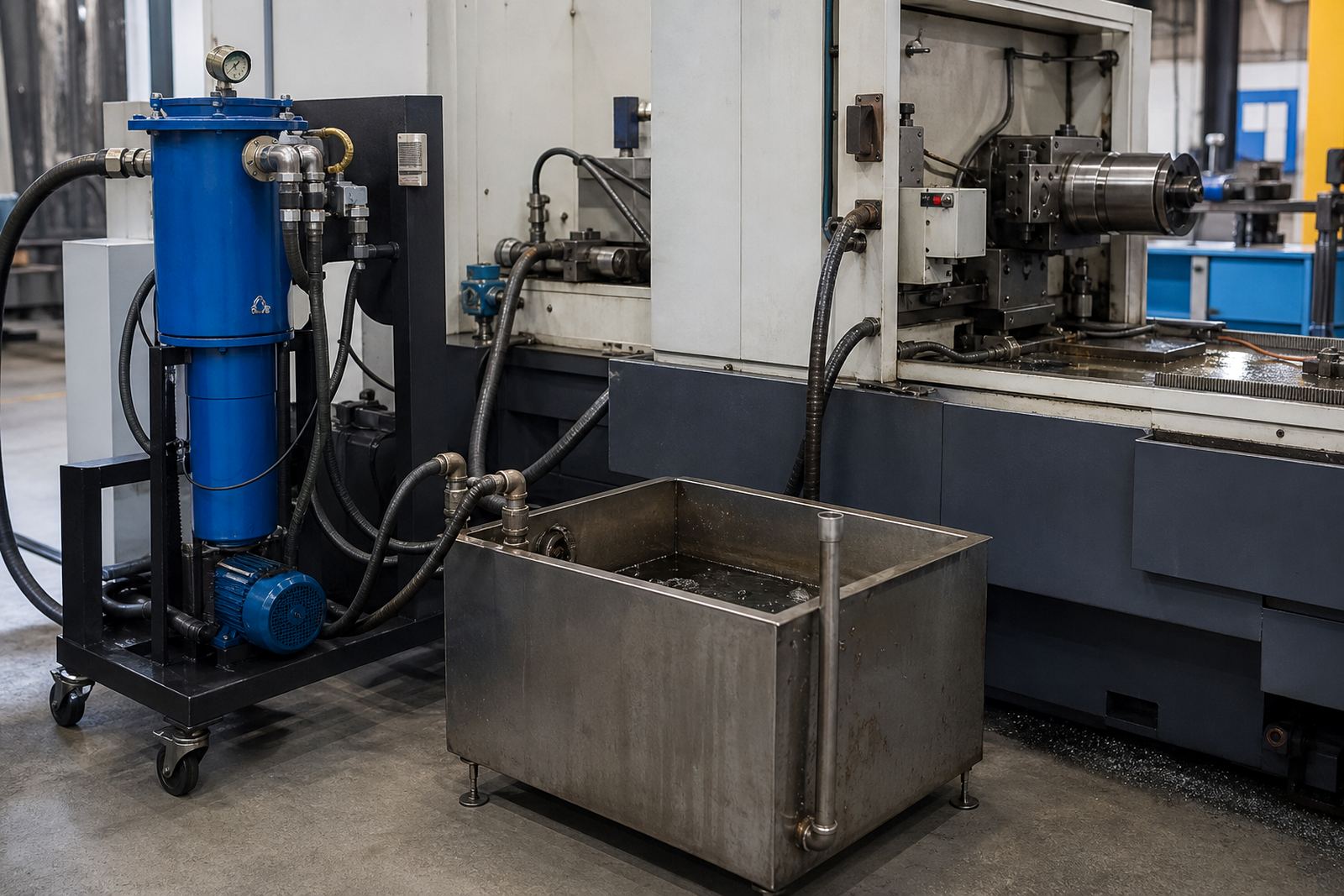
We support preventive maintenance, breakdown support, alignment checks, coolant system service and spare parts supply. Tooling selection also plays a part in care, because the wrong tool for the material can push the machine too hard and shorten service life. If a workshop is seeing changing finish quality, drilling noise or drifting cycle times, we can help troubleshoot the process and look at the likely cause before production slips further.
Training matters as much as the hardware. A capable operator still needs the right setup method, tool handling and inspection routine. Our training lead supports operator training on safe use, daily checks and basic fault awareness, so the team can spot trouble early.
What to check before you place the order
To specify a multi spindle unit properly, start with the part drawing and the hole layout. We need to know hole count, pitch, depth, diameter range, material type and whether the holes must be through holes or blind holes. It also helps to know the batch size, target cycle time and how the part is currently loaded. Without that information, it is difficult to match the spindle layout and tooling correctly.
Check the available power supply, workshop space and whether the machine will be used on one shift or more. If your operation runs in a coastal area, ask for advice on corrosion control and storage. If the workshop is in Gauteng and power interruptions are part of the week, let us know how you manage shutdowns and restart. That affects the way we plan commissioning and support.
If you already have fixtures, clamps or existing tooling, we can review what can be reused and what should be replaced. This saves time and helps avoid a unit that arrives ready on paper but not in the workshop. Clients reach us through the enquiry form on our contact page, and we then work through the requirements with the right team member.
- Hole count, pitch and depth
- Material type and finish requirement
- Power supply and space available
- Batch size and target output
- Existing fixtures or tooling to review
Key facts
| Machine type | Multi spindle drilling unit for repeated hole patterns |
|---|---|
| Spindle arrangement | Configured to suit the part layout |
| Application | Higher-throughput drilling on similar parts |
| Setup support | Installation, commissioning and alignment checks |
| Tooling | Selection and supply for the material and hole duty |
| Service support | Training, preventive maintenance, breakdown support and spare parts |