
What Tool Holders Do in Deep-Hole Drilling
In gun-drilling and deep-hole boring, the holder is part of the cutting system, not just an add-on. It keeps the tool aligned to the spindle or drive side, helps control runout and gives the cutting edge a steady feed path through long, narrow bores. If the connection is loose or mismatched, you will see poor hole finish, chatter, tool wear and more time spent on rework.
Tool holders are used where repeatability matters, especially on production parts with long bores, tight positional control or a need for consistent surface finish. They suit manufacturers and engineering shops working on hydraulic components, shafts, sleeves, mould components and other precision parts. In South Africa, where many shops run mixed jobs and shifting power conditions can interrupt a schedule, it helps to have holders that are dependable and easy to set up again after stoppages.
- Secure mounting for drilling and boring tools
- Better alignment and repeatability between jobs
- Reduced movement at the tool connection point
- Support for consistent hole quality over longer runs
Sizes, Shanks and Connection Options
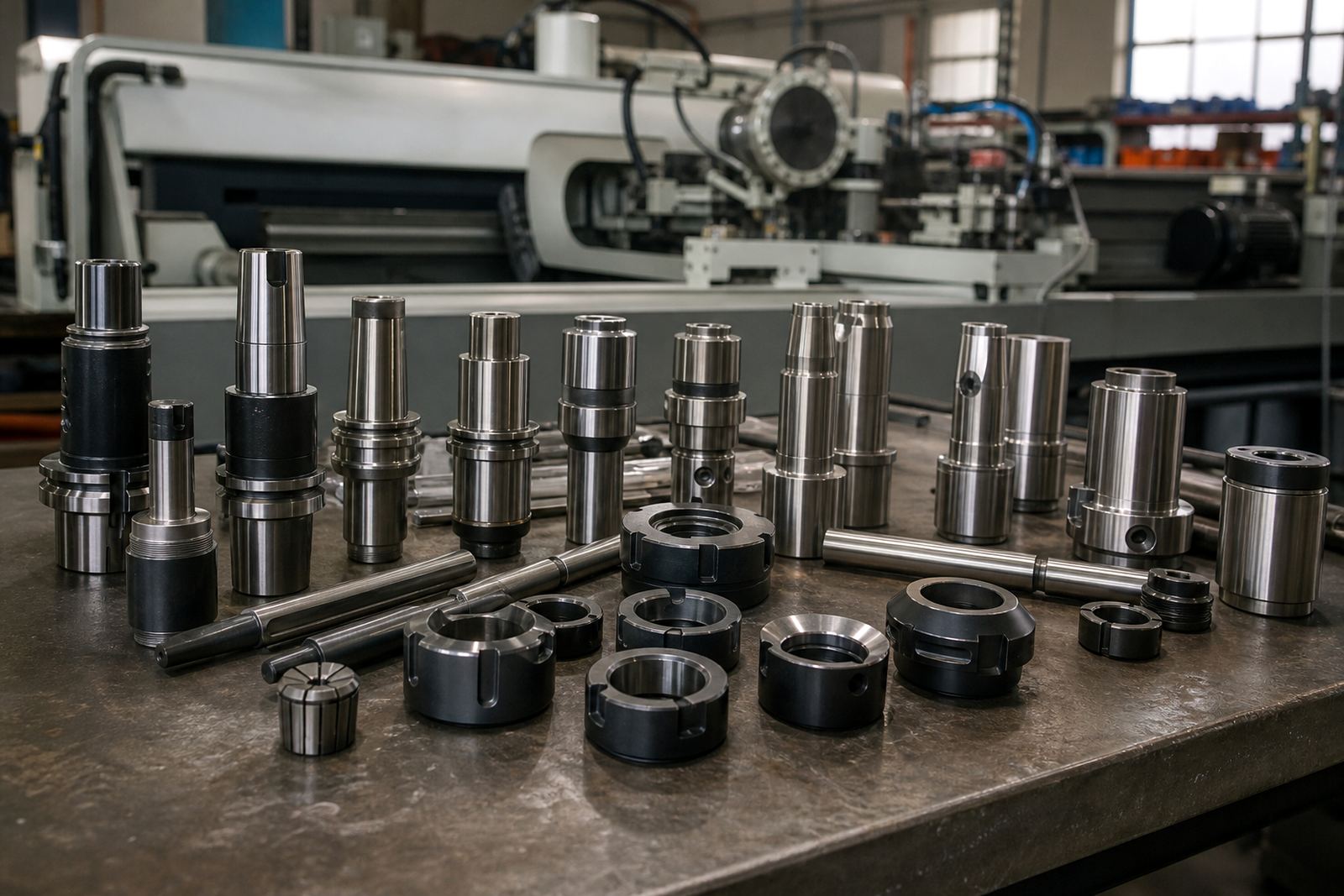
Tool holders are selected to match the machine interface, the tool body and the job itself. Common options include different shank sizes, taper styles and connection types for straight drilling, guide support or boring applications. The right choice depends on your machine spindle, the diameter of the tool being held and how much extension is needed for the part setup. Get the connection wrong and you lose the accuracy you paid for.
We help shops compare holders by the physical fit and the job requirement, not by guesswork. If a bore is long, a shorter and stiffer setup may be better. If access is limited, a longer connection might be needed but it must still stay within safe support limits. For some applications, interchangeable sleeves or adaptor pieces are useful when one machine handles more than one family of parts.
- Shank and taper options to suit machine interfaces
- Different bore diameters and clamping ranges
- Adaptor pieces for multi-machine use
- Options for drilling, boring and support applications
Where Tool Holders Suit the Work
These holders are used in workshops that machine parts for mining, general engineering, automotive repair parts, hydraulic systems and specialist fabrication. They are especially useful where a hole needs to stay straight over a long distance, or where the tool must hold position while cutting through dense material. For deep-hole work in Johannesburg, Pretoria or Durban, the holder often becomes the difference between finishing a job and spending half a shift correcting it.
Tool holders are also helpful in smaller engineering shops that do not have time for complicated set-ups every morning. A well matched holder makes changeovers quicker and reduces the chance of an operator forcing a tool into the wrong connection. In coastal areas like Cape Town and Gqeberha, the holder and mating components also need regular cleaning to keep dust, coolant residue and humidity from building up around the connection points.
- Deep-hole drilling and boring production lines
- Jobbing shops running mixed precision work
- Plants needing quicker tool changeovers
- Coastal and inland sites with daily production pressure
Installation, Power and Machine Setup Checks
Tool holders themselves do not need power, but they must suit the machine setup around them. Before installation, check spindle condition, taper cleanliness, locking surfaces and the available clearance for feed, coolant and chip removal. If the holder is fitted to a machine with poor alignment, the tool will follow that error through the bore. That is why alignment checks and setup optimisation are part of the service work Deephole supports from Benoni to the rest of Gauteng and beyond.
For production machines, make sure the coolant delivery path is clear and that the holder does not interfere with the flow needed for deep-hole cutting. On some jobs, compressed air may be used for chip clearing or auxiliary support, depending on the machine and process. Stable electrical supply matters for the machine running the holder, especially during load-shedding or after power interruptions when a restart check is wise before production continues.
- Clean spindle and mating surfaces before fitment
- Check alignment before first cut and after any impact
- Confirm coolant path and chip clearance
- Recheck setup after power interruptions or machine movement
Care, Servicing and Long-Term Use
Tool holders last longer when they are cleaned after use, stored properly and inspected for wear on the contact surfaces. Fine scoring, burrs, looseness or visible damage can affect runout and tool life. In deep-hole work, a small defect in the holder can show up as a bigger problem in the bore, so routine inspection is worth the time.
We recommend checking holders during scheduled preventive maintenance and after any crash, binding event or unusual vibration. Service teams should also look at the coolant system, seal condition and any adaptor pieces used with the holder. In humid areas or where coolant mist hangs around the machine, wipe down the holder and connection components before storage. That simple step often saves trouble on the next shift.
- Clean and dry holders before storing them
- Inspect for scoring, burrs and wear marks
- Check locking faces and adaptor condition
- Include holders in preventive maintenance schedules
What to Check Before Ordering
When ordering a tool holder, have the machine details, tool diameter, connection style and intended job ready. You should also note whether the holder is for gun-drilling, deep-hole boring or another related setup. If the holder must work with existing tooling, bring the dimensions of the parts already in use so the fit can be confirmed before supply. That avoids delays on the shop floor and helps keep production moving.
It also helps to tell us where the holder will be used, what material is being machined and whether the shop needs training, setup support or spare parts backup. Deephole supports manufacturers and engineering shops across Johannesburg, Pretoria, Durban, Cape Town and Gqeberha, with support from our Benoni base. For many customers the right holder is only part of the answer, the rest is correct setup and after-sale help when the line needs it.
- Machine model and spindle interface
- Tool diameter, length and application type
- Required bore size and workpiece material
- Whether you need installation, training or support
Key facts
| Product type | Tool holders and connection components for deep-hole drilling and boring |
|---|---|
| Use | Secure mounting of drilling and boring tools in precision machine setups |
| Common interfaces | Shank, taper and adaptor-based options |
| Size range | Selected to suit the machine and tool diameter, confirm on enquiry |
| Support | Installation, commissioning, alignment checks and setup optimisation |
| Service areas | Benoni, Johannesburg, Pretoria, Durban, Cape Town, Gqeberha and wider South Africa |