

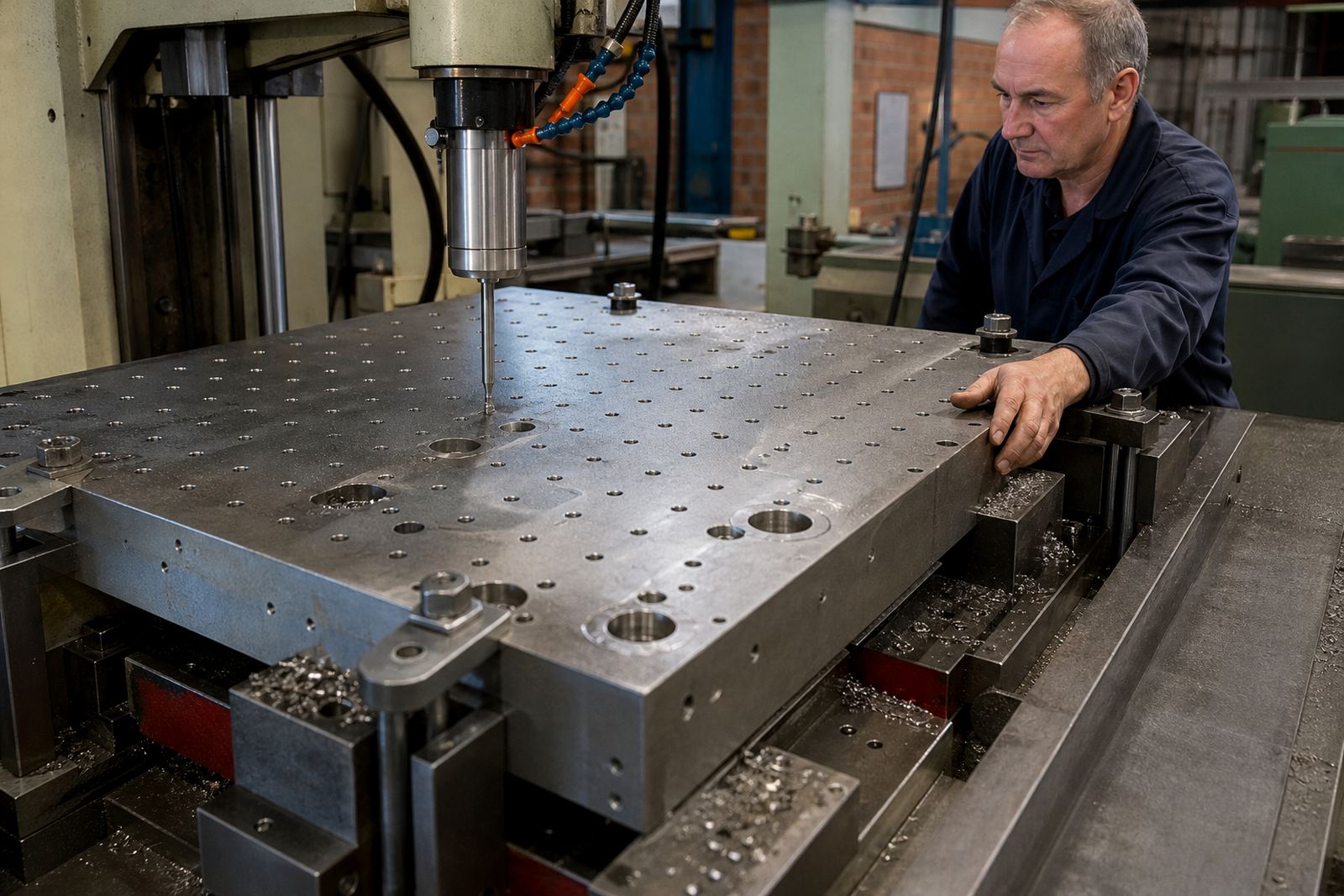
Tube Sheet Driller
Home / Machines / Tube Sheet Driller

Machines

Tube Sheet Driller

A tube sheet driller is used for repeated hole patterns in tube sheets, channel plates and similar plate work where position, repeatability and straightness matter. Deephole supplies the machine, tooling, setup and support needed to get the job running in South African workshops.

Purpose-built for repeated hole patterns

A tube sheet driller is made for jobs where the same hole size and spacing must be repeated over and over, with consistent alignment across a plate. It is commonly used on tube sheets, exchanger plates and other thick plate work where manual drilling can cause wander, uneven entry and poor finish.

For workshops in Johannesburg, Pretoria, Durban, Cape Town and Gqeberha, this type of machine helps reduce rework and keeps production moving when a job has many holes to complete. It is suited to manufacturers and engineering shops that need controlled drilling on small batches or repeat orders, not just one-off work.

The right setup depends on the plate thickness, hole count, material type and the accuracy you need on the finished component. Deephole assists with machine selection, tooling and commissioning so the machine is matched to the actual job on the floor.

Where a tube sheet driller fits in the workshop

This equipment suits plants and shops that work with heat exchangers, pressure-related assemblies, boiler parts and plate components that need a pattern of accurate holes. It is also useful where the job calls for stable drilling through stainless steel, carbon steel or similar materials, with a repeatable process rather than hand-held drilling.

  • Tube sheets and plate work with many holes in a set pattern
  • Repeat production runs where spacing must stay consistent
  • Engineering shops needing cleaner results than manual drilling
  • Jobs where setup time matters and alignment must be controlled

In coastal areas such as Durban and Gqeberha, humidity can affect tooling and stored components, so proper storage and routine care matter. In Gauteng, dust and load-shedding can interrupt production, which is why dependable setup and practical support are important from the start.

Machine sizes, options and tooling choices

Tube sheet drilling machines are selected around the plate size, hole pattern, work envelope and the type of tooling needed for the material. Options may include a suitable clamping arrangement, guided drilling setup, alignment aids and tooling matched to the hole diameter range required on the job.

Because every shop works differently, Deephole focuses on the job spec rather than selling an oversize machine that takes up space and power without adding value. The aim is to get the right machine for the drilling pattern, the material and the required output rate.

  • Machine configuration based on plate size and hole layout
  • Tooling selection for the material and hole diameter range
  • Setup support for repeatability and accurate positioning
  • Operator training so the process stays consistent on shift

For many sites, the practical question is not just whether the machine can drill the holes, but whether it can do so day after day with the same result. That is where setup quality and correct tooling make a real difference.

Power, installation and workshop requirements

Before installation, the workshop needs enough floor space, a level base and clear access for loading the workpiece safely. Power requirements depend on the selected machine and drive arrangement, so Deephole confirms the needs during quotation and planning rather than guessing on site.

If compressed air, gas or coolant service is part of the process, those requirements must be checked early. The same applies to lifting access, machine placement and any local site rules that apply in an industrial area or factory environment. In some plants, the main issue is not the machine itself but where it can be positioned for safe handling of heavy plates.

  • Confirm available power supply before delivery
  • Check floor loading and access for the plate size handled
  • Plan coolant, air or gas connections where needed
  • Allow space for loading, unloading and maintenance access

Deephole handles machine installation, commissioning and alignment checks so the machine is ready for production startup, not just standing in the workshop. That reduces lost time during the first few jobs.

Care, servicing and keeping output consistent

A tube sheet driller needs regular care to keep the holes straight and the tooling working properly. Routine checks help prevent early wear, poor surface finish and the kind of small errors that become expensive after a full plate is drilled. This includes coolant system service, alignment checks, tooling inspection and preventive maintenance.

For shops running on tight schedules, breakdown support and spare parts support are just as important as the machine itself. If a tool wears unexpectedly or a setup drifts, the job can stall fast. Deephole provides service coordination and technical support to help keep production moving.

  • Check alignment before each new job or pattern change
  • Inspect tooling for wear, chips and loss of cutting quality
  • Maintain coolant quality and flow for cleaner drilling
  • Schedule preventive maintenance before a busy production run

A well-kept machine also makes operator training easier, since the process stays predictable from shift to shift. That matters in workshops with rotating staff or where one person handles more than one machine.

What to confirm before ordering

When ordering a tube sheet driller, start with the hole pattern, material type, plate thickness and the tolerance expected on the finished work. It also helps to know whether the job is a one-off, a recurring contract or a production run with steady volume. These details guide the machine choice and the tooling package.

Deephole will usually ask for the following so the recommendation fits the job properly:

  • Plate size and thickness
  • Hole diameter range and pattern spacing
  • Material to be drilled, including stainless or carbon steel
  • Target output, batch size and repeat frequency
  • Available power and workshop layout
  • Any tooling, setup or training support needed after delivery

For manufacturers and engineering shops across South Africa, the best result comes from matching the machine to the actual work and not just the brochure. That approach saves time, reduces waste and makes the drilling process easier to run when production picks up.

Support from Benoni to the rest of South Africa

Deephole is based in Benoni, Gauteng and supports customers across Johannesburg, Pretoria, Durban, Cape Town and Gqeberha. The team includes sales, applications, service and tooling support, so customers can get help with selection, setup optimisation, troubleshooting and production startup.

Whether the job is for a new installation or an existing line that needs attention, the focus stays on practical support that works in a South African workshop. Clients reach the team through the enquiry form on the contact page, which keeps the first step simple and direct.

Key facts

Machine typeTube sheet drilling solution for repetitive hole patterns
Typical useTube sheets, exchanger plates and similar plate work
Drilling processConfigured for controlled, repeatable hole placement
ToolingSelected to suit material, hole diameter and production needs
Installation supportMachine installation, commissioning and alignment checks
After-sales supportTraining, breakdown support, spare parts and preventive maintenance

What our Deep-Hole Drilling customers say

Verified Google reviews

Questions we get asked

What is a tube sheet driller used for?

It is used for repeated hole patterns in tube sheets and similar plates where accuracy, repeatability and a cleaner drilling result are needed.

Can Deephole help with setup and commissioning?

Yes. Deephole handles installation, commissioning, alignment checks, tooling selection and operator training so the machine is ready for production.

What should I send before requesting a quote?

Send the plate size, thickness, hole diameter range, pattern spacing, material type and any power or site limits that affect installation.

Planning something? Send the team a message.

Contact form