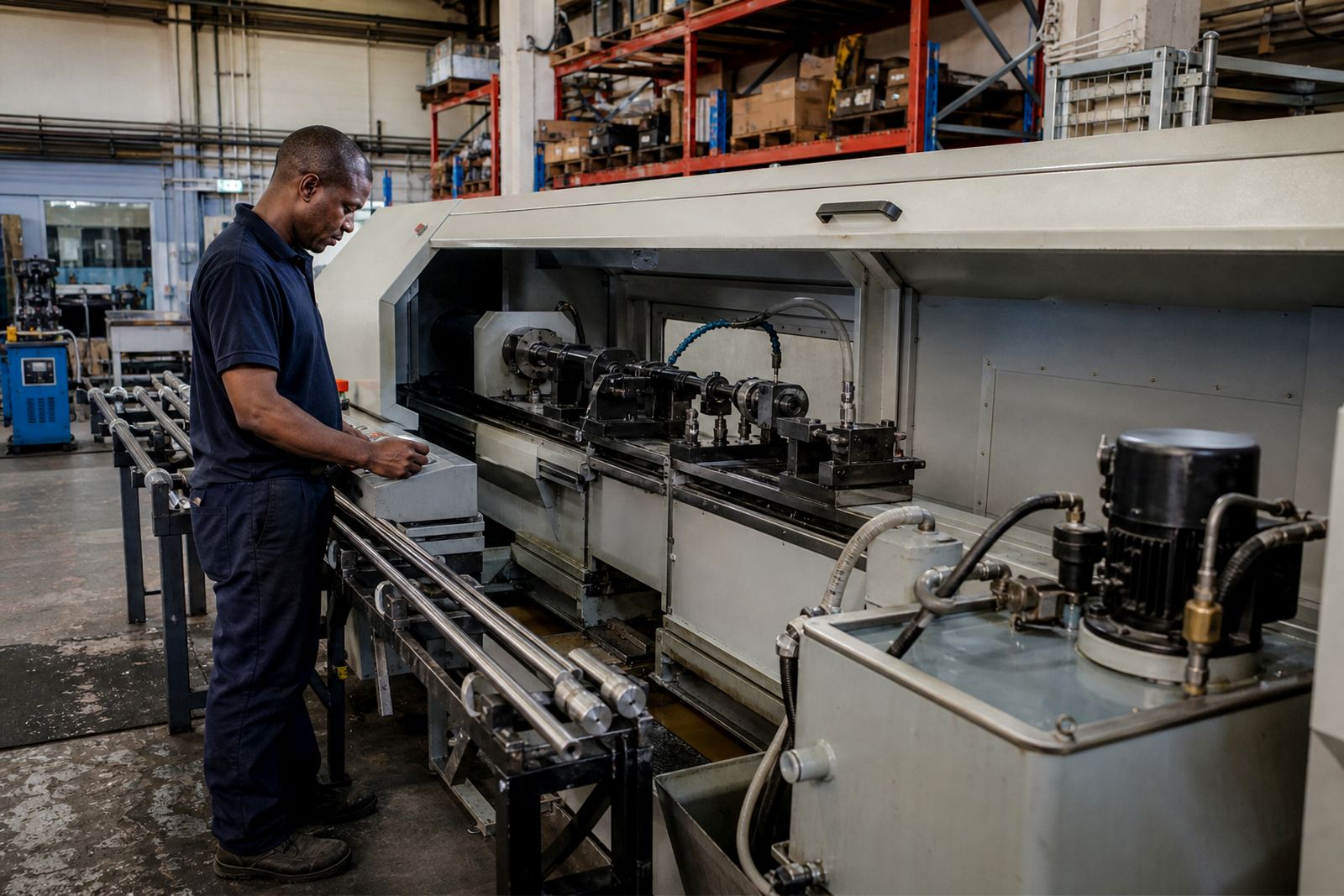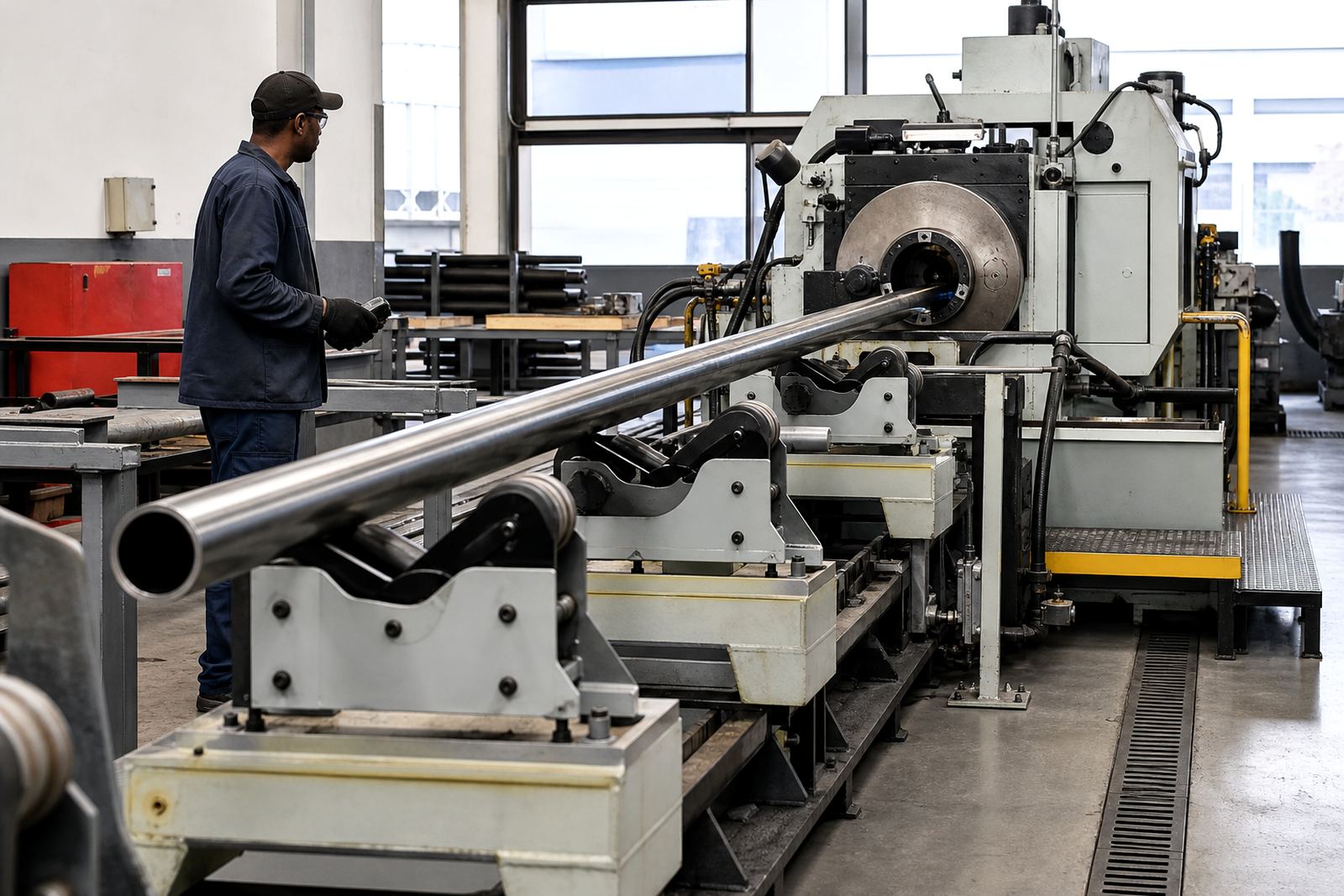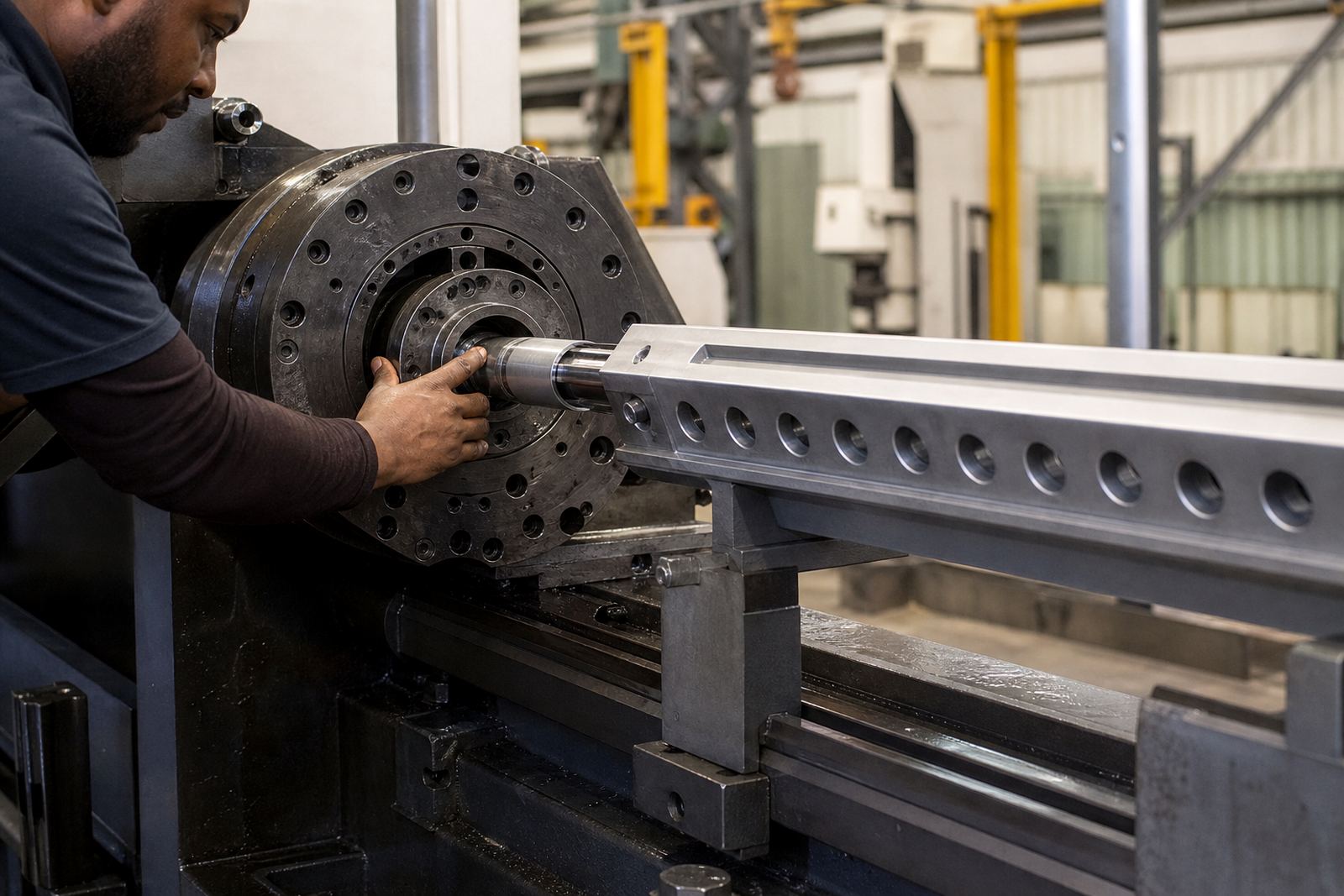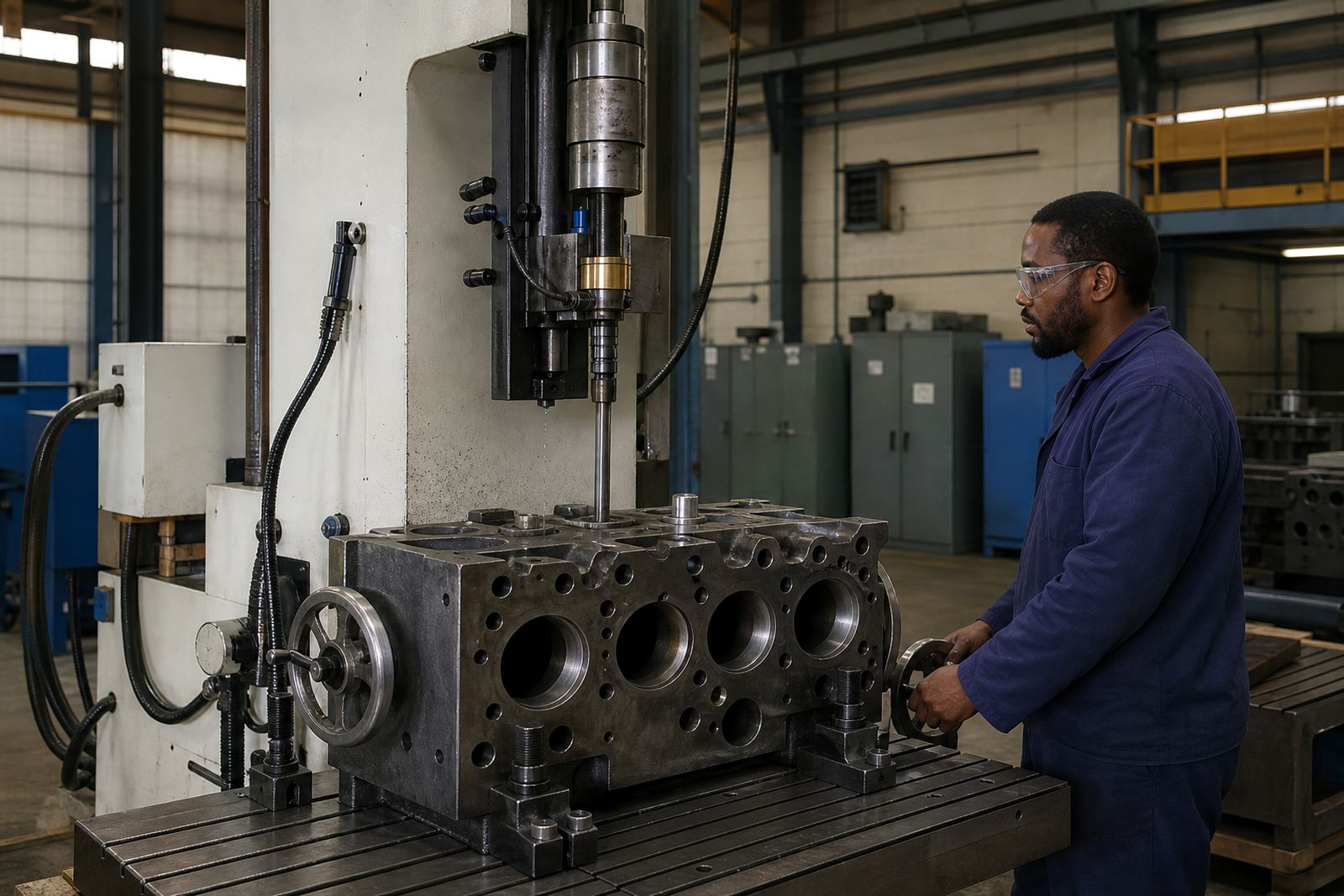
Vertical machine layout for awkward parts and tighter floorspace
A vertical machine is used when the part is better handled upright, or when the workshop layout calls for a smaller footprint and easier access from the front. In gun-drilling and deep-hole boring work, that can make a real difference on the shop floor, especially where cranes, hoists or manual loading points already exist. The setup can suit selected part geometries, but it is not the right answer for every job, so the workpiece, hole direction and loading method need to be checked first.
For South African manufacturers, a vertical arrangement can help where floor planning is tight in Benoni, Germiston, Pretoria or Durban, or where a production bay must stay clear for other equipment. It also helps when the part needs to stand naturally in fixtures, with better chip flow and cleaner access around the machining zone. That said, the final choice should always follow the part drawing, material and process route, not just the available floor space.
Sizes and configuration choices to ask about
We do not treat vertical machines as one fixed package. The right setup depends on bore size, part length, work envelope, spindle arrangement, guiding method and the tooling needed for the job. When you enquire, it helps to share your drawing, material spec, target bore tolerance and the daily output you need. That lets the machine and tooling be matched properly instead of forcing a general-purpose fit.
- Machine configuration suited to the part orientation and loading method
- Workholding and fixture planning for stable vertical setup
- Tooling package for the hole diameter, depth and material
- Coolant delivery and chip handling options for the process
- Control and operator interface options for production use
- Training and support plan for setup, alignment and handover
If you are replacing an older machine, it is worth checking whether your current tooling can be reused or if new guides, holders or coolant accessories will be needed. In many shops, small differences in the setup can affect bore quality more than people expect, so the quote should reflect the full process, not just the machine frame.
Where a vertical configuration suits best
Vertical gun-drilling and deep-hole boring is commonly considered for shafts, bodies, valve parts, hydraulic components and other long or deep bore applications where controlled hole formation matters. It can suit manufacturers that run repeat work, engineering shops handling repair and production, and operations that need dependable alignment checks before they start cutting. The machine is less about show and more about repeatable setup, which is what most production teams need.
This configuration can be a practical choice when chips must clear cleanly and the workpiece can be secured upright without strain on the setup team. It can also help in plants where overhead lifting is already in place, or where the workshop wants to keep access clear around the machine base. In coastal areas like Durban or Gqeberha, the machine room should also be planned for humidity, corrosion control and proper storage of tooling. A dry, organised area saves time and avoids the kind of small faults that slow a shift down.
- Better suited to selected upright part geometries
- Useful where floor space must be planned carefully
- Common in production and repair environments
- Can support stable loading with proper lifting aids
- Needs clean chip removal and correct coolant routing
Installation, power and site preparation
Installation starts with the site, not the machine. The floor must be level and able to carry the load, the service area must allow access for maintenance, and the route into the workshop must suit the equipment size. In Benoni, Johannesburg, Pretoria and across Gauteng, many installations are delayed by poor access planning or a missing lifting point. It is better to measure the doorway, bay height and floor conditions before the unit arrives.
Power requirements depend on the selected machine and its controls, so the supply must be confirmed before delivery. In some sites, a clean electrical feed, proper earthing and stable protection are the difference between smooth commissioning and ongoing trips during load-shedding recovery. Compressed air may be needed for certain accessories or machine functions, while gas is normally not part of a standard deep-hole drilling installation. If your plant uses backup generation, it must be checked against the starting load and control sensitivity before production starts.
- Confirm incoming electrical supply and earthing
- Check floor level, access width and lifting route
- Plan coolant fill, drainage and chip disposal
- Allow space for tool setting and operator movement
- Verify any compressed air needs before commissioning
Tooling, setup and process support
A vertical machine performs properly only when the tooling, setup and support process are right from day one. Deephole assists with tooling selection, alignment checks, setup optimisation and operator training so the machine can be used with confidence. We also support process troubleshooting when bore finish, straightness or chip control starts to drift. That support is practical and hands-on, not just advice from a distance.
Our team in Benoni works with manufacturers and engineering shops across South Africa, including Johannesburg, Pretoria, Durban, Cape Town and Gqeberha. Ayanda Mokoena handles sales enquiries, Johan Smit supports applications, Noluthando Dlamini coordinates service, Francois du Plessis handles machine support, Leanne Naidoo leads training and Sibusiso Khumalo supports tooling. When a plant is under pressure to get a line moving again, the first call should go to someone who understands the machine and the job, not just the paperwork.
If your team is new to deep-hole work, training should cover setup order, tool handling, coolant checks, chip management and safe production startup. Small habits matter. A clean filter, correct alignment and steady operator routine often save more time than expensive fixes later on.
Care, servicing and what to confirm before ordering
Before ordering a vertical machine, check the part drawing, material grade, bore depth, tolerance, quantity and loading method. It also helps to confirm whether the job needs just gun-drilling or a mix of drilling and deep-hole boring. If the part family may change later, ask whether the selected configuration can be adapted without major rework. A little planning here avoids costly surprises later.
For ongoing care, plan routine cleaning, coolant checks, filter attention, alignment checks and preventive maintenance. In coastal or dusty environments, stored tooling should be protected and the machine area kept dry and tidy. Bearings, guides and coolant systems need regular attention, especially where production runs are long or where power interruptions can affect start-up and shutdown routines. Our service support includes breakdown response, spare parts support and coolant system service where needed, so the machine stays in production instead of sitting idle.
- Check part geometry and bore requirements first
- Confirm floor space, lifting and access routes
- Match tooling to material and hole depth
- Plan training for operators and setters
- Set a maintenance schedule from the start
Key facts
| Machine type | Vertical configuration for selected gun-drilling and deep-hole boring applications |
|---|---|
| Use case | Parts that suit upright loading, controlled chip flow and planned floor-space use |
| Tooling | Selected per hole diameter, depth, material and process requirement |
| Installation needs | Level floor, safe lifting route, electrical supply, coolant and access space |
| Utilities | Power required; compressed air may be needed for some functions; gas is not standard |
| Support | Machine installation, commissioning, training, maintenance and breakdown support |