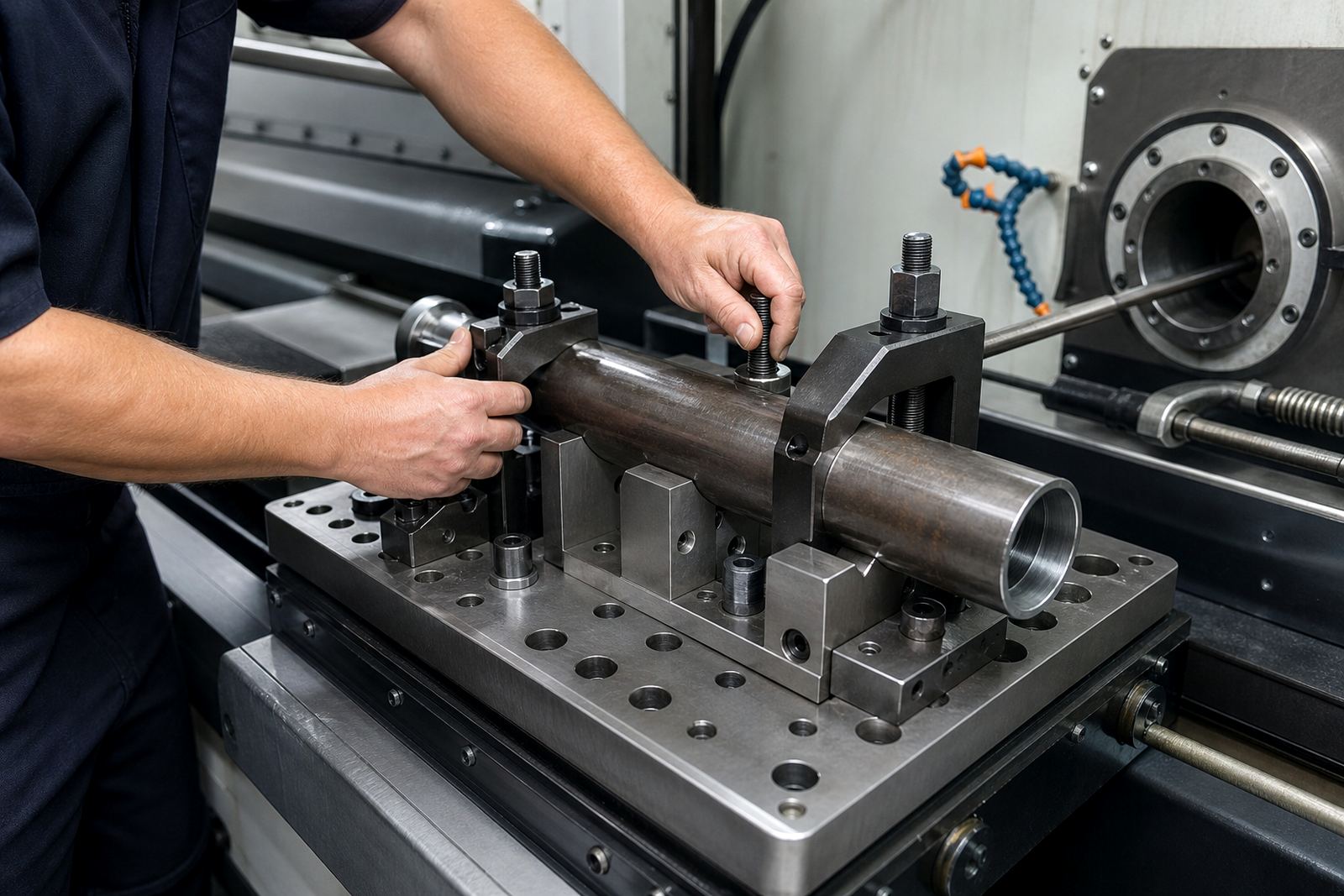
Purpose-built fixturing for deep-hole work
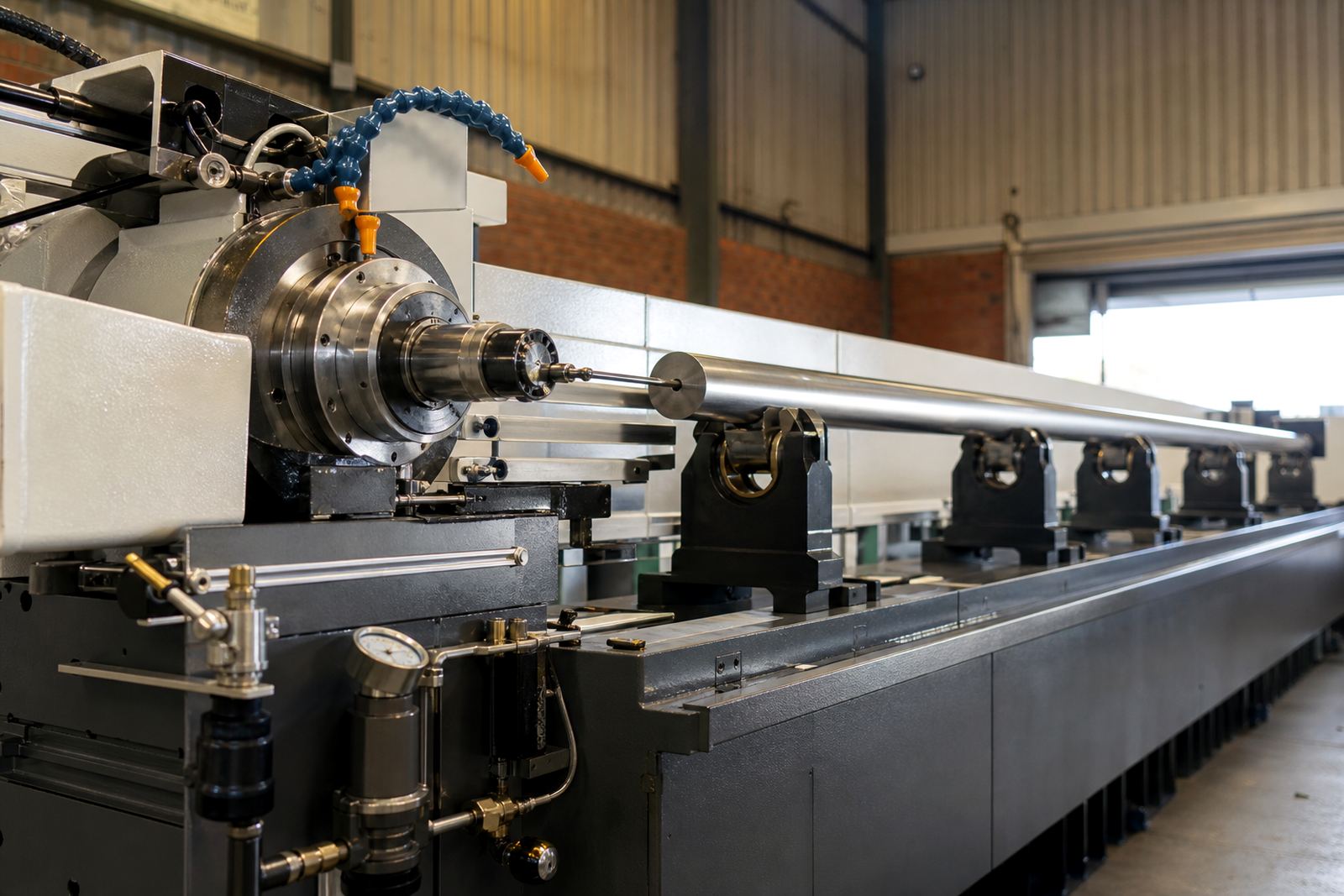
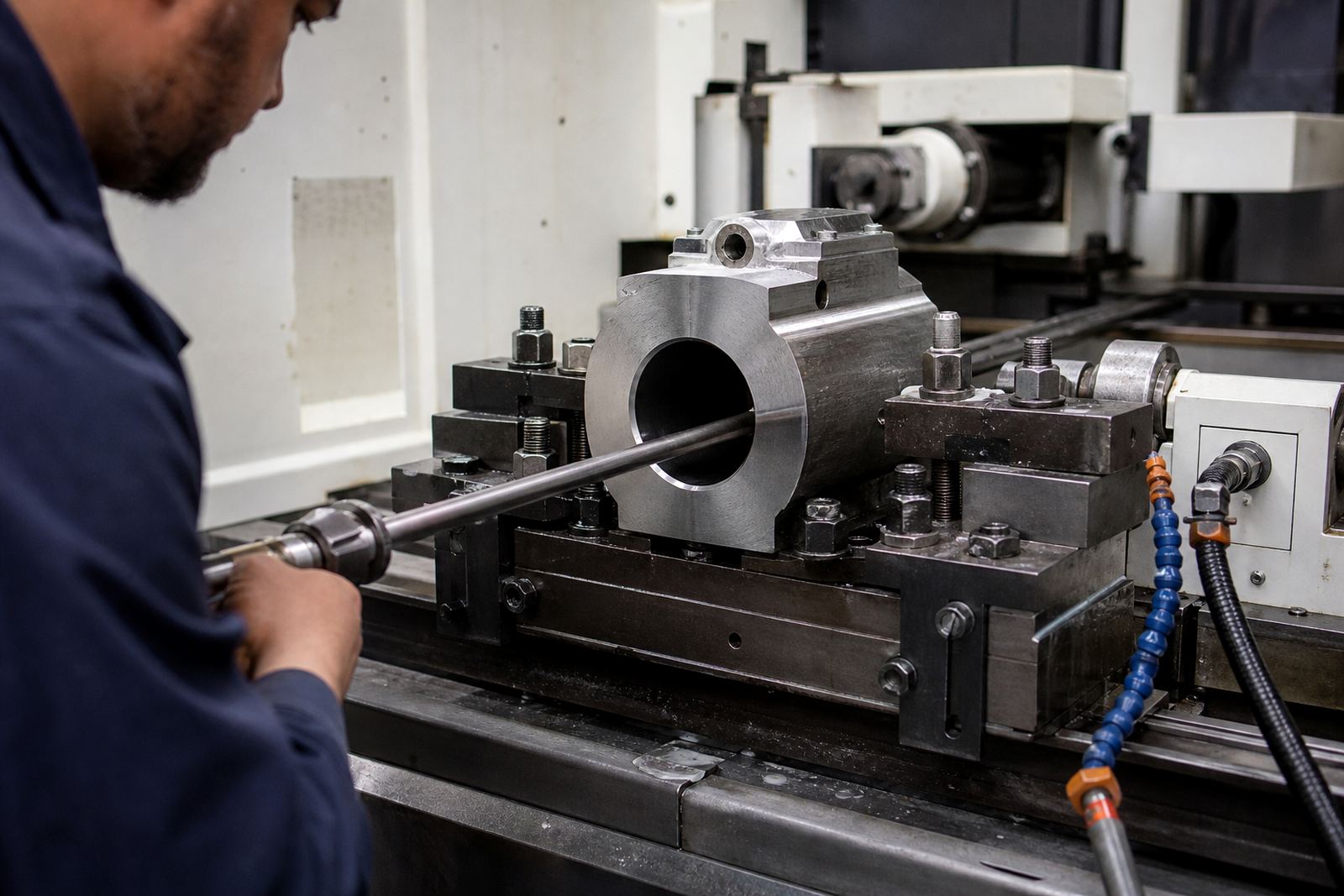
Workholding fixtures are the part of the setup that keeps a component centred, supported and repeatable while the drill or boring bar is running. On deep-hole jobs, small movement at the clamping point can become a bigger problem down the length of the hole, so the fixture has to hold firmly without distorting the part. That matters on shafts, tubes, hydraulic parts, mould inserts and other long workpieces where straightness and finish are critical.
Deephole supplies fixtures and clamping arrangements for gun-drilling and deep-hole boring machines, with support from our Benoni base and coverage into Johannesburg, Pretoria, Durban, Cape Town and Gqeberha. We assist with selection, installation, alignment and production startup, so the fixture matches the machine, the tooling and the actual job on your floor.
Common fixture types and options
The right fixture depends on part length, diameter, wall thickness and how the component is loaded and unloaded. Some jobs need simple vee supports and clamping pads, while others need more controlled location with end stops, guide bushes or custom supports for repeat runs.
- Fixed and adjustable clamp arrangements for repeat setups
- Vee blocks, support saddles and locating stops for round stock
- Custom holding plates for awkward shapes or thin sections
- Guide bush arrangements for drilling entry control
- Quick-change elements for shops running mixed batches
We help match the fixture to the machine table, spindle line and coolant delivery point. If the part is long or flexible, the support points must be planned before the first cut, not corrected afterwards. In many cases a small change in clamp position can improve hole tracking and reduce chatter.
Sizes, materials and build choices
Fixtures can be supplied as standard arrangements or built for a specific part family. Material choice depends on wear, coolant exposure and the level of adjustment needed. For coastal areas such as Durban or Gqeberha, corrosion resistance and easier cleaning are worth considering because coolant mist and humidity can affect hardware if it is left unprotected.
- Manual or assisted clamping, depending on throughput
- Steel, plated steel or other wear-resistant components where required
- Machined contact faces for accurate location
- Replaceable pads, bushes and wear parts for longer service life
- Options for right-hand, left-hand or central loading layouts
We do not force one standard size across all jobs because deep-hole work is too varied. What suits a short hydraulic body in Pretoria may not suit a long shaft in Cape Town. The fixture should suit the machine table, the hole position and the operator workflow, otherwise setup time stretches out and consistency suffers.
Where these fixtures suit best
These fixtures are used where hole straightness, repeatability and safe handling are important. Typical applications include engineering shops, component manufacturers, rebuild workshops and production lines that run shafts, sleeves, die components, valve bodies and similar parts. They also suit contract shops that need to change from one job to the next without losing alignment.
Deep-hole work is sensitive to poor support. If the part flexes, the drill can wander or the bore can open up unevenly. A properly planned fixture reduces that risk and helps the operator keep to target position from the first hole to the last. It also makes loading safer, especially with longer parts that are awkward to lift by hand.
Installation, power and service needs
Most workholding fixtures are mechanical items, so they do not usually need dedicated electrical power. If the arrangement includes assisted clamping, sensors or linked controls, then the machine and the fixture must be checked together during installation. Air supply or hydraulic supply may be needed on some setups, depending on how the clamping action is designed.
- Level the machine and fixture before alignment checks
- Confirm clamp reach, stroke and access for the operator
- Check that coolant lines and chip flow are not blocked
- Allow space for loading, inspection and safe release
- Verify any pneumatic or hydraulic connections before production
Our team can handle installation, commissioning and alignment checks. We also support breakdowns, spare parts and coolant system service where the fixture forms part of the wider machining setup. If your shop runs during load-shedding windows, stable backup power for the machine and coolant system should be planned, even if the fixture itself is manual.
What to check before you order
Before ordering, it helps to have the part drawing, material type, finished hole size, hole depth and loading method ready. We also need to know whether the job runs on a gun-drilling machine or a deep-hole boring setup, because the clamping and support arrangement can differ. If you already have a fixture in place, bring photos and measurements so we can see where the current setup is struggling.
- Part length, diameter and weight
- Hole location, depth and tolerance requirement
- Batch size and how often the job repeats
- Machine table size and available mounting points
- Need for manual, pneumatic or hydraulic clamping
Deephole’s support team in Benoni works with manufacturers and engineering shops across South Africa, including Johannesburg, Pretoria, Durban, Cape Town and Gqeberha. If you need fixture advice, tooling selection or process troubleshooting, send an enquiry through our contact page and we will help you work out the best setup for the job.
Key facts
| Product type | Workholding fixtures and clamping arrangements for deep-hole machining |
|---|---|
| Typical use | Gun-drilling and deep-hole boring setup on long or sensitive parts |
| Options | Manual, assisted, custom and quick-change arrangements |
| Materials | Machined steel and wear-resistant contact components where required |
| Utilities | Usually none, with pneumatic or hydraulic options on some setups |
| Support | Installation, commissioning, alignment checks, training and servicing |