
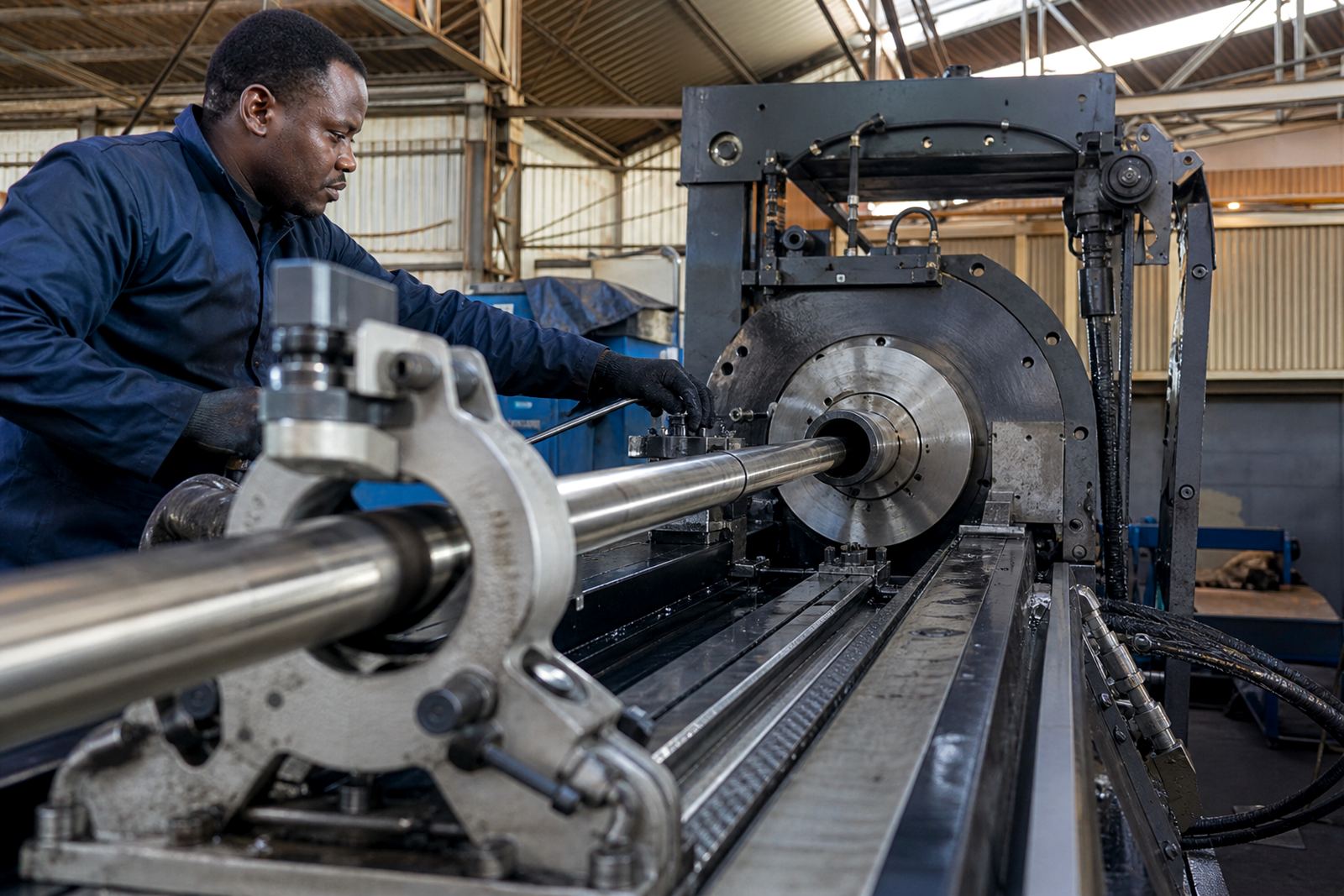
Where deep-hole machining shows up in energy work
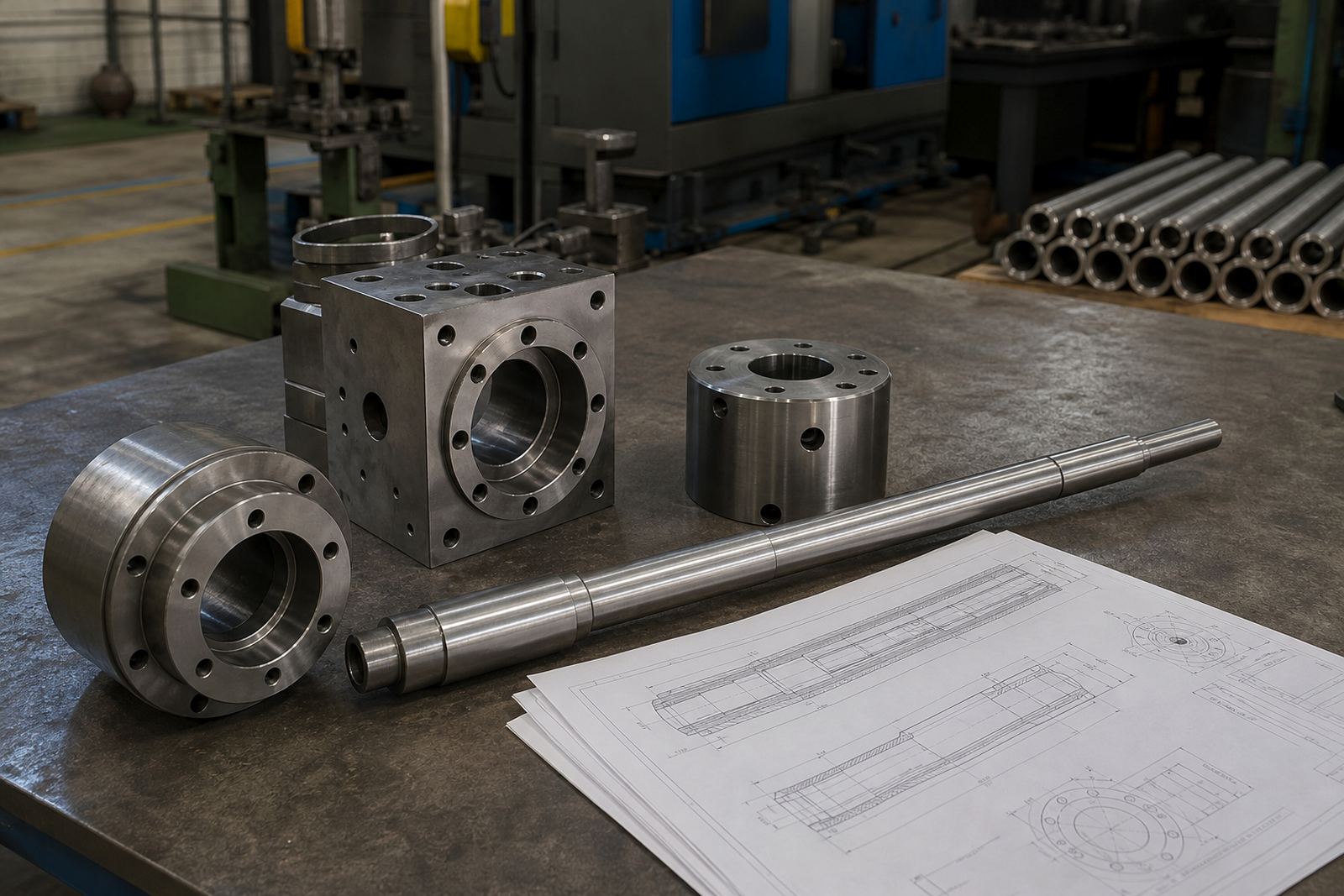
Energy components often ask for long, accurate bores that must stay consistent over several parts and across long production runs. In that work the machine, tooling and setup matter as much as the drawing. We work with shops making and repairing parts for turbine systems, heat exchange equipment, hydraulic assemblies, valve bodies and other industrial energy items where drilling wander or poor chip evacuation can waste expensive stock.
Many clients come to us when they are moving from general machining into more demanding internal drilling. The first concern is usually not only the machine, but whether the whole process can be supported on their floor with the staff they have. That means looking at part size, material type, coolant handling, floor space, lifting access and how the job will fit into the rest of the production flow.
For energy work, a machine may be sound on paper but still struggle if the workshop does not have the right tooling package, workholding or operator method. That is why we start with the application, then match the equipment and support to the job, not the other way round.
Typical machine set and tooling for this type of job
Most energy component work needs a machine set up for controlled drilling, repeatable alignment and dependable coolant delivery. Depending on the job mix, that can include a gun-drilling machine, a deep-hole boring machine, or a combination of both in the same production cell. The key is to choose a system that suits the material, hole depth and batch size rather than trying to force one process to do everything.
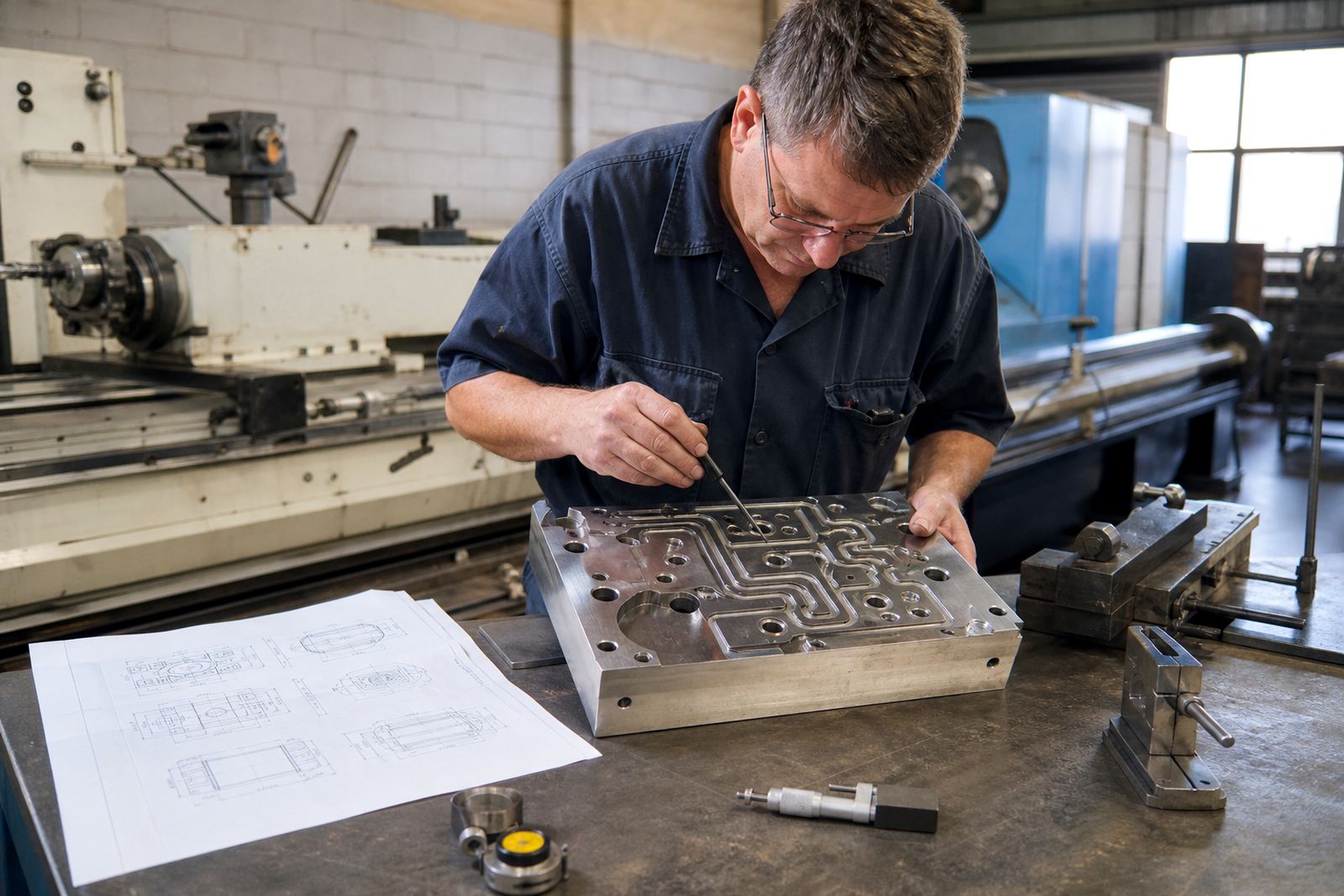
Tooling is just as important. The usual package may include drills, guide systems, boring heads, tool holders, bushings, alignment aids and measuring equipment for process checks. We also spend time on coolant system service, because poor filtration or weak circulation can cause finish problems, tool wear and unnecessary stoppages. In a coastal area like Durban or Gqeberha, this can become even more important because moisture and corrosion can affect storage and changeover habits.
- Gun-drilling machine for straight, controlled holes in repeated production
- Deep-hole boring machine for larger internal diameters and finishing work
- Tooling selection matched to material, depth and surface finish target
- Coolant, filtration and chip removal planning from the start
- Alignment checks and test runs before full production release
Planning the floor layout before the machine arrives
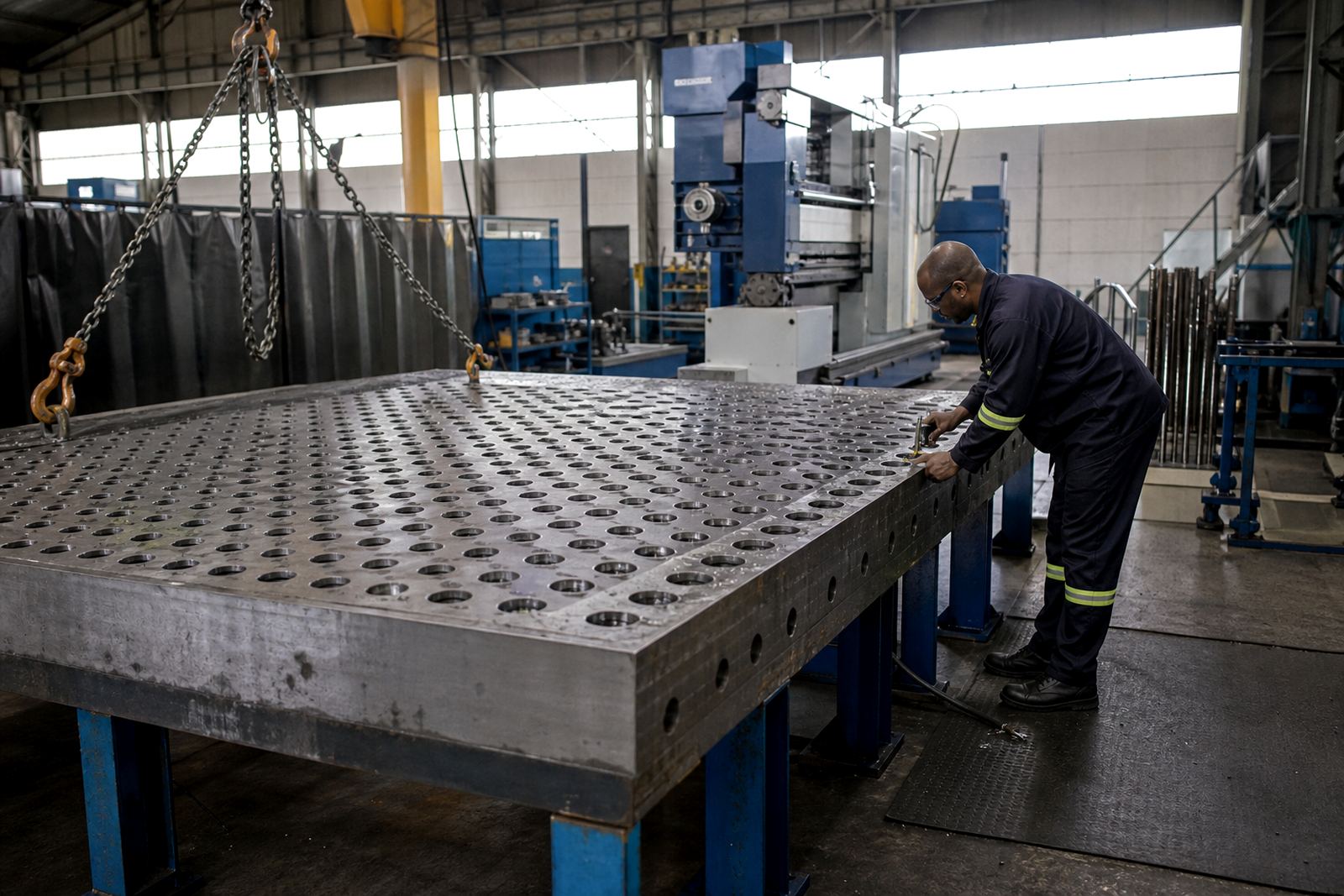
Good layout planning saves time later. In Benoni and the East Rand many workshops already have limited floor space, shared power points and forklifts moving through the same area. For energy component work, the machine should be placed where loading, unloading and inspection can happen without crossing traffic routes or forcing operators to lift parts by hand.
Think through the full workflow: raw material storage, machine access, tool setting, coolant service, chip removal and final inspection. If the job needs regular adjustments, leave space for safe access around the control side and the service side. It also helps to allow room for training and troubleshooting, because the first few weeks of production usually expose small issues in setup or handling.
Load-shedding and power interruptions also matter. A workshop running deep-hole operations should plan for orderly shutdowns, restart checks and control of unfinished workpieces. We often advise clients to map out what happens if a cycle stops mid-job, who checks alignment after power returns and how coolant and pumps are protected. That planning reduces scrap and keeps the team calmer when supply is interrupted.
- Leave clear access for loading, tool changes and routine maintenance
- Separate the machine from heavy traffic and contamination points
- Plan for power interruptions and controlled restart procedures
- Provide inspection space for gauges, sample parts and quality checks
Common mistakes we see on energy component projects
The most common mistake is underestimating the process support around the machine. A shop may budget for the unit itself, then leave too little for tooling, setup work, spare parts and training. That creates delays when the first real production order lands. Another problem is assuming that a generic drilling approach will handle every material in the same way. Energy components often involve difficult materials and long running times, so tool selection and coolant management need proper attention.
We also see workshops rush the installation and then try to fix alignment later during production. That usually costs more than taking the time to commission properly. A careful machine commissioning process, followed by alignment checks and process troubleshooting, is far cheaper than correcting a batch of poor parts. In some cases the issue is simple, like a coolant setting or a fixture position but it still needs someone who knows what to look for.
Another trap is not assigning a clear operator responsibility. If more than one person changes setup without a common method, the process becomes inconsistent. This is where operator training and a written startup routine make a real difference.
Budget ranges in Rand for a practical South African setup
Budgets vary widely because every energy component job is different. A smaller workshop looking to start with a focused gun-drilling setup may plan for a lower entry cost, while a larger plant that needs a full deep-hole boring system with tooling, support equipment and commissioning should budget more. The machine is only part of the spend. Tooling, installation, alignment, operator training and spare parts support should be included from day one.
As a practical guide, many clients start by planning for a basic application package in the low hundreds of thousands of Rand, while a more complete production setup can move into a much higher range depending on the process and accessory package. If the job requires added automation, extra measuring support or a more involved coolant system, the budget rises again. It is better to define the actual parts to be made, then work backwards from there.
For planning purposes, we help clients compare the cost of doing the work in-house against outsourcing and downtime. In some cases the better decision is not the biggest machine, but the machine that can be kept running reliably with the staff and floor space available.
How Deephole supports energy production shops
Deephole is based in Benoni and supports manufacturers and engineering shops across Johannesburg, Pretoria, Durban, Cape Town and Gqeberha. Our team helps with machine installation, commissioning, tooling selection, setup optimisation, operator training, process troubleshooting, preventive maintenance, breakdown support, spare parts support, coolant system service, alignment checks and production startup. We keep the focus on getting the job running properly and keeping it there.
Clients usually reach us through the enquiry form on our contact page, then we work through the application, the floor conditions and the support needed after handover. That might mean a full site visit in Gauteng, support for a supply project in Johannesburg or Pretoria, or setup advice for a coastal workshop where humidity and maintenance timing need closer attention. The aim is practical support that suits South African working conditions, not theory for its own sake.
If your energy component work depends on accurate deep holes, consistent finishes and a setup that your team can run safely, we can help you plan the right path from the start.