Why heat exchanger plates need careful drilling
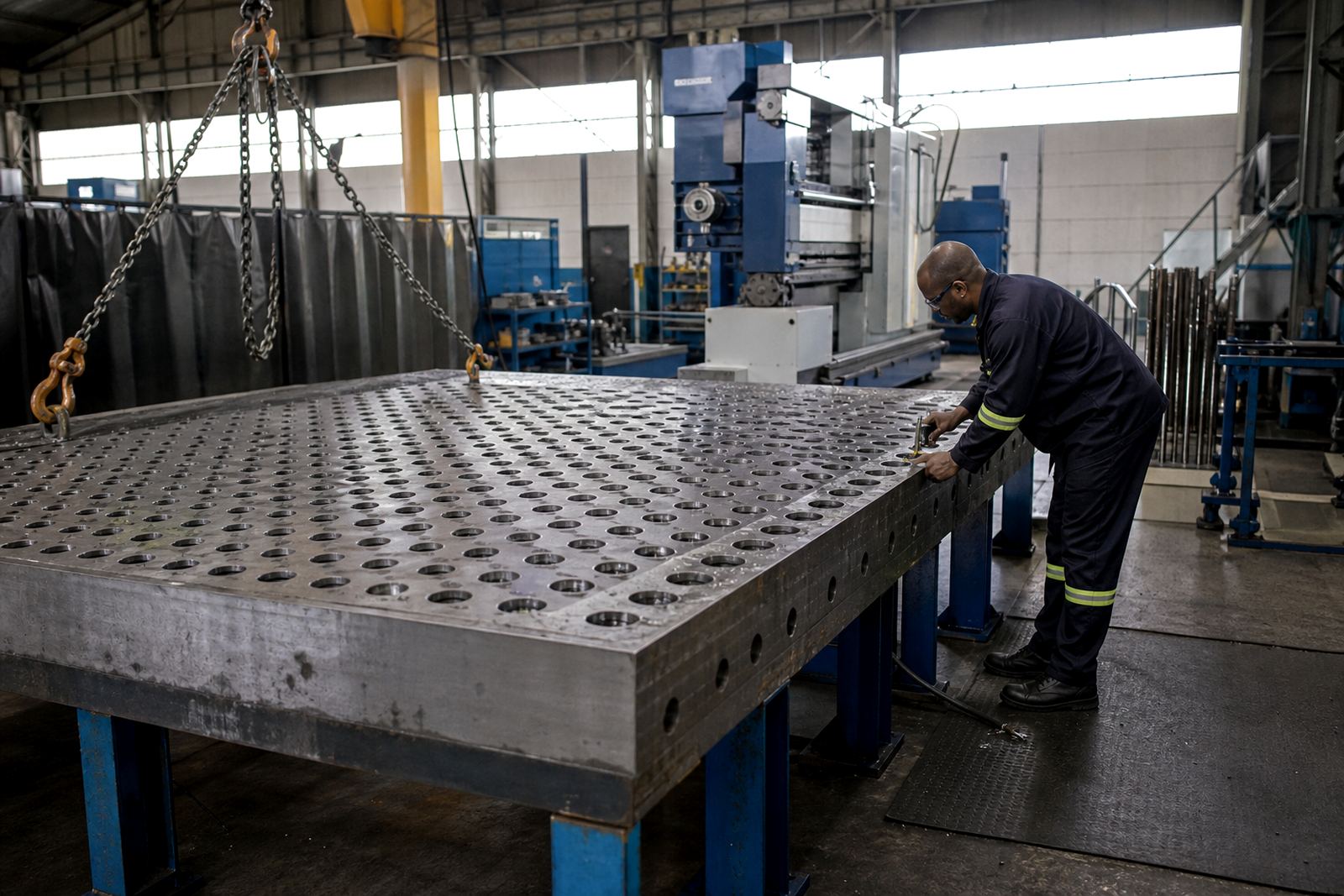
Heat exchanger plates are not forgiving. If the hole pattern drifts, sealing faces do not sit right, flow paths become uneven and the unit can lose efficiency or need rework before it ever leaves the shop. In many plants the plates also have to stand up to vibration, temperature changes and regular cleaning, so the drilled finish matters as much as the hole position.
For this kind of work, the main goal is control. That means repeatable hole centres, stable clamping, correct entry and exit treatment, and a setup that keeps the plate flat during machining. On thinner sections, even a small error can show up across the full pattern, so the machine, tooling and fixturing must all work together.
Typical machine set for plate pattern drilling
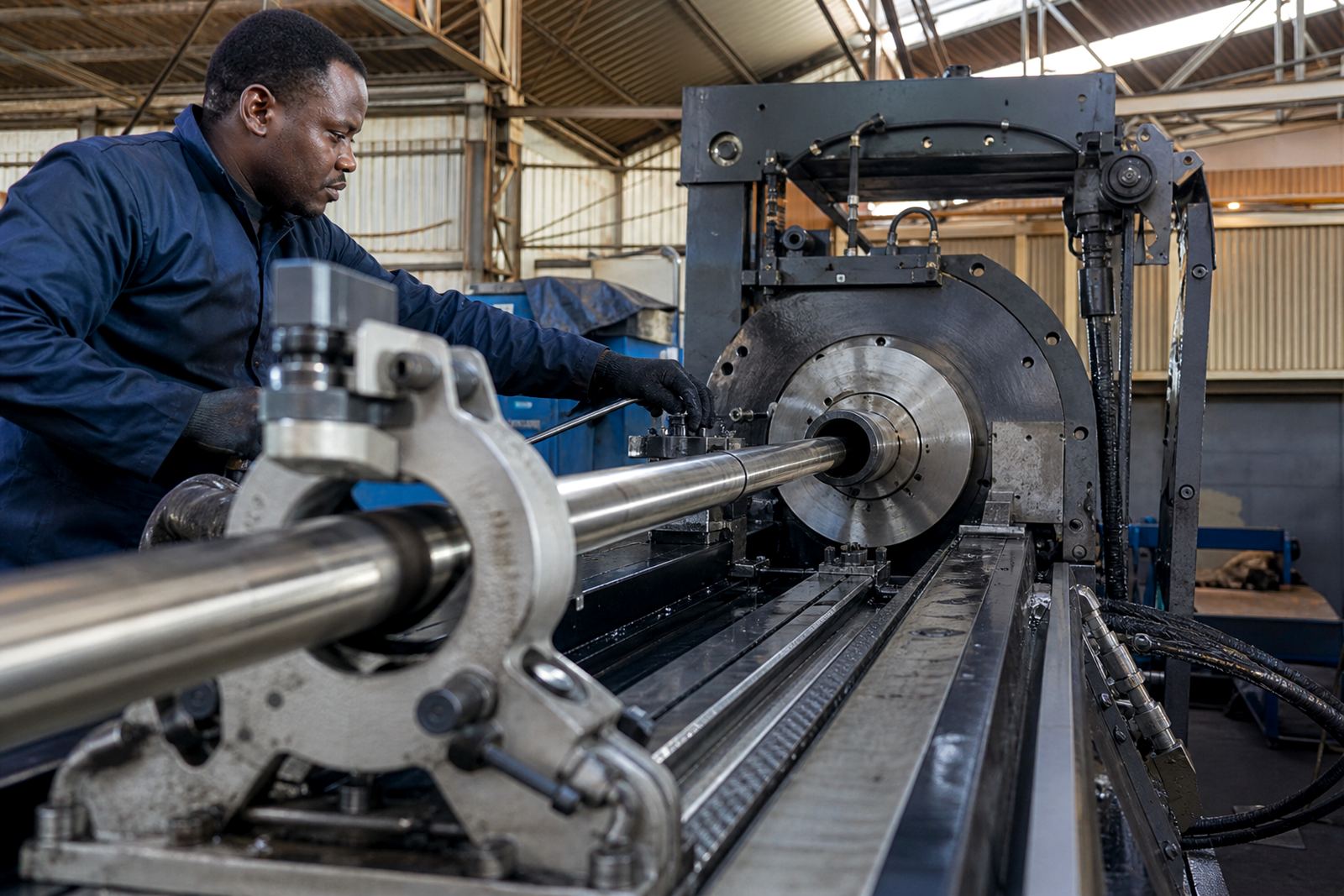
Most plate work starts with a deep-hole drilling machine matched to the part size and the hole depth required. For some shops, a dedicated gun-drilling setup is enough. For others, deep-hole boring support is needed where the plate stack-up or the assembly design calls for more controlled hole development. The right choice depends on material, thickness, hole count and how the plates are handled between operations.
A practical setup usually includes the machine, suitable tooling, workholding, coolant delivery and a plan for chip removal. If the plate has many holes across a wide face, the layout must also allow easy loading and unloading without damaging the sealing surfaces.
- Gun-drilling machine for accurate, narrow hole patterns
- Deep-hole boring support where hole control and finish need extra attention
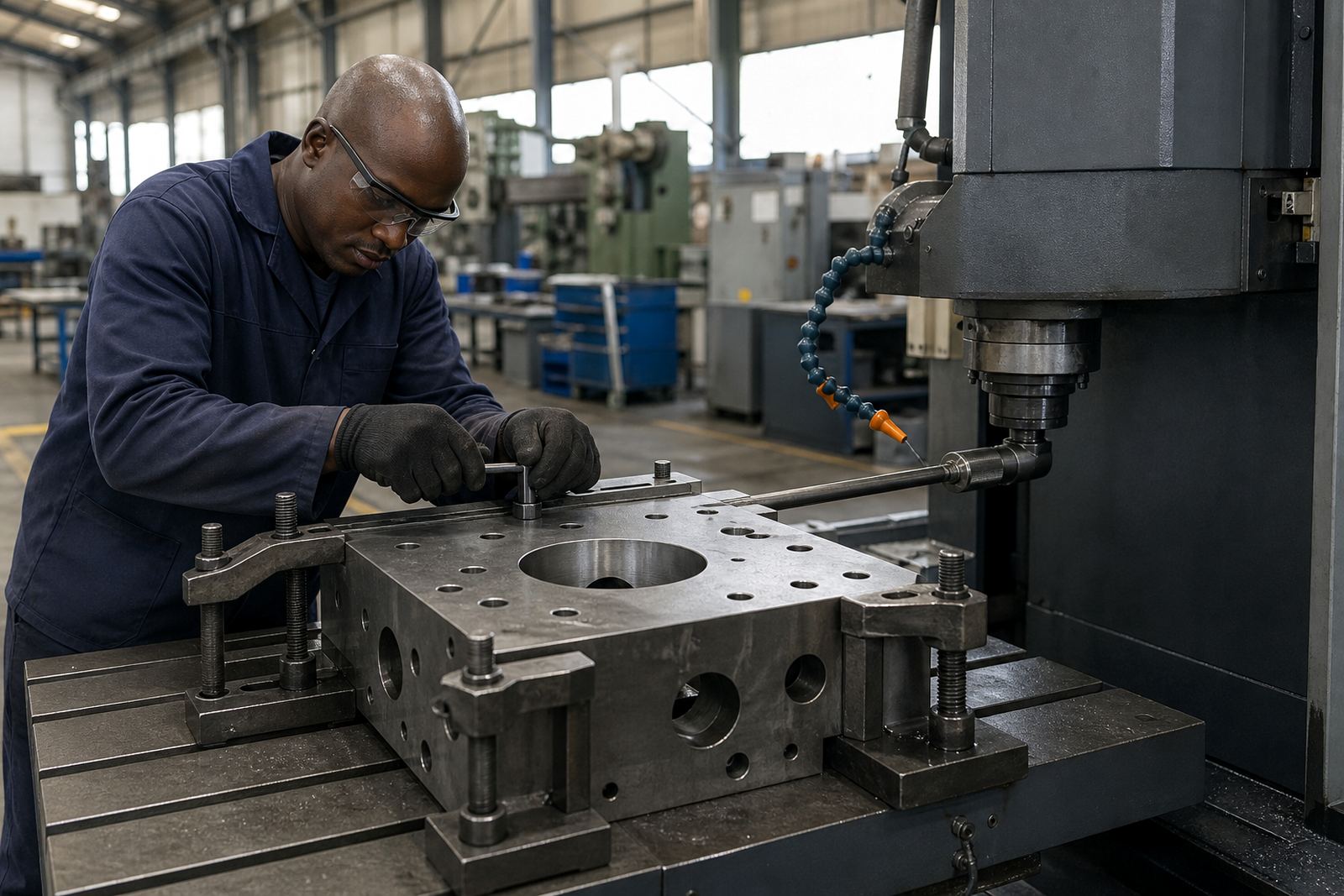
- Workholding that keeps the plate flat and stable
- Tooling matched to the material and hole size
- Coolant and chip handling arranged for continuous cutting
- Measurement method for checking centre distance and repeatability
Layout planning before the first hole is cut
Good plate work starts at the planning stage. Before drilling begins, the shop should confirm hole positions, clamp points, reference faces and the order of operations. That planning step saves time later, especially when plates must be produced in batches for assembly lines or maintenance stock.
When we assist on a job, the first questions are usually about how the plate will be used, what the mating surfaces look like, whether the part must be turned over and how the operator will inspect it between stages. In a busy shop in Johannesburg or Pretoria, the layout also has to suit the available lifting gear and floor space. In coastal areas like Durban, humidity can affect storage and surface condition, so handling and protection matter too.
- Confirm datum points before the programme or manual setup is finalised
- Allow for clamp access without fouling the drill path
- Plan chip evacuation so it does not mark the face of the plate
- Check whether holes need to be drilled in one setup or across multiple stations
- Protect sealing surfaces during loading, unloading and intermediate inspection
Common mistakes that cause rework
The most common problems we see are not always caused by the machine itself. Often the issue starts with poor fixturing, wrong tool selection or rushed setup on the first article. On heat exchanger plates, those mistakes can become expensive because one bad hole pattern can affect the full assembly.
Another issue is assuming that a hole is only a hole. In practice, the entry condition, straightness and finish all matter. If the coolant flow is not set correctly, chips can pack in the hole and create scoring. If the machine is not aligned properly, the pattern can drift across the plate. If the operator has not been trained on the sequence, they may damage the edge or lose repeatability from one shift to the next.
- Poor clamping that allows the plate to move during cutting
- Tooling chosen without checking the actual material and thickness
- Incorrect reference marks or datums used for the hole pattern
- Inadequate coolant flow, leading to chip build-up
- Skipping alignment checks after a machine move or service
Support for setup, training and production start-up
Deephole supports heat exchanger plate work from first setup through to production start-up. That includes machine installation, commissioning, tooling selection, alignment checks and operator training. For many South African shops, the challenge is not only buying the right machine but getting it into production without losing a week to trial and error.
Our team can assist with process troubleshooting, preventive maintenance, breakdown support and coolant system service. If a shop in Benoni, the East Rand or further afield needs help getting a new plate job running, we focus on the practical side: safe setup, stable cutting and repeatable results that the team can maintain on the floor.
- Machine installation and commissioning
- Tooling selection for plate work and related assemblies
- Setup optimisation for better repeatability
- Operator training for day-to-day use
- Production startup support after installation or changeover
Budget ranges and what affects the cost
Budget for heat exchanger plate drilling can vary a lot depending on whether the shop needs a dedicated machine, additional tooling, or support for an existing line. A smaller setup for straightforward plate patterns will sit at a different level to a more specialised arrangement that needs deeper hole control, more fixturing and extra handling support. In Rand terms, the full spend can range from a modest tooling package to a much larger capital outlay for a new machine and commissioning package.
Costs are usually influenced by hole depth, material type, plate size, production rate and the level of automation required. Spare parts support, preventive maintenance and training also affect the long-term cost of ownership. If you are planning a new line or upgrading an older machine, it is worth looking at the complete setup rather than only the purchase price.
For many customers, the most useful first step is to discuss the plate drawing, the production target and the current machine condition. From there, we can guide the practical options and help separate what is necessary from what is just nice to have.
Where we support plate work from Benoni
Deephole is based in Benoni, Gauteng and supports manufacturers and engineering shops across South Africa. We work with clients in Johannesburg, Pretoria, Durban, Cape Town and Gqeberha, with area support across the East Rand and wider Gauteng. Whether the need is for a new machine, a tooling review, or a production line that has started giving trouble, clients reach us through the enquiry form on our contact page and we respond with the next practical step.
Heat exchanger plate drilling is one of those jobs where detail pays off. The right machine, the right setup and the right support can save a shop from repeated rework and keep production moving.