
When mould cooling holes have to run true
Mould cooling work is rarely forgiving. If a channel drifts off line, breaks through too close to a cavity face, or lands unevenly across the tool, the result is poor temperature control and extra rework. In a busy shop in Benoni, Johannesburg or Pretoria, that means more scrap, longer cycle times and more time on the machine than planned.
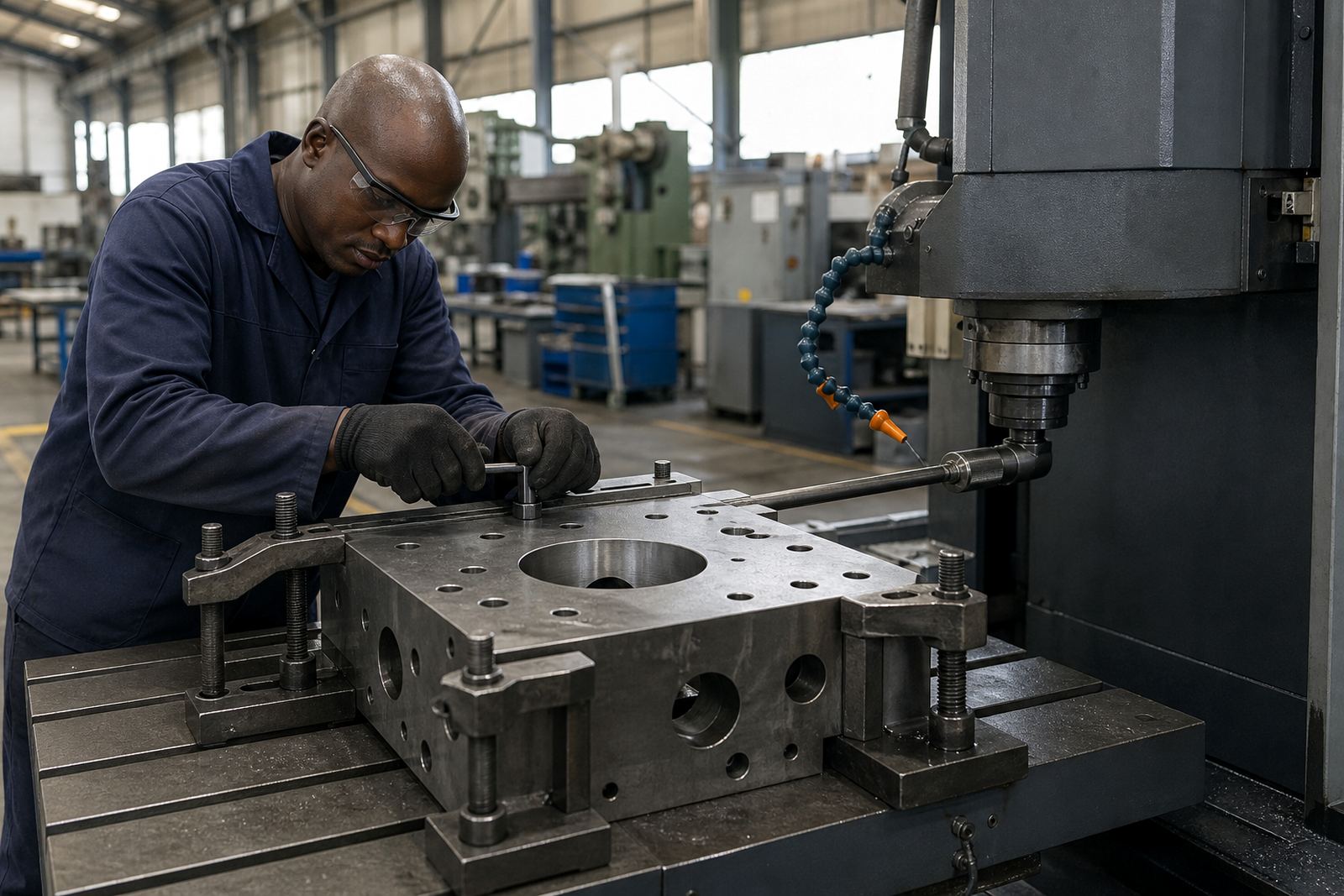
For mould components, the main issue is not only depth. Straightness, repeatability and correct hole placement matter just as much. A cooling line may need to follow a planned path through a core, insert or plate without wandering into another feature. That calls for proper fixturing, careful datum selection and a machine set up for controlled drilling over long lengths.
We work with manufacturers who need practical support for new mould jobs and repeat work. The aim is simple: get the hole in the right place, keep the drill stable, and make sure the job can be repeated on the next set without guesswork.
Typical machine set for mould cooling work
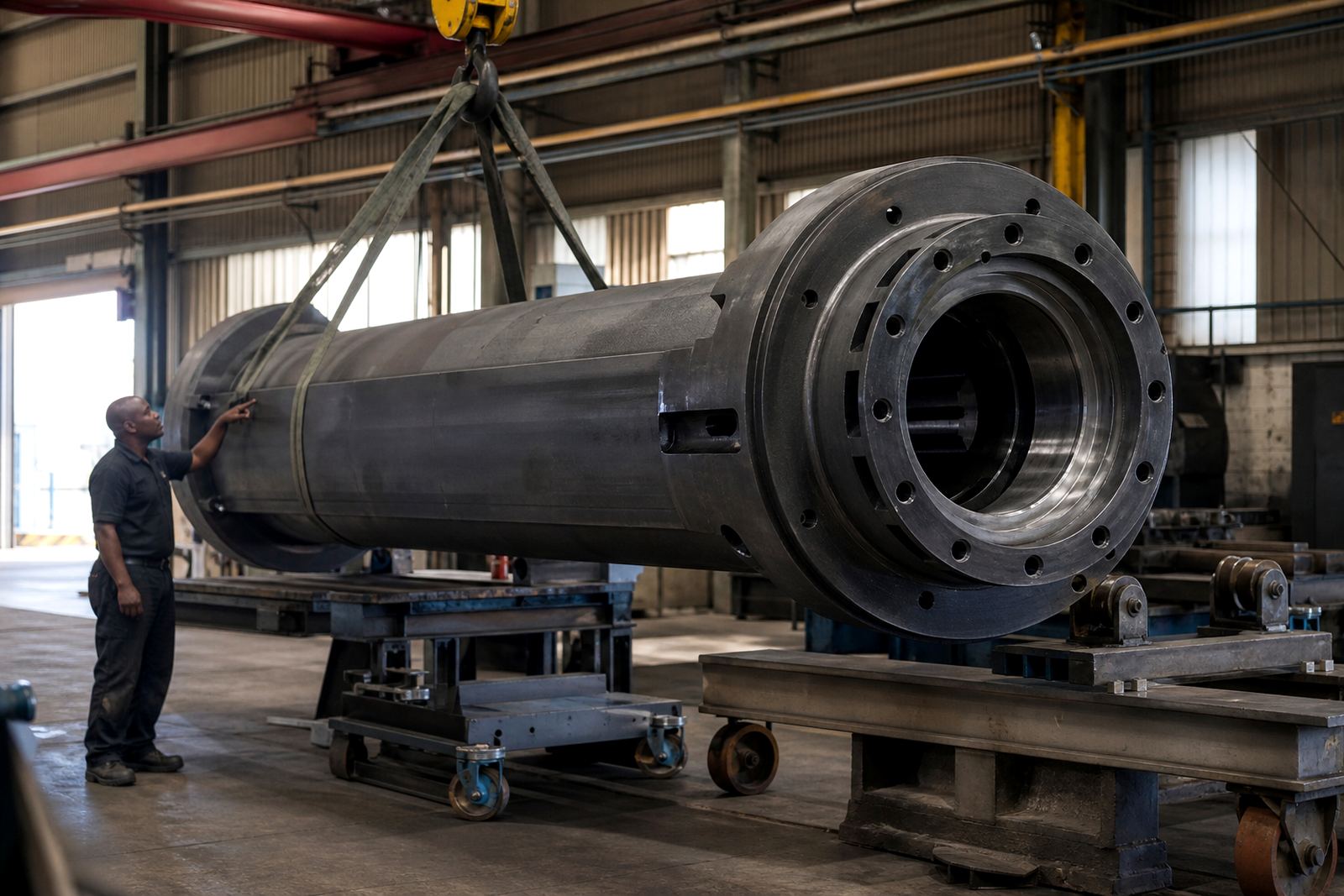
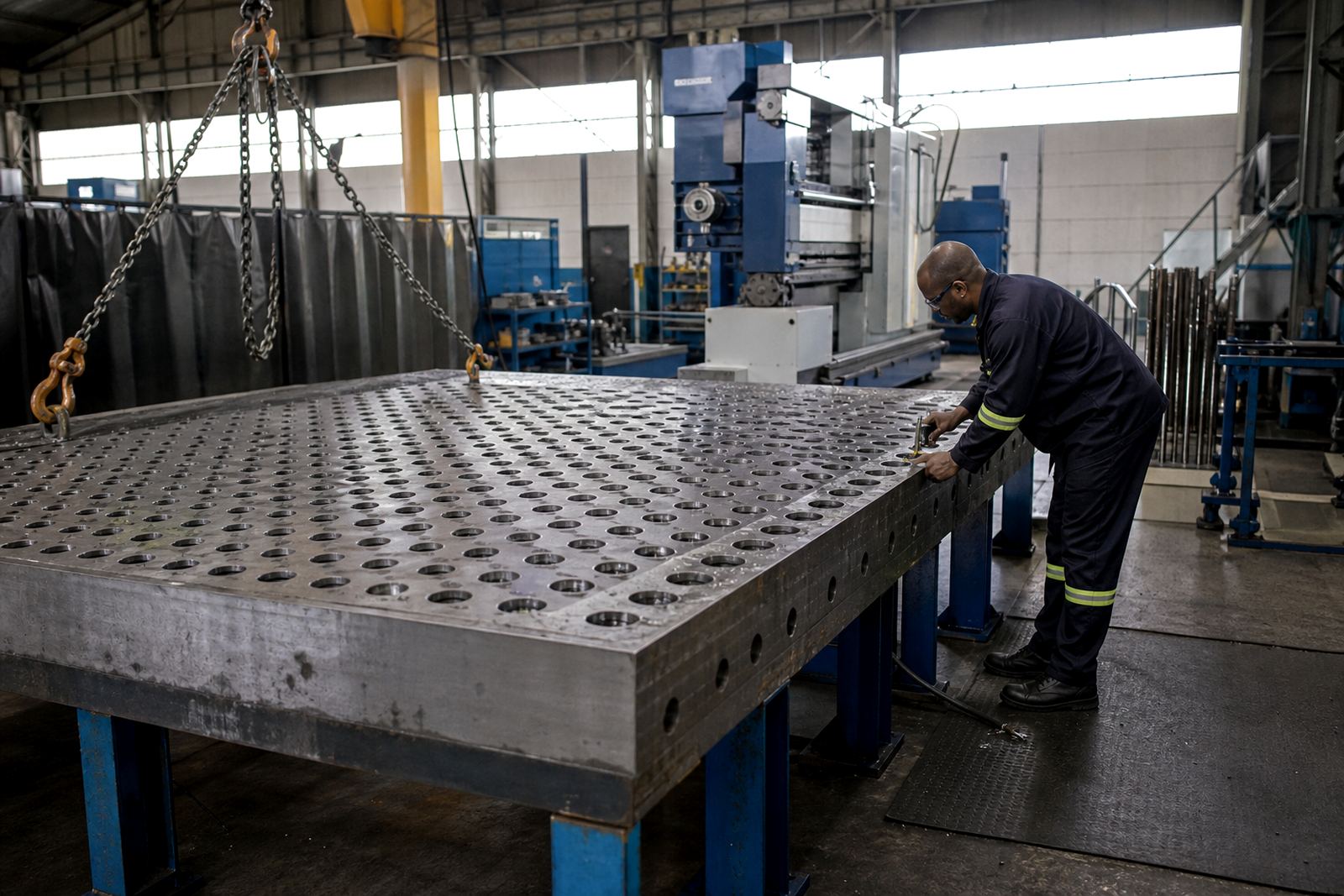
For this kind of work, the usual set up includes a gun-drilling machine or deep-hole boring machine, suitable workholding, coolant delivery, accurate measuring tools and the right tooling for the material. Some shops also pair the machine with CNC control for consistent positioning across multiple features.
- Gun-drilling machine for smaller diameter cooling channels
- Deep-hole boring machine for larger bores or heavier stock removal
- Guides, collets, sleeves and workholding fixtures matched to the part
- Tooling for carbide or high-speed steel applications, depending on the job
- Coolant management equipment to keep flow and filtration in order
- Measurement tools for setup checks, depth control and alignment
For mould work in coastal areas like Durban and Gqeberha, coolant handling and machine protection become even more important because humidity and rust can cause trouble fast. In Gauteng, dust and heat inside the workshop can also affect consistency if the machine is not maintained properly.
Planning the cooling layout before metal is cut
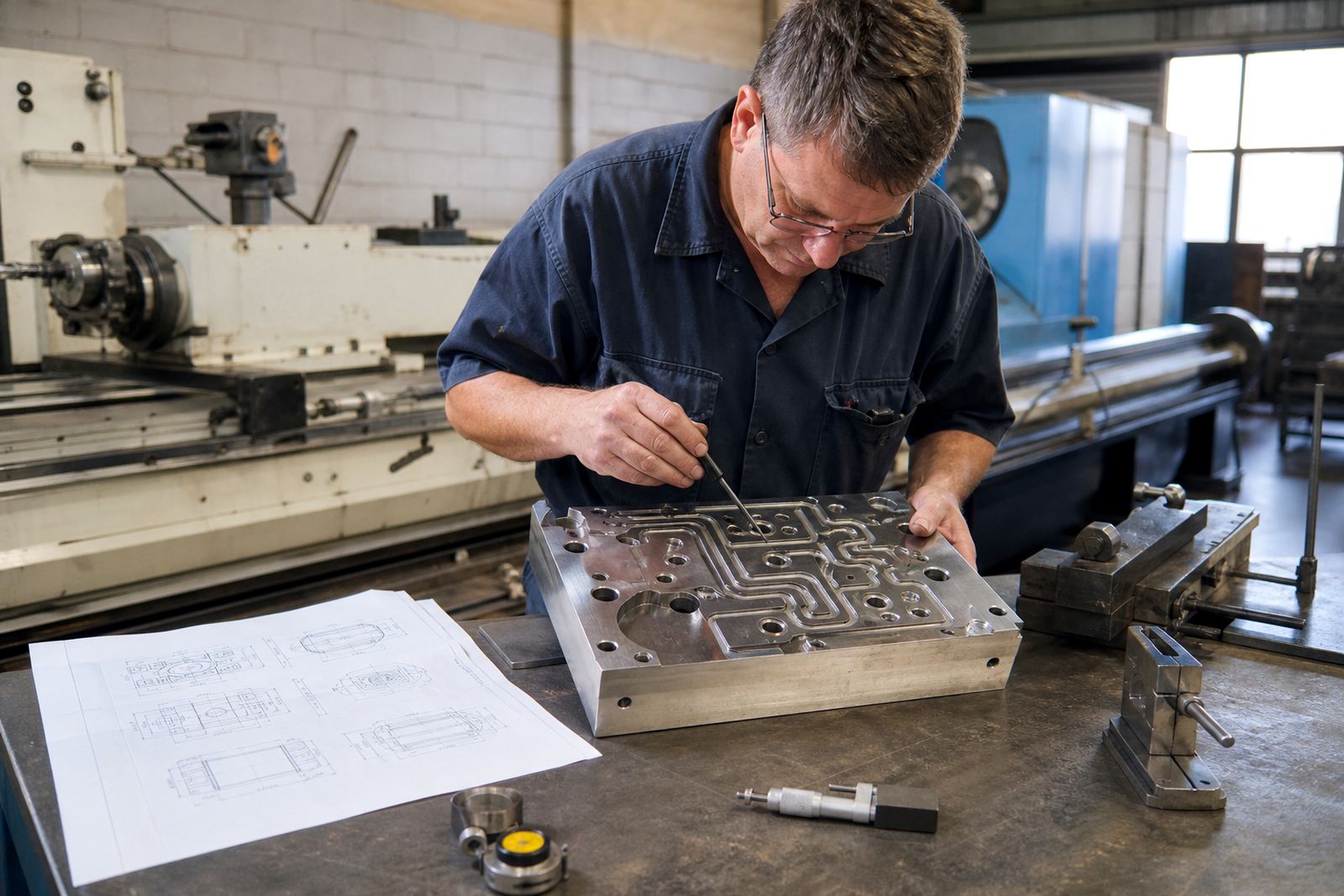
Good layout planning saves material and time. Before drilling starts, the team should confirm the hole path, entry and exit points, wall thickness, intersecting features and the order of operations. If the cooling pattern is not checked early, the shop may end up drilling into a corner that leaves no room for a proper tool runout or chip clearance.
We often advise shops to treat the drilling plan as part of the mould design process, not something handled at the last minute. That means checking the drawing, confirming the stock condition, and deciding where the part will be clamped. It also means allowing enough room for tool access and for operators to inspect the first hole before full production starts.
- Confirm all dimensions and datums before clamping
- Check for intersecting bores, screws and pockets
- Allow for chip evacuation and coolant flow
- Plan the order of holes so heat build-up stays manageable
- Mark inspection points for depth, straightness and position
Common mistakes that cause cooling problems
The biggest mistakes are usually simple ones. A fixture is rushed, the drill is pushed too hard, or the coolant flow is not checked properly. On mould components that can lead to a hole that starts cleanly but drifts after a certain depth. It can also cause poor surface finish inside the channel, which affects flow and cleaning later.
Another common issue is trying to use the same setup for every part. A mould insert, plate and core body do not behave the same way. Material hardness, hole length and part geometry all change the setup needs. If the operator is not trained to read the cut and listen for trouble, the job can go sideways quickly, sometimes without warning.
We also see shops skip preventive checks on alignment, spindle condition, coolant pressure and filtration. Those small issues grow into bigger ones under load. A machine that is slightly out on alignment can still make holes, but it will not make the same hole twice with confidence.
Support for setup, training and startup
Deephole supports mould shops with machine installation, commissioning, tooling selection, setup optimisation, operator training and production startup. For a new or upgraded drilling line, the first few jobs are where most of the learning happens, so practical support at that stage saves time later. Our team in Benoni works with customers across South Africa, including Johannesburg, Pretoria, Durban, Cape Town and Gqeberha.
Our support team includes Marius Jacobus van Rensburg, Ayanda Mokoena, Johan Smit, Noluthando Dlamini, Francois du Plessis, Leanne Naidoo and Sibusiso Khumalo. That gives customers a direct path to sales, applications, service, training and tooling help when a job needs attention.
- Installation and commissioning for new machines
- Alignment checks and production startup support
- Process troubleshooting for hole quality or repeatability issues
- Preventive maintenance and breakdown support
- Coolant system service and spare parts support
Budget ranges for mould cooling projects
Budget depends on whether the shop needs tooling only, a machine upgrade, or a full new drilling cell. For tooling and setup items on a mould cooling application, a project may start in the tens of thousands of Rand and move higher depending on part size, hole depth and the amount of support required. A commissioning visit, operator training and setup optimisation will add to that. A full machine purchase and installation is a larger capital item and should be planned around the actual production mix, not just the price tag.
It is better to budget for the full working picture. That includes tooling, coolant handling, spare parts, machine movement, electrical prep and any changes needed for the floor space. In some shops the real cost is not the machine itself, but the time lost when the setup is wrong and the first batch needs to be reworked.
For customers in Benoni and across Gauteng, we can discuss the job on the enquiry form and help define what is needed before a quotation is issued. That makes it easier to compare options and avoid buying more than the mould shop actually needs.
What to bring us when asking about a mould cooling job
When you enquire, send the drawing if you have it, plus the material type, hole diameter, depth, quantity and the tolerance requirements. If the component is already on the shop floor, photos of the part and the current setup help too. The more detail we get, the quicker we can advise on tooling, machine choice and setup risks.
For mould cooling work, small details matter. A short note about the final application, the mould size and whether the job is one-off or repeat production can change the recommendation quite a bit. That is usually where a proper support conversation saves the most time.