Start With the Jobs You Need To Run Every Week
Before comparing machine types, look at the parts you actually make. If your shop runs repeat jobs, needs tight tolerance control or works across several shifts, CNC may suit you better. If you handle short runs, one-off repairs or varied work where an experienced operator can adjust on the fly, a manual machine can still make sense.
In Benoni, Johannesburg and across Gauteng many engineering shops work with mixed jobs, so the best choice is not always obvious. A good starting point is to list the shaft lengths, hole depths, materials and finish requirements you see most often, then compare that list with the machine's setup method and the amount of operator input it needs.
- Short runs with frequent changeovers
- Repeat parts with the same hole pattern
- Deep holes where concentricity matters
- Jobs that need careful coolant control
When CNC Helps Your Production Flow
CNC deep-hole machines are often chosen when consistency matters more than hand adjustment. Once the programme is set and the tooling is correct, the machine can repeat the same cycle with less variation between parts. That helps when you are supplying production lines, OEM work or contract manufacturing where the spec must stay steady from batch to batch.
CNC also helps where labour availability is tight. If you have skilled setters but not enough time for constant manual adjustment, the machine can reduce operator load and keep the process more predictable during long shifts and load-shedding recovery windows. You still need trained staff, but the workflow is easier to standardise.
- Repeatability across batches
- More controlled cycle times
- Better support for process records and traceability
- Less reliance on constant hand correction
Where Manual Machines Still Make Sense
Manual machines remain practical in shops that need flexibility and direct control. For repair work, prototypes or low-volume production, a manual setup can be quicker to understand and easier to adapt when the job changes part way through. If your operators are experienced, they can make useful judgement calls without waiting for a full reprogramme.
Manual does not mean basic or less serious. It simply means the operator plays a bigger role in the cut. In some Pretoria and East Rand workshops that is exactly what is needed, especially when jobs come in with odd dimensions, limited drawings or older components that need careful handling. The trade-off is that results depend more on the person at the machine.
- One-off or repair work
- Short runs with changing requirements
- Jobs that benefit from operator feel and adjustment
- Lower complexity in daily operation
Compare Setup Time, Tooling and Changeovers
Many buyers focus on purchase price first, but setup time can affect the real cost over months and years. A CNC machine may take more time upfront to programme, prove out and align, but once the process is stable it can save time on repeat work. A manual machine may be quicker to start on a simple repair job, but it can take longer to hold consistency across many parts.
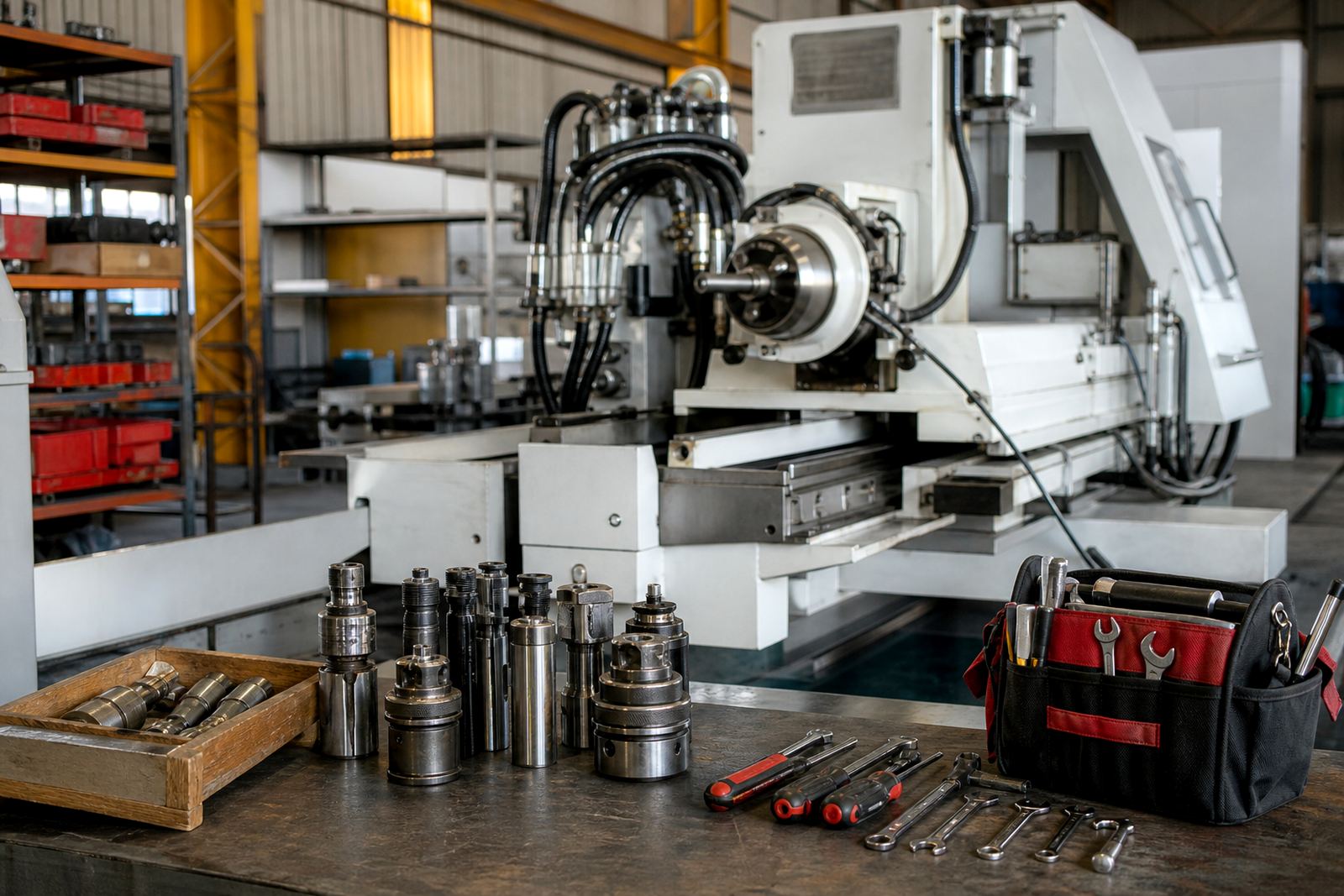
Tooling also matters. Deep-hole work depends on the right tooling, correct support and good coolant flow. If the tooling is not suited to the material or hole depth, both CNC and manual machines will struggle. That is why setup optimisation, alignment checks and process troubleshooting should be part of the buying decision not an afterthought.
- How often do you change between jobs?
- Do you need preset cycles or operator adjustment?
- How much tooling stock do you already carry?
- Will the machine run one shift or several?
Check the Support Behind the Machine
A machine is only useful when it is installed, commissioned and supported properly. This is especially true for deep-hole work, where alignment, coolant condition and tooling selection affect the result from the first part onward. If you are comparing options, ask who will help with installation, startup and operator training, and how breakdown support is handled when production is waiting.
At Deephole, support is part of the job from Benoni to Cape Town and Durban. That includes machine installation, commissioning, tooling selection, preventive maintenance, spare parts support, coolant system service and production startup. For many shops the right answer is not just CNC or manual, but which option will be easier to maintain with the team and conditions you already have.
A Practical Buying Checklist for South African Workshops
Use a simple checklist before you commit. It helps you compare machines against the work, the staff and the floor space you have available. If your site has limited power stability, restricted access or high humidity near the coast, include those points as well because they affect day to day operation and upkeep.
- What materials do we drill or bore most often?
- What hole depth, diameter and finish do we need?
- Do we need repeatability or direct operator control?
- Can our team programme and run CNC confidently?
- Do we have space for tooling, coolant and maintenance access?
- Will the machine suit our production volumes over the next 2 to 3 years?
If you are still unsure, compare the machine against a real job card rather than a brochure. That gives a better answer than guessing and helps avoid buying equipment that is either too complex or not precise enough for the work.