Why chips cause trouble so quickly in deep holes
When a drill goes deep, the cutting edge is no longer working in open space. Chips must move out through a long, tight path while coolant keeps the tool cool and stable. If that path is restricted, the chips start to rub instead of exit, and the heat builds around the tool and bore wall.
That is where many shops lose time. A bore may look fine at the mouth, but down the hole the chip pack starts to form and the tool begins to push material instead of cutting it cleanly. On carbon steels, alloy steels and stainless work, that can mean poor surface finish, tool wear and a bore that drifts off size before the operator notices. In a busy Gauteng workshop, that sort of problem can hold up the next operation as well, especially when the machine is already working around load shedding and planned production windows.
The signs your chip evacuation is not right
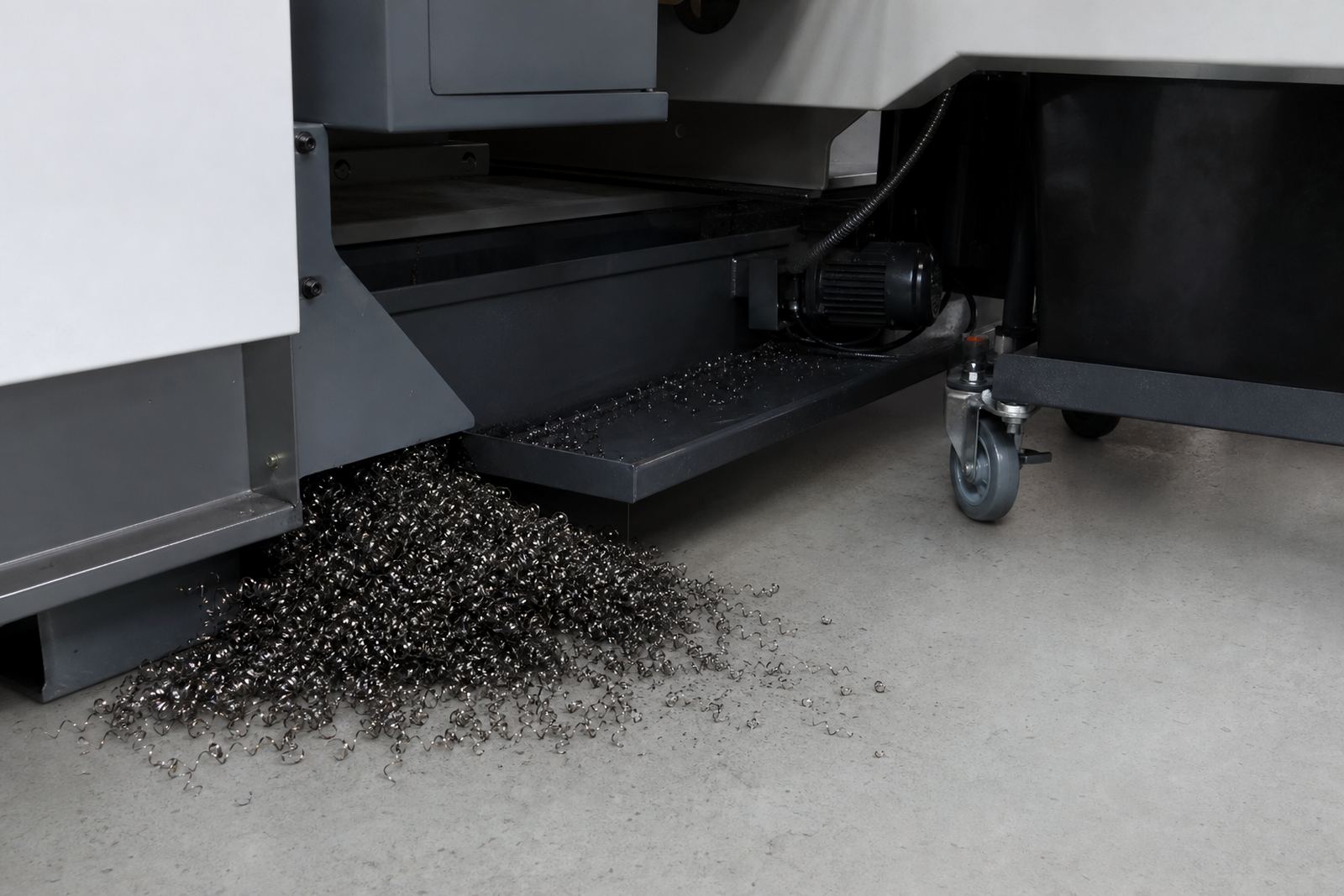
Most chip issues leave a trail. Operators usually see the warning before the job fails completely, if they know what to look for. A small change in sound, a hotter than normal tool, or chips that come out in long strings instead of short controlled forms can point to trouble.
- Chip flow becomes uneven or stops and starts
- Tool pressure rises without a clear change in material
- Coolant returns dirty too quickly
- Hole finish becomes rough or torn
- Drill marks appear at the bore entry or along the flute path
In some cases the machine still completes the cycle, but the bore is no longer reliable. That is why operators and setters should not treat chip condition as a small detail. It is one of the clearest indicators of whether the process is under control.
Coolant delivery and chip control work together
Chip evacuation depends on more than the drill geometry. Coolant delivery has to match the job. The pressure, flow path and cleanliness of the coolant all affect whether chips are carried out or packed back into the cut. If the coolant is weak, contaminated or poorly aimed, chip control suffers even on a well set-up machine.
A clean coolant system matters a lot in South African workshops, especially where fine grinding dust, airborne grit and long production runs are common. If the tank is neglected, the chips recirculate and the whole system works harder than it should. Preventive maintenance on filters, pumps and return lines saves a lot of trouble later.
- Check that coolant reaches the cutting point consistently
- Keep return paths clear of swarf build-up
- Remove sludge before it settles in the tank
- Confirm the nozzle or delivery point has not shifted during setup
Setup choices that help chips leave the hole cleanly
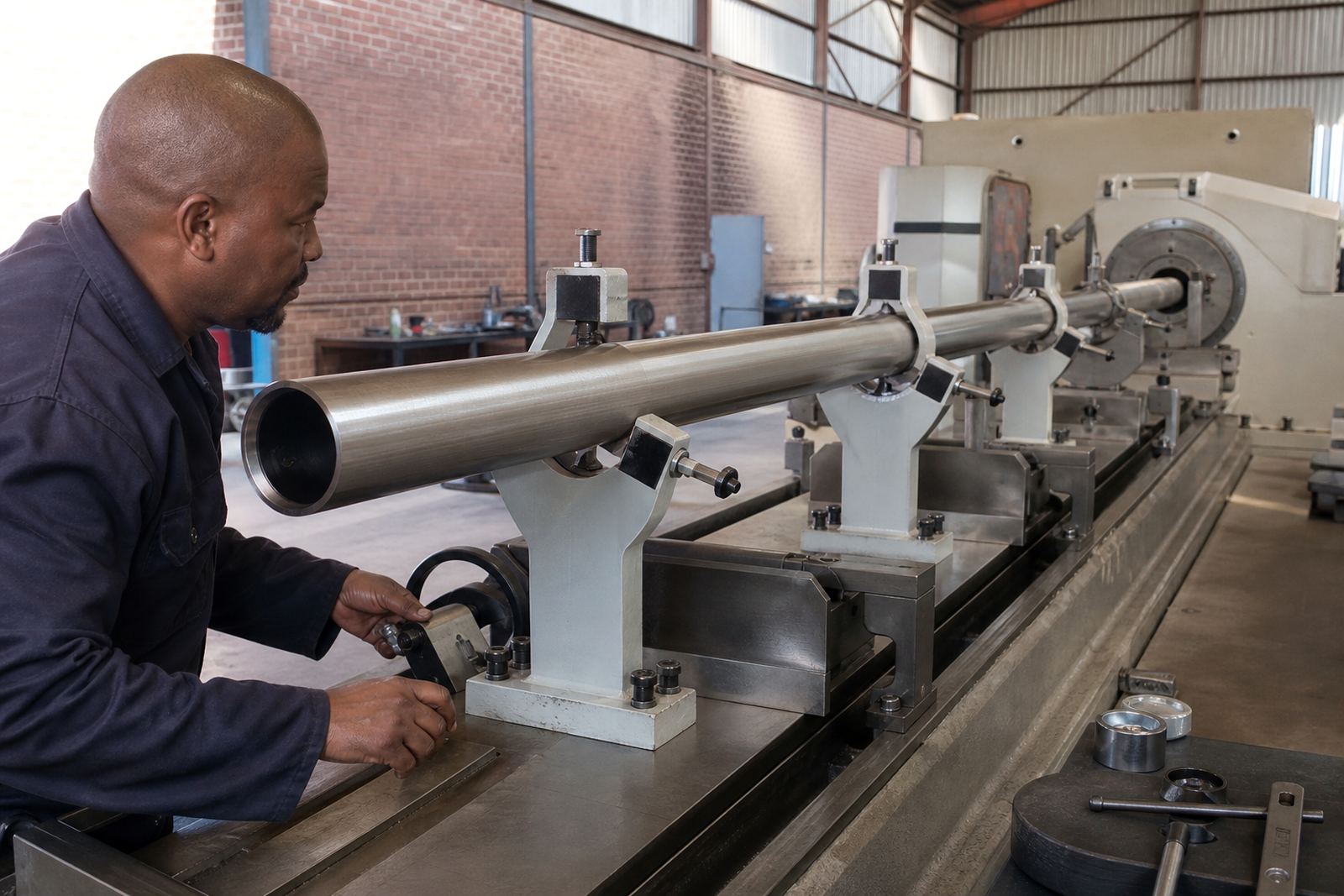
Good chip control starts before the first cut. The workholding has to be stable, the part aligned properly and the entry condition clean. If the job starts with poor centring or movement in the setup, chips will not travel out the way they should. The tool will work harder, and the bore can wander.
For many deep-hole jobs, the operator should pay attention to entry guidance, hole preparation and the sequence of the operation. A clean pilot or starting hole, correct part support and careful alignment checks all make a difference. On a long job, even a small setup error can show up as poor chip flow halfway through the cut. That is why Deephole often treats setup optimisation as part of the drilling process, not a separate task.
In Benoni and the wider East Rand, many shops work with mixed batches and short turnaround jobs. That makes repeatable setup even more important because the next job may be different in size, material or hole depth, and there is not much spare time for trial and error.
Tooling selection affects chip breakage and exit
Tooling is not only about making a hole; it is about how the cut behaves inside the material. The wrong tool can create chip shapes that are too long, too bulky or too fine to clear properly. That is why tooling selection should always be linked to the material, depth and machine setup.
For deep-hole work, the drill, guides and associated tooling must suit the application as a set. When the tooling is matched correctly, chip formation is more predictable and the process is easier to monitor. When it is not, operators spend time chasing symptoms rather than solving the real issue.
Useful checks before production starts include:
- Confirming the tool is suited to the material grade
- Checking wear before the job begins
- Making sure holders and guides are correctly fitted
- Reviewing whether the chip form is likely to clear the bore properly
A practical example from a local workshop floor
A machining shop in Gauteng may be asked to produce a long bore on a component for equipment used in mining or hydraulic service. The first parts may look acceptable, but by mid-run the chips begin to build up and the bore finish changes. The issue is not always the machine itself. More often it is a combination of coolant condition, tool setup and chip removal path.
Once the operator clears the return lines, checks the alignment and reviews the tooling condition, the process usually becomes steadier. The key lesson is simple: deep-hole drilling rewards consistent preparation. If the chips can leave the hole cleanly every time, the rest of the job becomes far more manageable. If they cannot, the machine will keep telling you something is wrong.
That is why support after installation matters just as much as the machine supply. In real production work, process troubleshooting, alignment checks and operator training all help turn a difficult bore into a repeatable operation.
What a shop should monitor on every deep-hole job
Chip control is not a once-off inspection. It is something the setter and operator should watch through the full run. When the same checks are done every time, problems are spotted early and production stays steadier.
- Chip shape and colour during the cut
- Coolant return and visible flow at the bore entry
- Tool sound and cutting feel
- Surface finish after the first few parts
- Any sign of heat marks, scoring or drag in the hole
If a workshop keeps seeing the same problem, the right response is not to push harder. It is to look at the whole process, from machine condition to tooling, coolant and operator setup. That is the practical way to keep deep-hole work consistent across Johannesburg, Pretoria, Durban, Cape Town and Gqeberha.