Why internal passages matter in toolmaking
Many toolmaking jobs depend on hidden features inside the metal. A straight drilled passage can carry coolant, guide oil, move pressure, or support a later machining step. If that passage wanders, the rest of the tool has to work harder to make up for it.
That is why deep-hole drilling and boring are not only about making a hole, but about keeping the hole true over length. In toolmaking, accuracy inside the workpiece affects the finish outside it, and that matters whether the job is for a mould shop in Benoni or a production line in Cape Town.
- Coolant channels must reach the right point without breaking through where they should not.
- Oil passages need consistent flow so the tool stays reliable in service.
- Alignment between holes and external features affects fit, wear and heat build-up.
Where deep-hole work shows up in tool and die shops
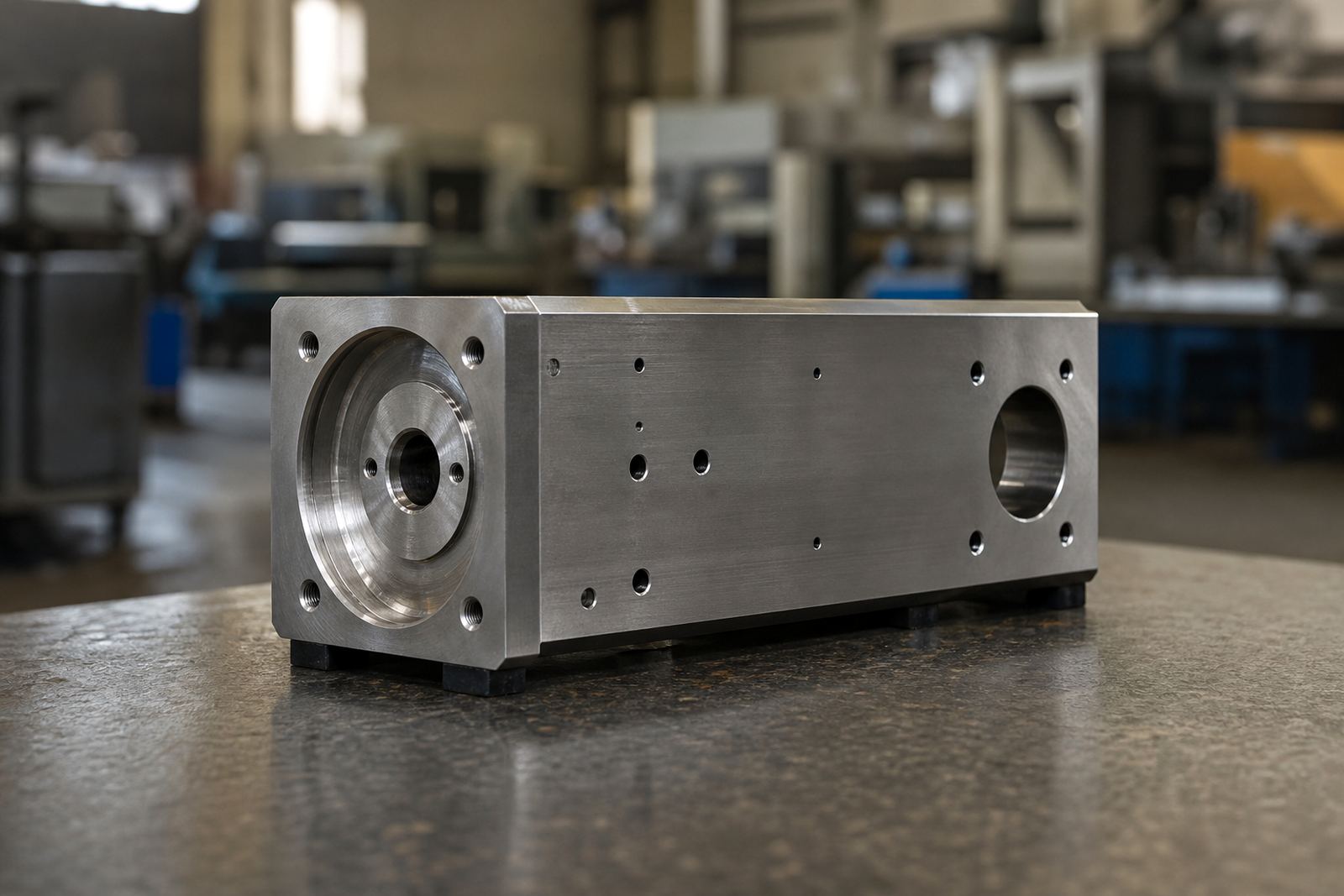
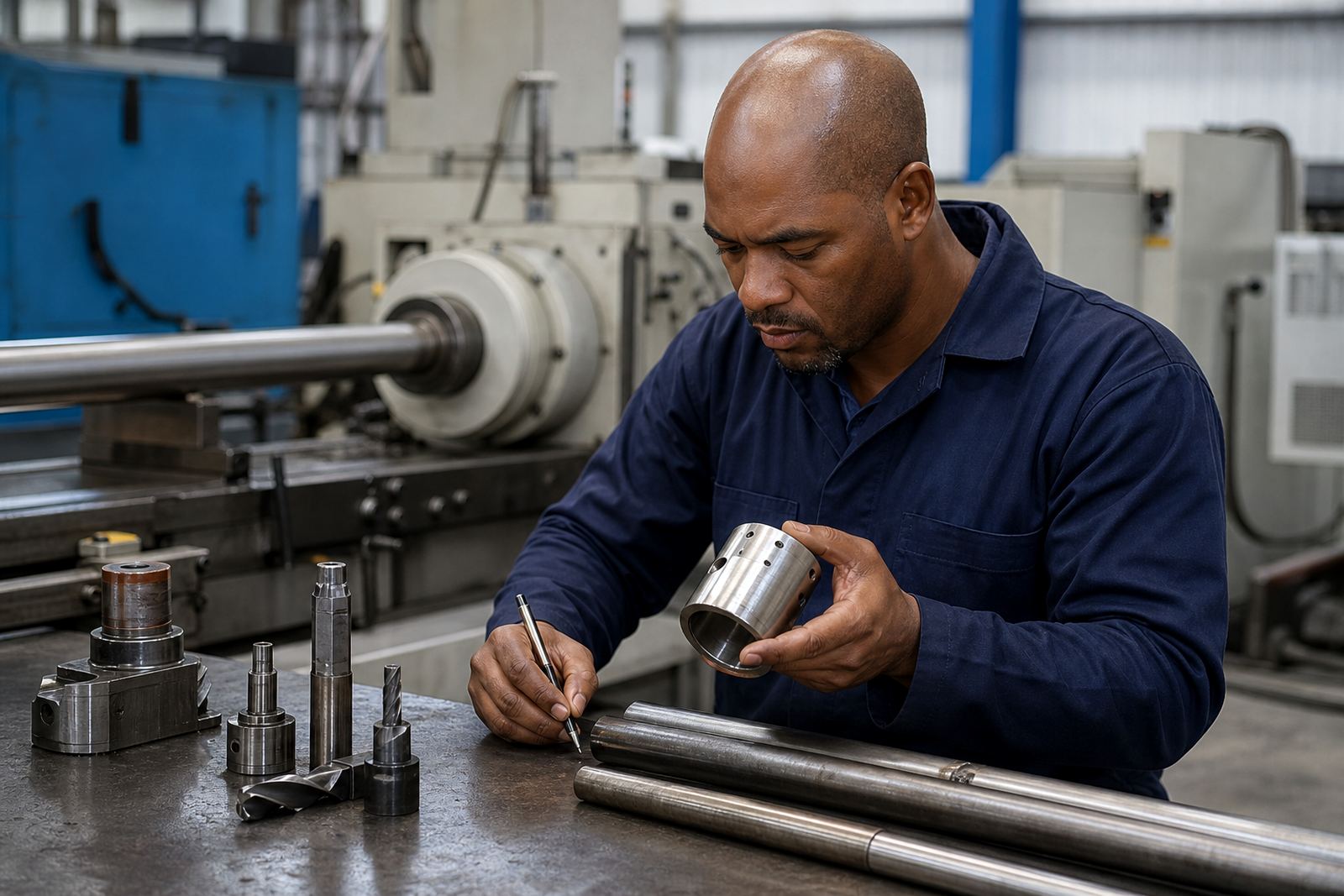
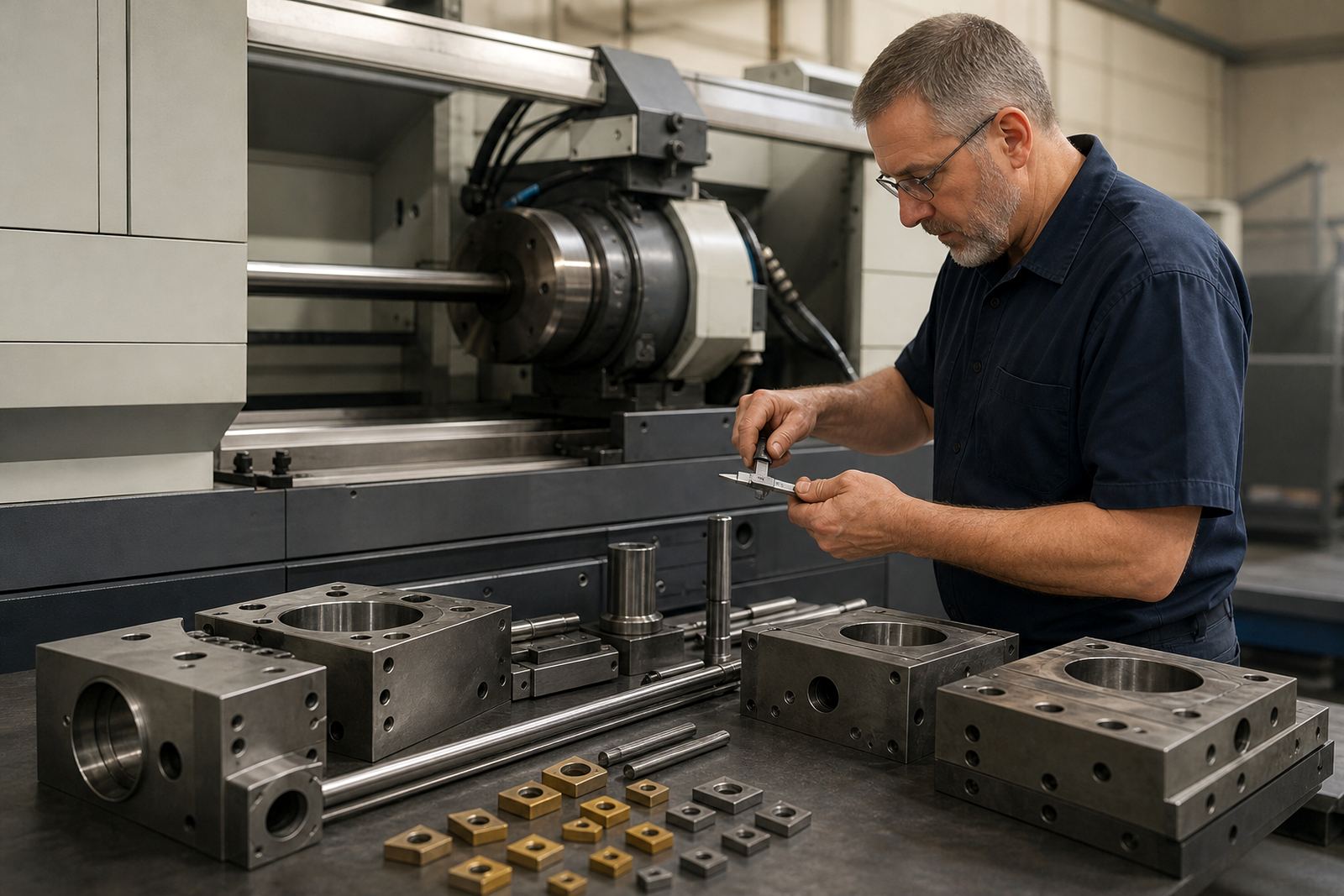
Toolmakers use deep-hole drilling and boring in more places than many people realise. It shows up in ejector tooling, jigs, fixture bodies, press tools, long guide sections and parts that need internal flow paths. The job may look simple from the outside, but the real work is in holding the path through the full depth.
On heavier work, the challenge is not only depth. It is chip control, straightness, surface finish and getting repeatable results from one component to the next. On a busy shop floor, that also means setting up the machine so the operator is not fighting the process every shift.
- Mould and die components with cooling or pressure passages
- Jigs and fixtures that need accurate internal bores
- Long tooling bodies where straightness affects the final build
- Repair work where an existing passage must be re-established cleanly
Common mistakes that cost time in the workshop
A lot of trouble starts before the cutting begins. Poor clamping, wrong tool selection, weak coolant delivery or rushed setup can turn a promising job into scrap or rework. If the shop is also dealing with load-shedding, the restart after a power interruption can make a bad setup even worse if the machine is not prepared properly.
Another common issue is treating all deep holes the same. A passage for coolant in a tool body is not the same as a precision bore for a wear part. The tooling, feed strategy and support arrangement need to match the application, not just the diameter on the drawing.
- Misalignment during setup causes the hole to drift off line.
- Poor chip clearing leaves rough finishes and tool stress.
- Inconsistent coolant delivery can lead to heat, chatter and tool wear.
- Skipping alignment checks often leads to repeat faults later on.
What a practical setup looks like in South African conditions
South African workshops work in varied conditions. In Gauteng, dust and heat can affect air lines and coolant systems. Near the coast, humidity can affect stored tooling and machine surfaces. A practical setup accounts for both the machine and the environment, so the job stays steady from the first part to the last.
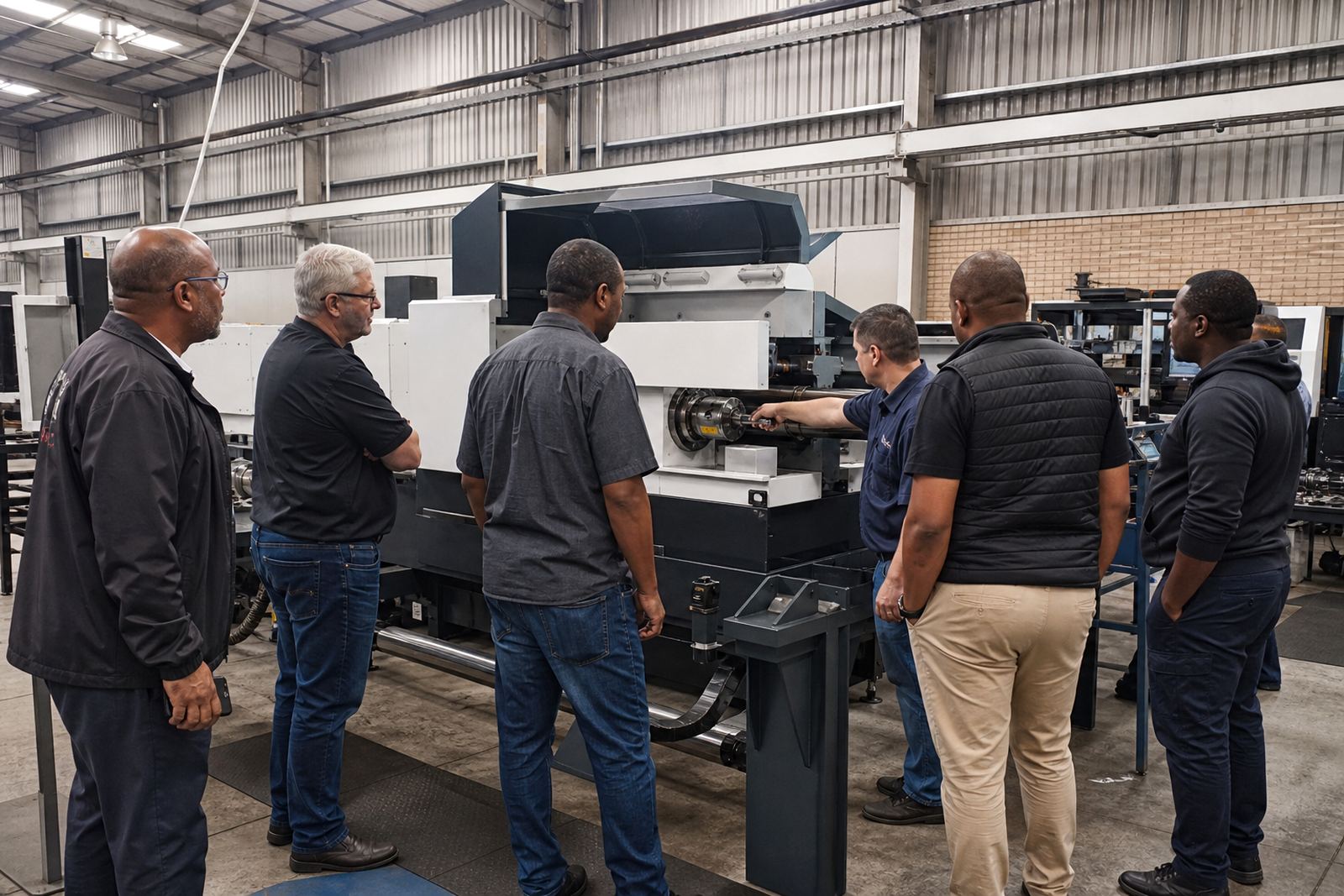
For toolmaking, that means checking alignment before production starts, confirming coolant flow, and making sure the operator knows the process step by step. It also means keeping spare parts and support close enough to reduce downtime when something goes wrong. A shop in Pretoria doing repeat work will need a different support rhythm from a one-off job in Durban, but the basic discipline stays the same.
- Check machine alignment before production startup
- Confirm coolant system condition and flow path
- Train operators on setup, not just running the cycle
- Keep a plan for breakdown support and spare parts
A Benoni example: small error, big effect
A toolmaking shop in the East Rand may be asked to produce a body with several internal passages that must meet at the right point. If one passage is even slightly off, the final assembly can bind, leak or lose pressure. The outside may still look fine, but the tool will not perform as intended.
That is where process support matters. With the right machine, the right tooling and a careful setup, the workshop can hold the internal feature where it belongs. It also gives the team a way to repeat the work without starting from scratch each time. In practice, that saves hours and reduces scrap, which counts when a job is already late.
For shops across Johannesburg, Pretoria, Durban, Cape Town and Gqeberha, the lesson is the same: internal accuracy is not a side issue, it is part of the tool itself.
Support that keeps production moving
Deep-hole work asks a lot from the machine and from the people running it. That is why installation, commissioning, tooling selection and process troubleshooting need to be handled as part of the same job, not as separate problems. When a team understands the process, they can move from setup to production with less trial and error.
Deephole supports manufacturers and engineering shops from Benoni and across Gauteng, with supply and support into Johannesburg, Pretoria, Durban, Cape Town and Gqeberha. The focus is on machine installation, commissioning, operator training, preventive maintenance, alignment checks and breakdown support so the workshop can keep making parts that meet the drawing.
- Tooling selection for the job at hand
- Setup optimisation for stable production
- Operator training for repeatable results
- Preventive maintenance and coolant system service