Start With Clean Floors, Trays and Return Paths
Coolant problems often begin outside the tank. Swarf, oil drips, loose packaging and grit on the floor get walked into the machine and wash back into the sump. If the area around the gun-drilling or deep-hole boring machine is untidy, the coolant system has to fight a constant stream of contamination.
Keep the machine base, chip trays, return gutters and screens free of build-up. In many Benoni and East Rand shops, teams lose good coolant simply because the return path is partially blocked by fines and sticky sludge. Once that material starts collecting, flow drops, settling gets worse and the pump has to work harder.
- Sweep the machine bay at the start and end of each shift.
- Remove chip heaps before they spill into coolant channels.
- Wipe oil patches before dust sticks to them.
- Keep hose ends, rags and loose fittings off the floor.
Skim Oil Early Before It Breaks Down the Sump
Tramp oil is one of the main causes of bad coolant housekeeping. It floats on top, hides bacteria and creates a grey or brown layer that is easy to ignore until odour, smoke or surface staining starts. Once that happens, the system usually needs far more effort to recover.
Skimming should be part of normal upkeep, not a panic task. Check the top of the sump, separators and any collection points every day. If the machine is used on long runs or with mixed materials, oil carryover can build up faster than expected, especially during hot Gauteng afternoons when the workshop temperature climbs.
- Look for a slick on the coolant surface.
- Check for foaming after start-up.
- Watch for a sour smell or dark staining around the tank edge.
- Remove tramp oil before topping up the system.
Control Swarf Before It Circulates Again
Deep-hole work produces chips that can be sharp, long or fine depending on the application. If those chips are not managed properly, they recirculate through the coolant and scratch surfaces, block filters and reduce pump performance. Good chip control is as important as the coolant itself.
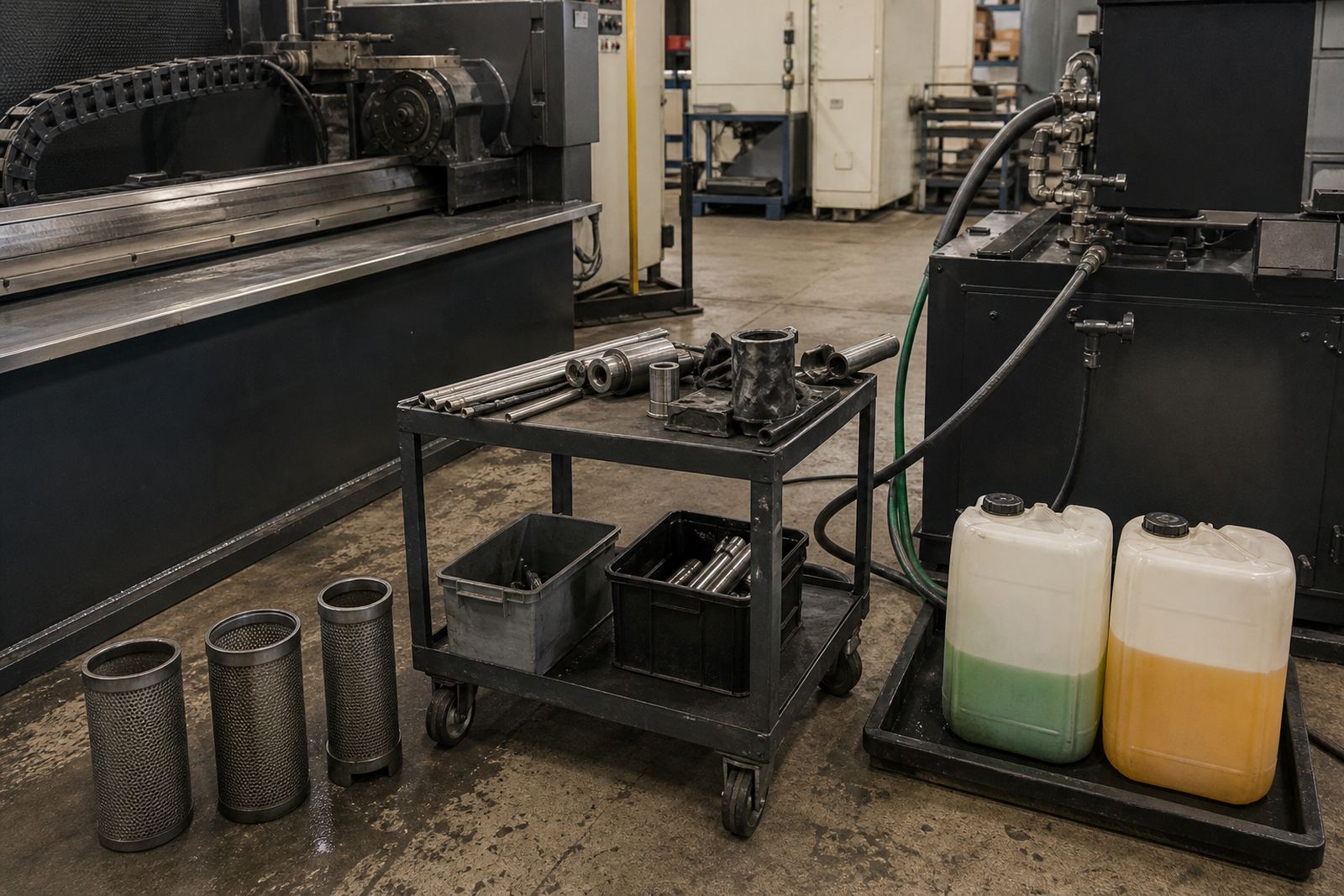
Use the correct chip removal routine for the machine and keep screens, baskets and strainers clear. When filters are overloaded, flow becomes inconsistent and the operator starts chasing the process instead of running it. That is when small issues turn into poor hole finish or repeat stoppages.
- Empty chip baskets before they overflow.
- Inspect screens for damage or bypass.
- Keep separate bins for clean swarf and mixed waste.
- Do not hose loose chips straight into drain channels.
Top Up With Care and Mix Consistently
Coolant quality changes quickly when water and concentrate are added without a consistent routine. A weak mix can lead to poor lubrication, corrosion and higher tool wear. A strong mix may create residue, foaming or sticky build-up on machine surfaces. The right balance depends on the process, but the housekeeping rule stays the same: add it properly every time.
Use clean containers and measure carefully. Never pour concentrate into a dirty tank without checking what is already there. If the system has been sitting idle during load-shedding or over a long weekend, inspect the coolant before starting production again. Stale coolant can separate, smell off or show signs of contamination at the bottom of the sump.
- Mix coolant in a clean vessel before adding it to the machine.
- Use the same water source where possible.
- Record top-ups so the mix does not drift over time.
- Check appearance, odour and foam before restarting after downtime.
Keep Tanks, Hoses and Seals in Good Condition
Even a well-run coolant system will struggle if the tank, hosework or seals are neglected. Cracked pipes, loose clamps and worn seals allow leaks, air ingress and contamination. That can lead to pump noise, unstable flow and wet patches around the machine base.
Carry out simple visual checks as part of the shift handover. A small leak at the back of the machine may seem minor, but over a week it can waste coolant and make the floor unsafe. Coastal humidity in places like Durban or Gqeberha can also make corrosion show up faster on exposed fittings and brackets, so regular inspection matters.
- Check hoses for cracks, flattening or hard spots.
- Look for rust, staining or white residue around joints.
- Confirm that tank covers and access panels close properly.
- Replace damaged seals before they fail completely.
Build a Routine the Team Can Follow
Housekeeping only works if everyone does it the same way. A good coolant routine should be easy for operators, setters and maintenance staff to follow on every shift. Keep the steps practical and write them where the team can see them near the machine or service point.
For South African workshops running under pressure, the best routines are the ones that take only a few minutes but save hours later. Deephole supports manufacturers and engineering shops with machine installation, commissioning, tooling selection, setup optimisation, operator training, process troubleshooting, preventive maintenance, breakdown support, spare parts support, coolant system service, alignment checks and production startup. That support helps shops in Benoni, Johannesburg, Pretoria, Durban, Cape Town and Gqeberha keep systems in order instead of reacting after the fact.
A useful local example is a machining shop in the East Rand that started checking the return screens and skimmed oil at the end of each day. The team did not change the machine or the tooling, but the coolant stayed cleaner for longer and the operators spent less time clearing blocked flow before first parts. That kind of routine is simple, but it pays back quickly.
- Assign one person per shift to check coolant condition.
- Use a short checklist for cleaning, topping up and skimming.
- Log faults early so they do not get ignored.
- Call for support before a small issue affects production.