What deep-hole boring does after drilling
Drilling creates the initial hole, but it does not always leave a bore that is straight enough, round enough or smooth enough for the next operation. Deep-hole boring is used to bring the hole back into control after drilling, especially where depth makes normal finishing difficult.
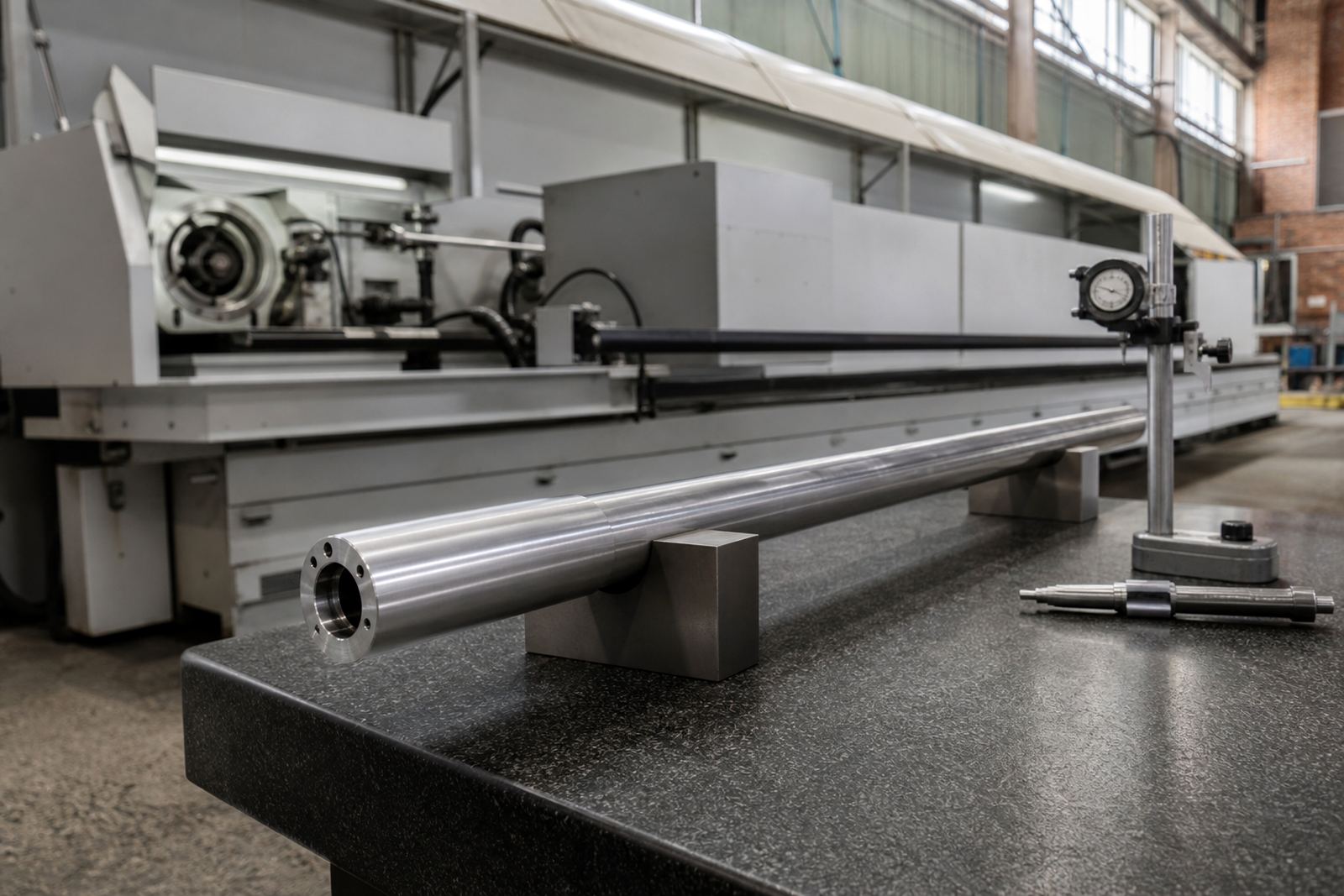
In practical terms, the drilled hole becomes the starting point. The boring process then removes a controlled amount of material to improve bore geometry, correct minor deviation and prepare the component for its final use. On long parts, even a small error at the start can grow as the hole gets deeper, so the boring stage matters more than many shops first expect.
At Deephole in Benoni, the conversation usually starts with the part itself: material, hole depth, diameter, coolant access and the finish the job needs. That is the point where a manufacturer can decide whether the hole needs one more operation or a different setup altogether.
When a bored hole is the better choice
Not every hole needs boring, but some jobs call for it from the start. If the hole will carry fluid, guide a moving part or accept a tight fitting component, the drilled hole alone may not be good enough. This is common on long shafts, hydraulic parts, tooling bodies and precision housings.
You normally look at boring when the job shows any of the following:
- The drilled hole is drifting off line over length
- The surface finish is too rough for assembly or flow
- The diameter needs closer control than drilling can hold
- There is a risk of taper, bell-mouthing or chatter marks
- The component must meet repeatable quality from part to part
For a workshop in Jet Park or a factory in Pretoria North, this often means checking the full process, not only the cutter. If the setup is weak, the best boring head in the world will still struggle.
Setup matters more than people think
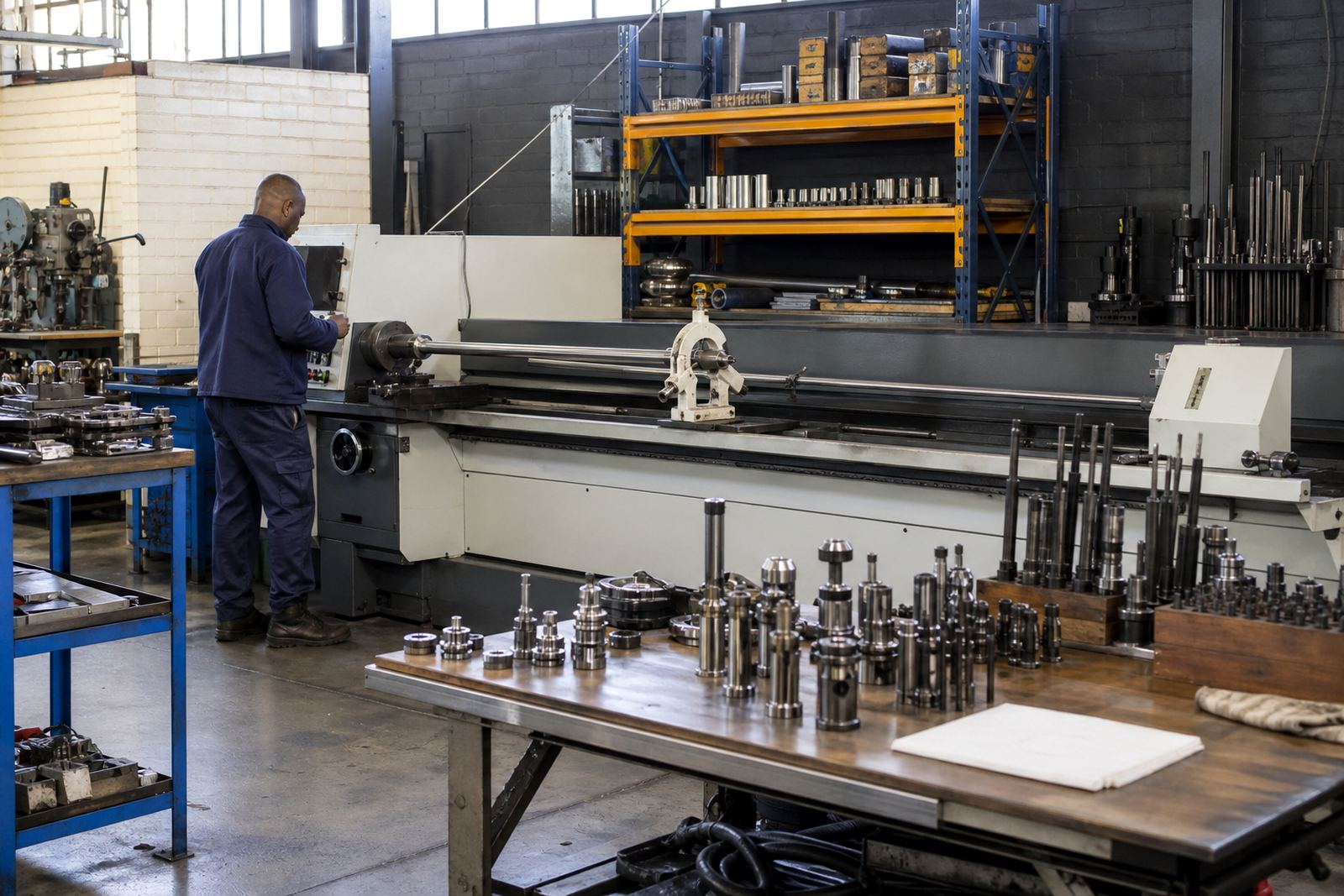
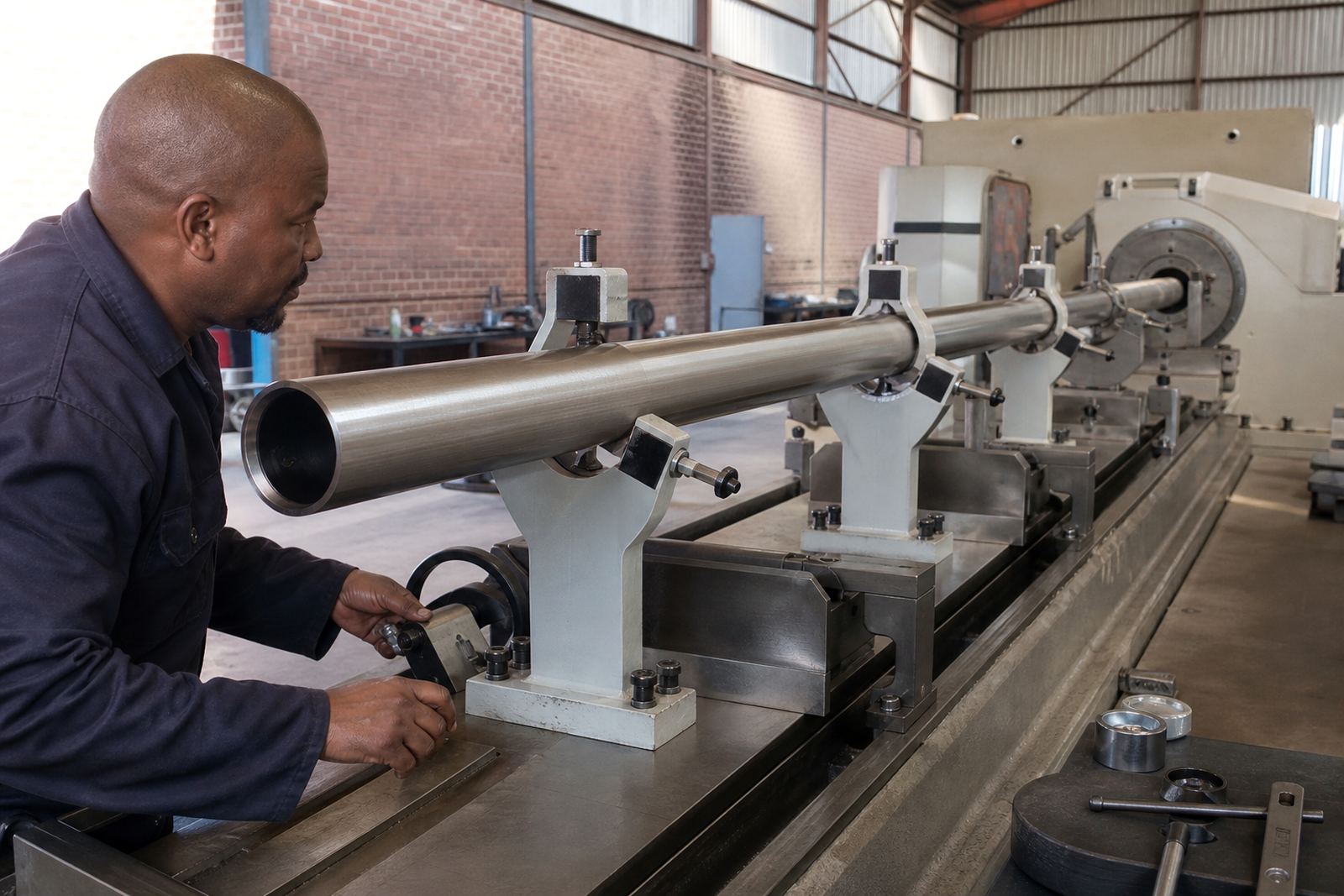
Deep-hole boring is as much about setup as it is about cutting. Workholding must be secure, the machine must be aligned and the boring bar or tool support must suit the depth and diameter. If any of those parts are wrong, the hole can wander or mark up the wall.
A good setup usually includes careful alignment checks, stable clamping, the right coolant delivery and a clear plan for chip removal. On long jobs, chip control is often the difference between a clean run and a damaged bore. Shops in coastal areas such as Durban and Gqeberha also have to think about humidity and corrosion, so storage, coolant condition and machine care become part of the daily routine.
- Check alignment before production starts
- Confirm tool projection and support
- Set coolant flow for chip evacuation
- Review first-off parts before the run continues
- Keep notes for repeat jobs so setup is quicker next time
Load-shedding can also interrupt a run, so a production team needs a restart plan. If a machine stops mid-cycle, it should be brought back into service safely, with the setup checked again before the next part is started.
Tooling choices that help the bore stay true
The right tooling helps the hole stay true and predictable. That includes the boring head, bars, guides, inserts and any support tooling needed for the material and the depth being machined. A tool that works fine on a short hole can behave very differently once the bore gets long.
Tooling selection should always match the process goal. If the aim is only to open the hole slightly for the next operation, the tooling choice will differ from a job that needs close size control over a long length. That is why many shops ask for support before the first cut, rather than after the first bad part.
At Deephole, tooling selection is part of the wider process support. The aim is not just to supply tooling, but to help the machine, the setup and the operator work together properly. That makes production startup easier and lowers the chance of avoidable downtime.
Why operators need clear training, not just a machine
Even a well set up boring process can drift if the operator is not shown what to watch for. A good operator knows how the cut sounds, how the chips should look and when a bore is starting to move out of tolerance. That practical knowledge is what keeps repeat jobs on track.
Training should cover the basics that affect daily production, including:
- How to read the early signs of chatter or deflection
- When to stop and inspect the bore
- How to manage coolant and chip flow
- What to record during production startup
- How to hand over a machine after a stoppage or shift change
In busy Gauteng shops, one poorly briefed handover can undo the work of a full shift. Clear training helps the team keep quality steady, especially when jobs move between Johannesburg, the East Rand and Pretoria.
Local support for production that cannot wait
Deep-hole boring work often sits on the critical path. If a machine is down, a tool is wrong or the setup needs correction, the whole production plan can slip. That is why support needs to be practical and local, not vague and far away.
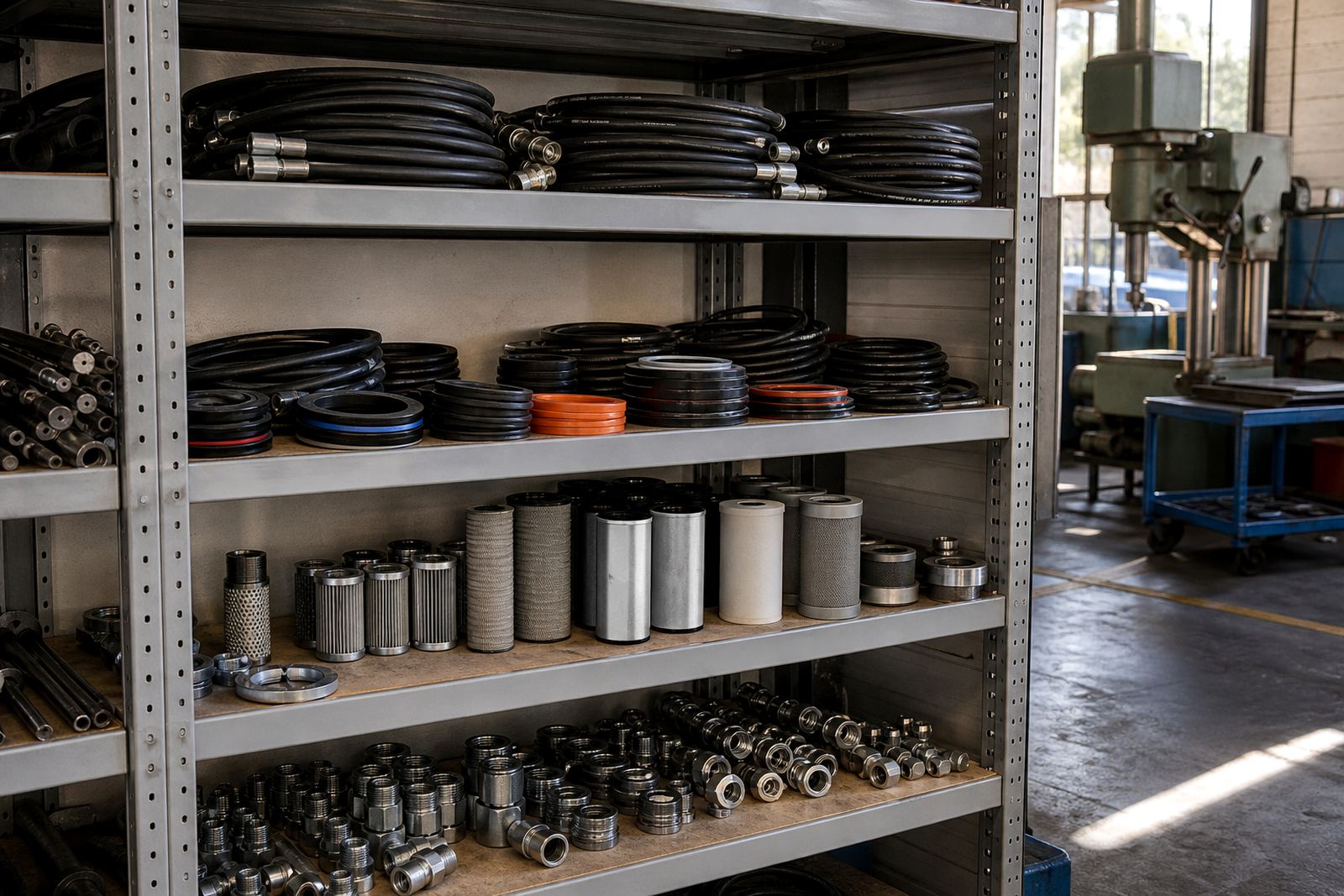
Deephole operates from Benoni, Gauteng, and supports manufacturers and engineering shops across South Africa, including Johannesburg, Pretoria, Durban, Cape Town and Gqeberha. The team handles machine installation, commissioning, preventive maintenance, breakdown support, alignment checks, process troubleshooting, spare parts support and coolant system service. If a production line needs a machine back in service or a bore process tightened up, the right support saves time and reduces scrap.
For many shops, the real value is simple: a clearer setup, a stable process and less guesswork. That is what turns deep-hole boring from a problem into a repeatable part of the job.