Start With The Longest Part You Make
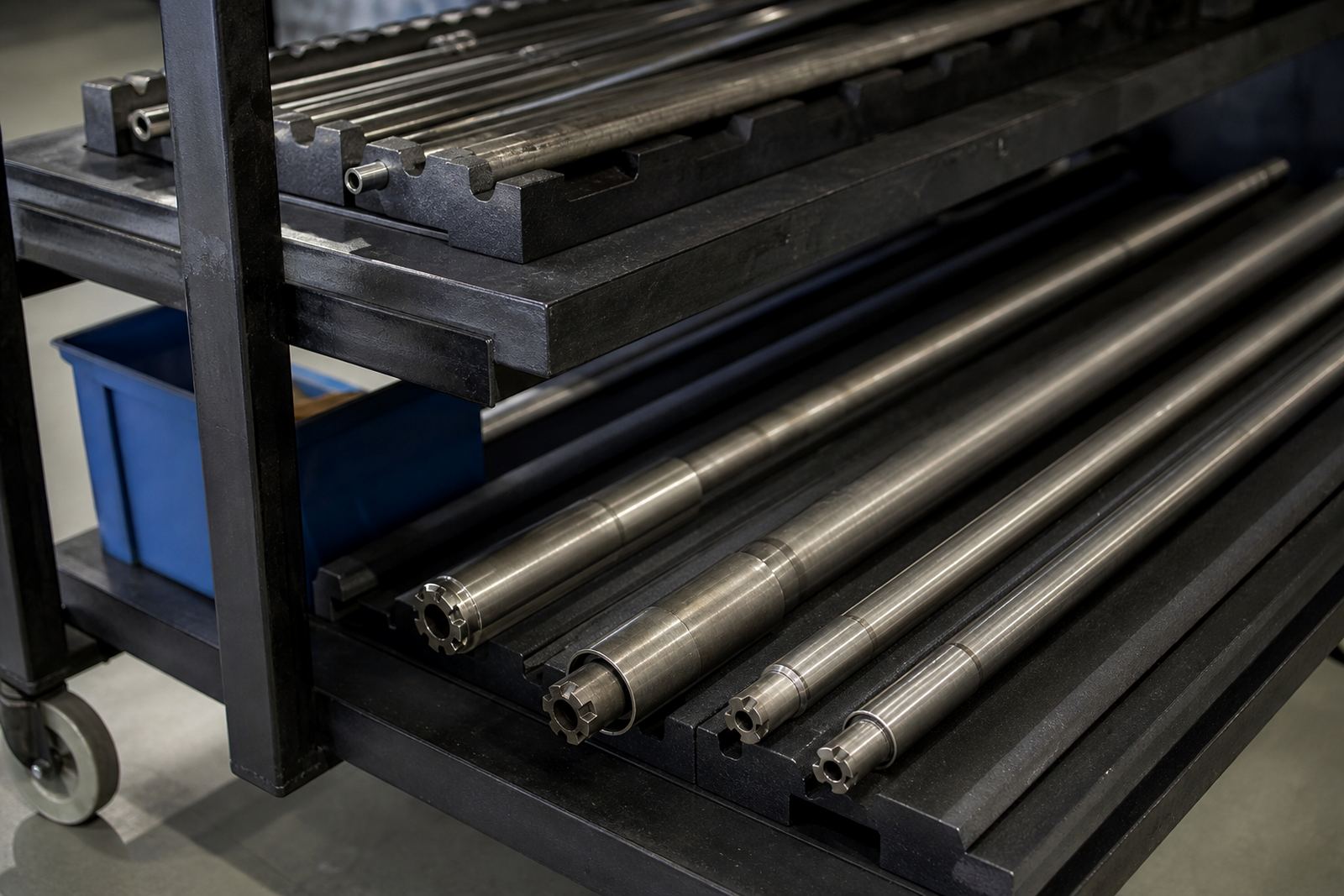
The first question is simple: what is the longest workpiece you need to handle, and where does it enter and leave the machine bay? A deep-hole boring setup needs more than the machine footprint. You also need room for loading, unloading, chip removal, tool changes and inspection of straight parts that may run several metres in length.
In many Gauteng workshops, the bay looks big enough until the first long part arrives on a trolley or cradle. Then the team discovers that a doorway is too narrow, a wall is too close, or a crane cannot reach far enough over the bed. Plan for the part path before you mark the floor.
- Measure the full part length, not just the machined section.
- Allow space for infeed and outfeed handling.
- Keep a clear route from receiving to the machine and on to inspection.
- Check whether forklifts, overhead lifting or rollers will be used.
Leave Space For Loading, Alignment And Chip Control
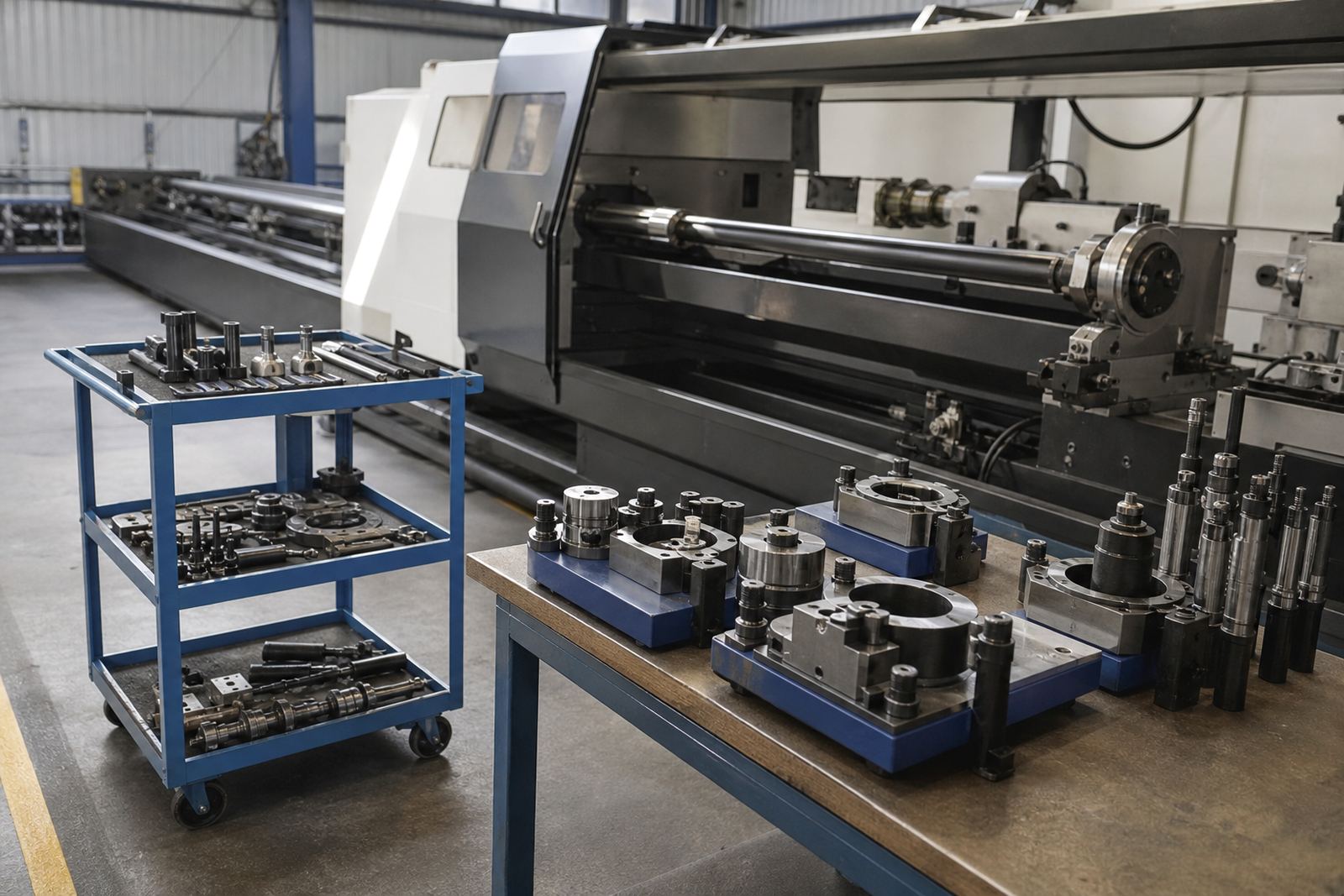
Gun-drilling and deep-hole boring rely on accurate setup. That means the machine needs clear access around the working side, the operator side and the maintenance side. Leave space for fixtures, support stands, measuring equipment and coolant service. If the machine is pushed too close to a wall, routine checks become awkward and operators start working around the layout instead of within it.
Chip control also affects the floor plan. Coolant tanks, filtration units and chip collection points should sit where they can be reached without interrupting the work area. In humid coastal areas like Durban and Gqeberha, good drainage and dry storage for tooling matter too, because rust and moisture can cause trouble quickly.
- Keep access clear for alignment checks and machine commissioning.
- Reserve room for coolant system service and filter cleaning.
- Allow safe walking space around the bay, not only at the front.
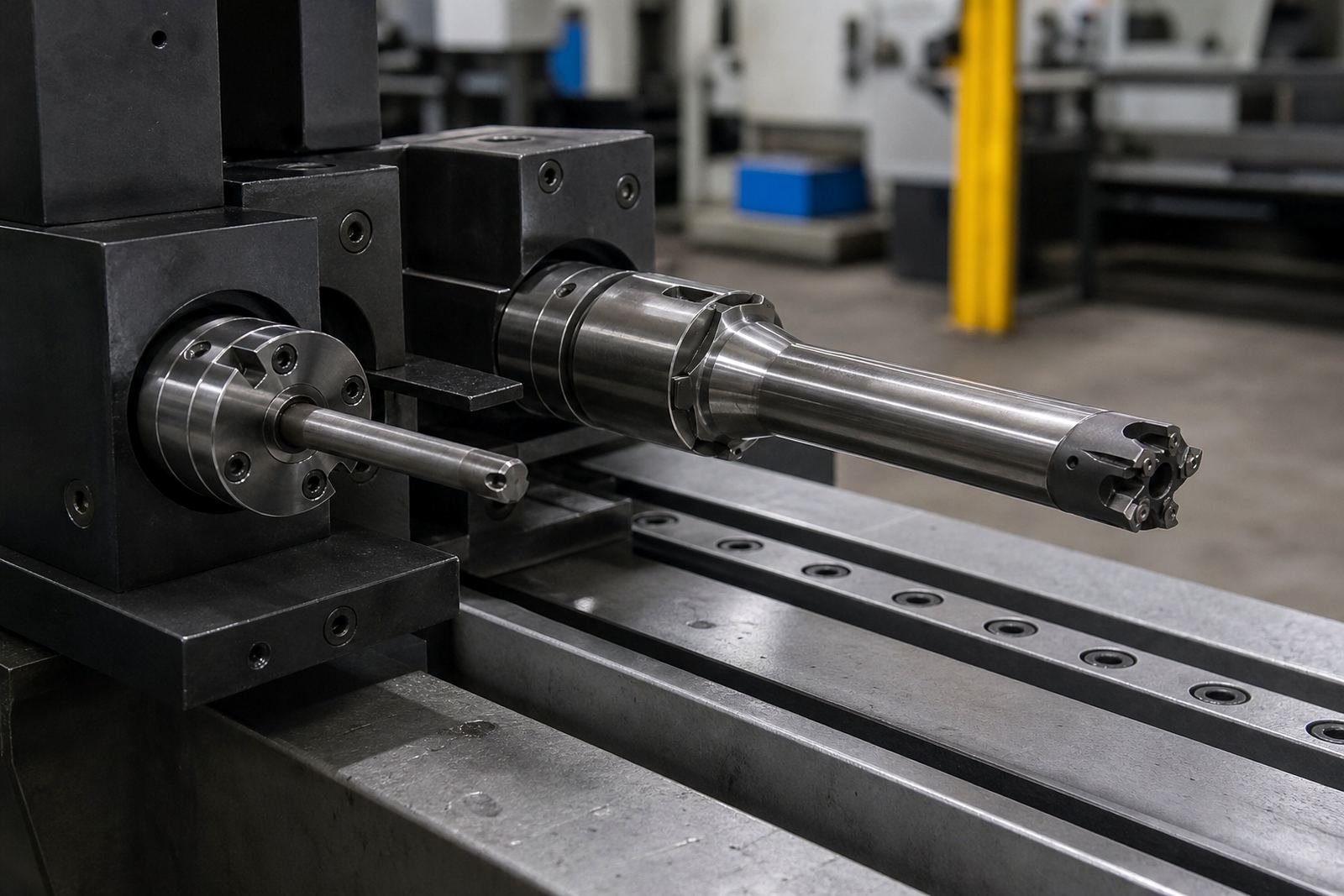
- Plan for storage of guides, drills, heads and measuring gear nearby.
Build A Flow That Matches Your Production
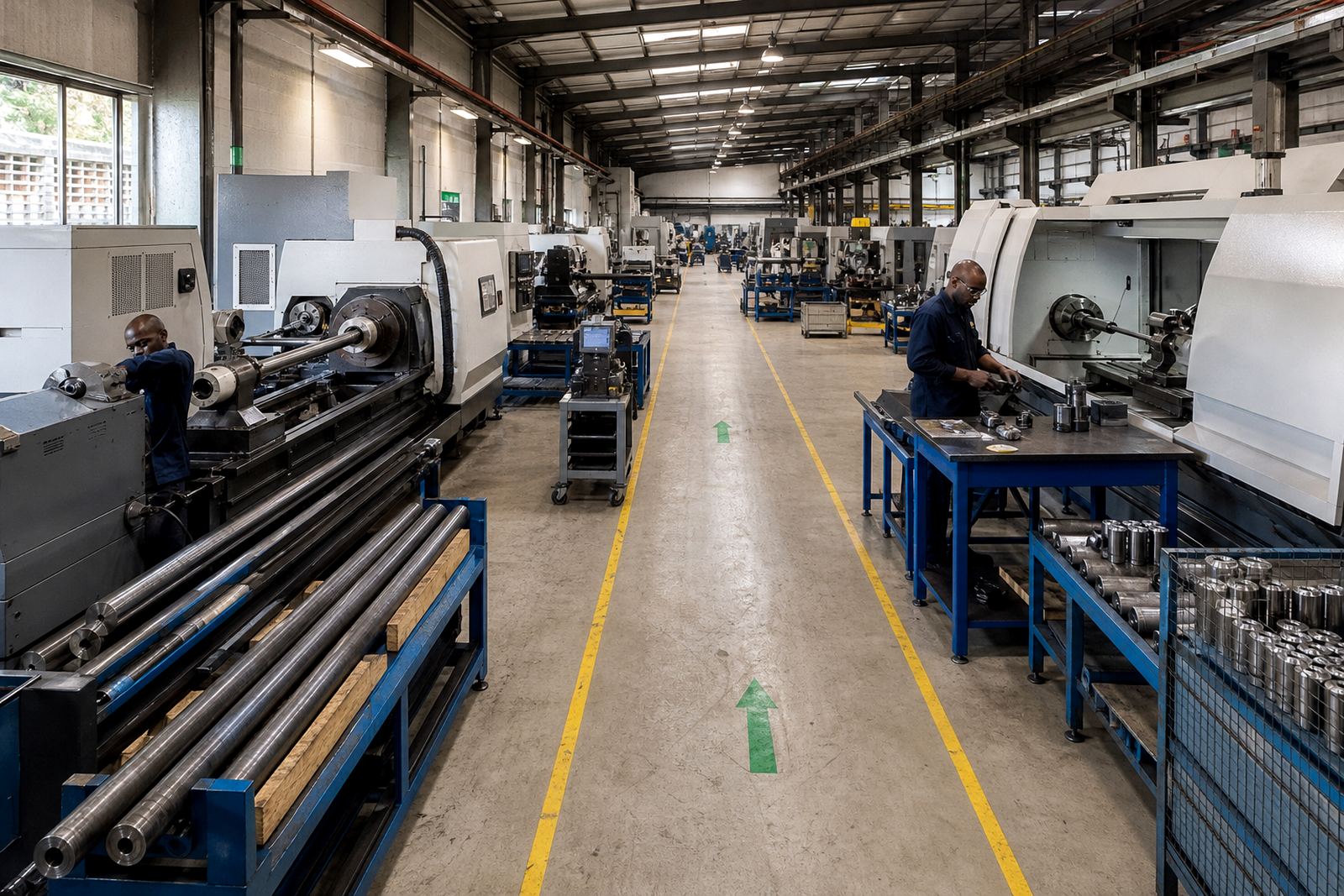
Good floor space planning is about flow, not just square metres. A shop that machines long parts should not force material to criss-cross the floor. Receiving, prep, drilling, inspection and packing should follow a straight line where possible. This reduces handling time and lowers the chance of dents, edge marks or mixed-up jobs.
For manufacturers in Benoni or the East Rand, a common issue is shared floor space with other processes. If milling, turning and drilling all sit in one bay, the deep-hole machine should be placed where long material can move without crossing hot work, grinding dust or heavy traffic. The fewer times a part changes direction, the better the control.
- Map the route from delivery bay to finished goods area.
- Separate long-part movement from busy general workshop traffic.
- Keep inspection and marking points close to the machine.
- Use floor markings to define safe walking and trolley routes.
Plan For Power, Services And Maintenance Access
A machine bay can look ready until the service connections are tested. Power supply, coolant, compressed air and any supporting equipment need to be positioned so that cables and hoses are not stretched across walkways. In South Africa, load-shedding also has to be considered. If backup supply or controlled shutdown time is part of your operation, the layout should allow the machine to be brought to a safe state without blocking the whole bay.
Maintenance access is often forgotten. A machine that cannot be opened properly for checks will lose time later. Leave enough room for preventive maintenance, breakdown support and spare parts replacement. If a technician has to move other equipment just to reach a panel, the layout needs work.
- Place service points where they can be reached without lifting hazards.
- Keep electrical panels and coolant areas clear of stored material.
- Allow room for preventive maintenance and alignment checks.
- Plan a safe shutdown path for power cuts and restart procedures.
Use Practical Benchmarks From Local Workshops
A simple local example helps. A machining shop in Benoni may receive long bars for deep-hole boring, then move the finished parts to a separate inspection area. If the machine is placed against the wrong wall, the forklift may need to reverse through a tight aisle, while the operator walks around packed material just to set up the next job. That adds risk and slows production. A better layout keeps the load path straight, with a clear open end for handling and enough side access for tooling and setup optimisation.
Every shop is different, but the same rules apply in Johannesburg, Pretoria, Durban, Cape Town and Gqeberha. Long-part flow must match the building, the lifting method and the way your team works each day. Small layout changes can make a big difference to daily output and operator safety.
- Test the route with the longest expected part before final placement.
- Check turning space for cranes, pallet jacks and forklifts.
- Mark the machine envelope on the floor before installation.
- Keep emergency exits and access routes fully open.
Get The Layout Right Before Installation Day
Floor space planning should happen before machine installation, not after. Once the machine is in place, moving it again costs time, money and production. It is better to confirm dimensions, door widths, floor loading, service access and part flow early. That is where practical support from an experienced supplier helps. The right advice can prevent a workshop from becoming cramped, noisy and hard to maintain.
At Deephole, the focus is on gun-drilling and deep-hole boring machines, tooling and support for manufacturers and engineering shops across South Africa. From machine commissioning and operator training to process troubleshooting and production startup, the aim is to help each site make the most of its floor space from day one. A good layout should support the job you do now and the bigger orders you want to take on next.
When a bay works well, the team feels it every shift. Parts move cleanly, the machine is easier to live with and the work stays under control.