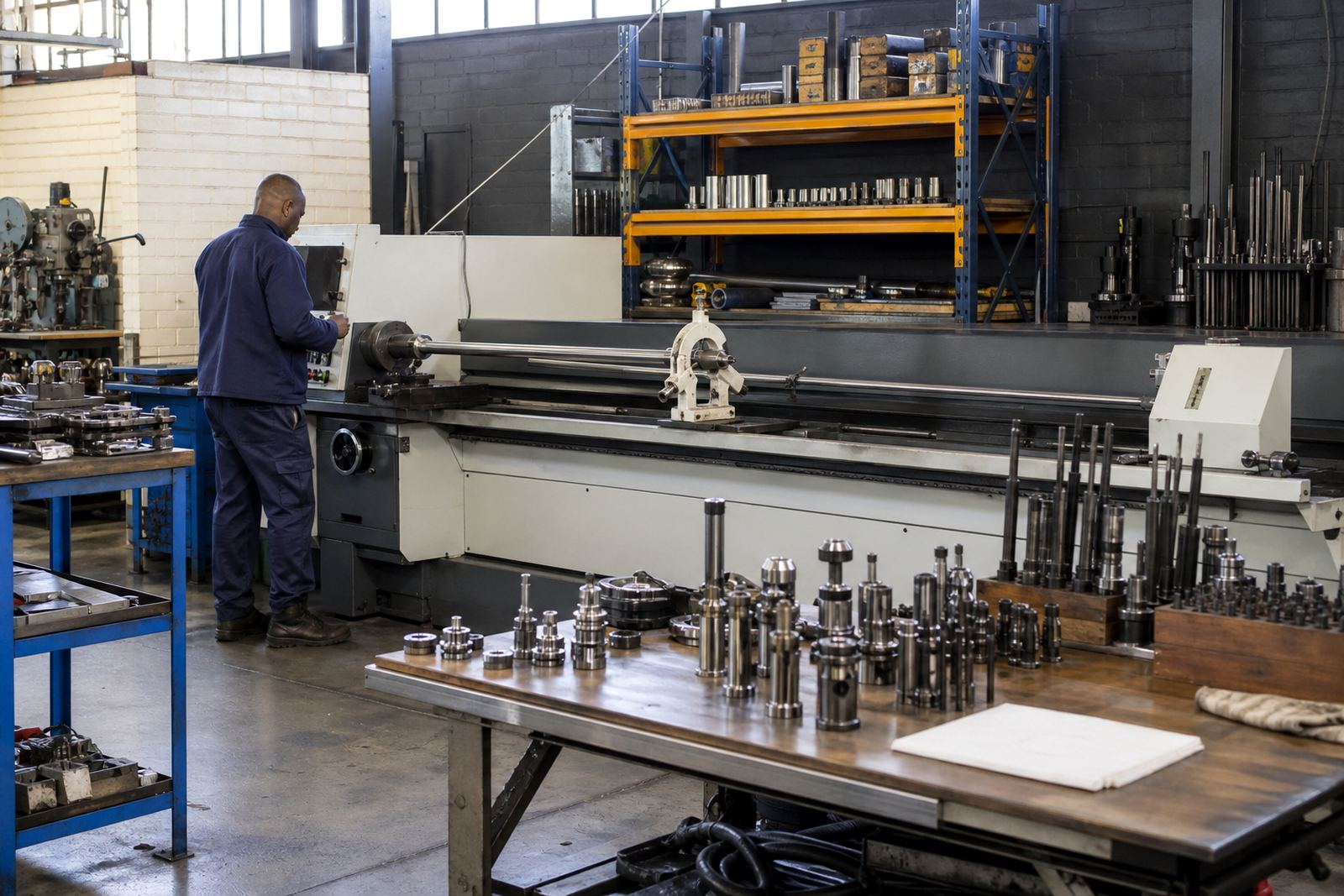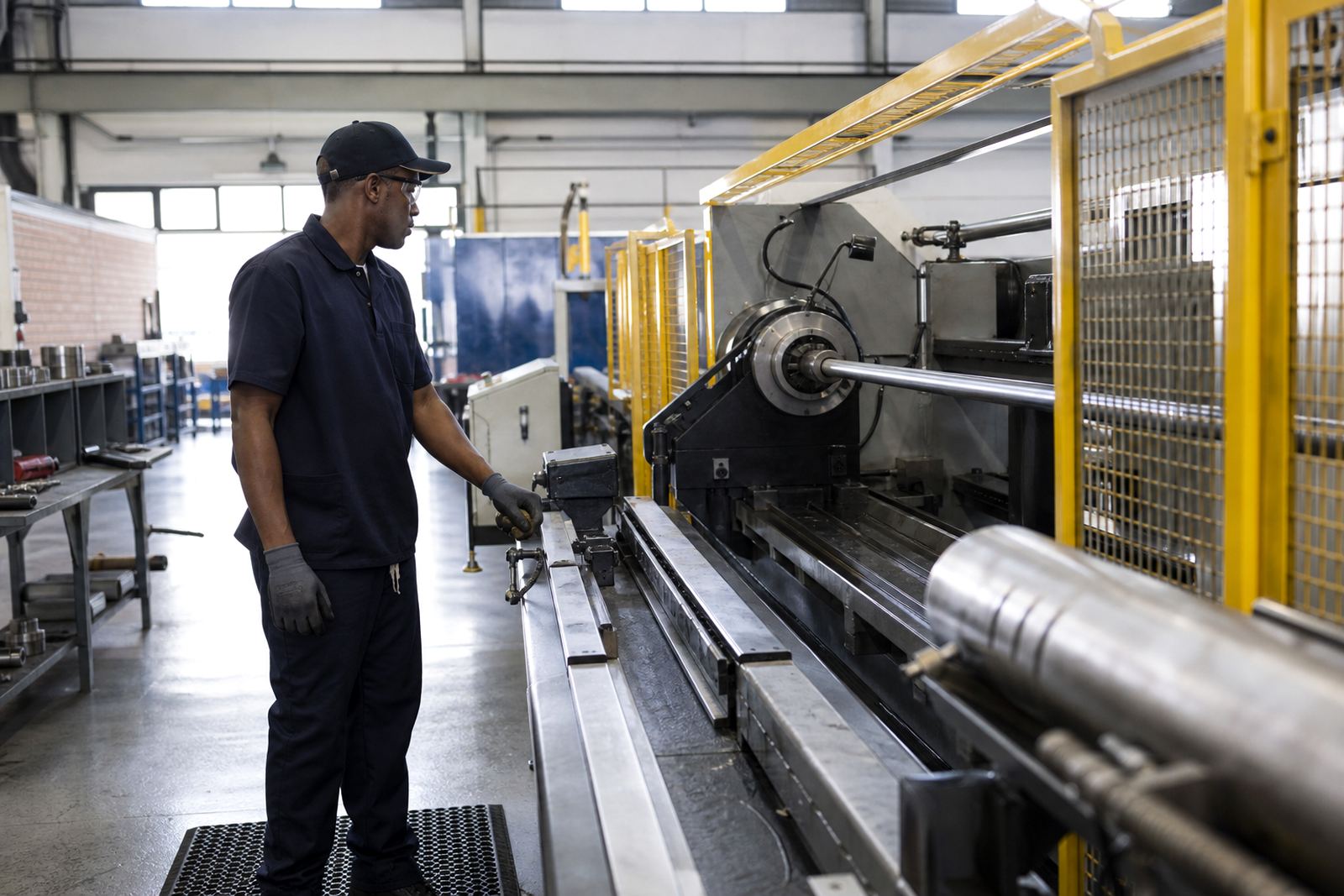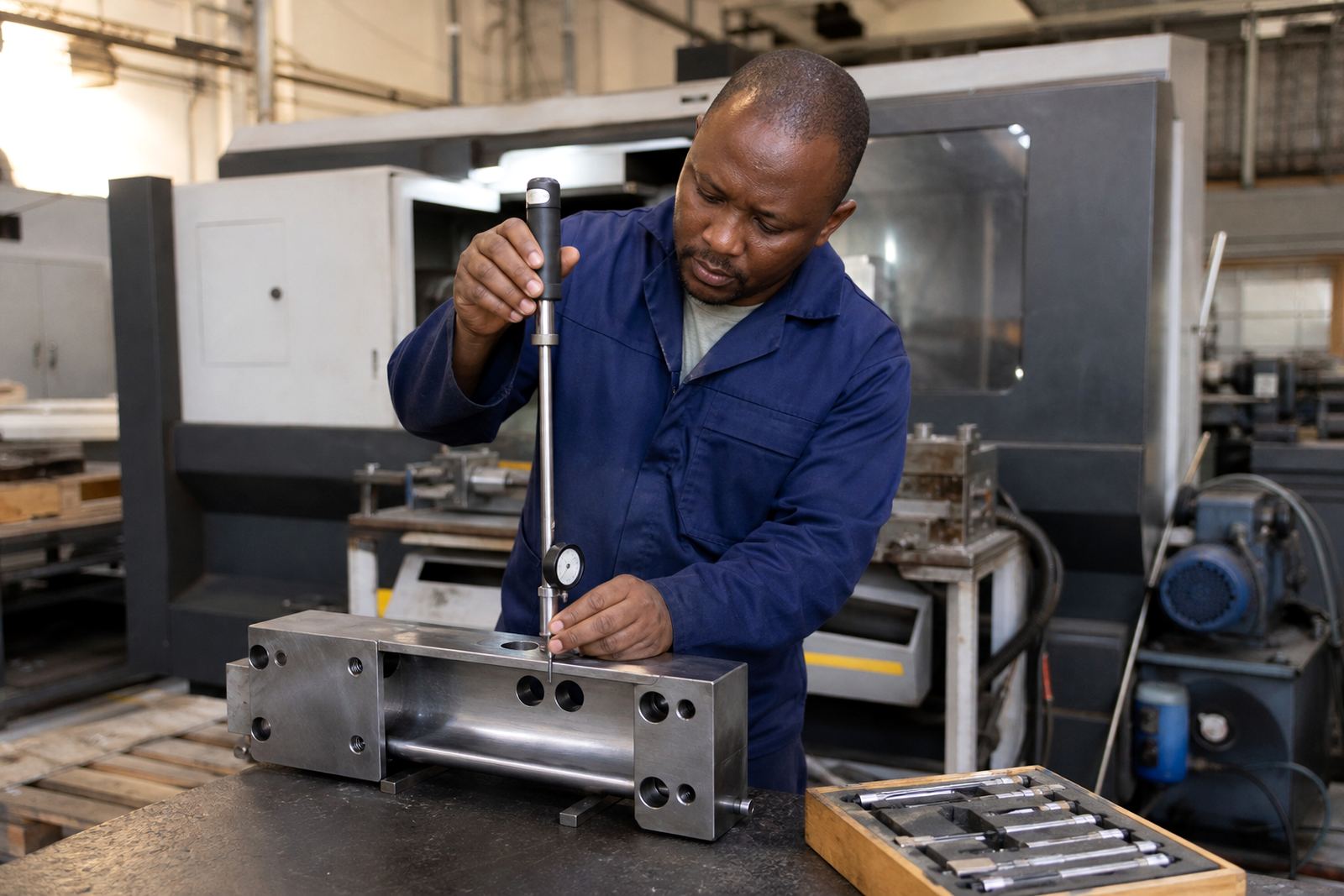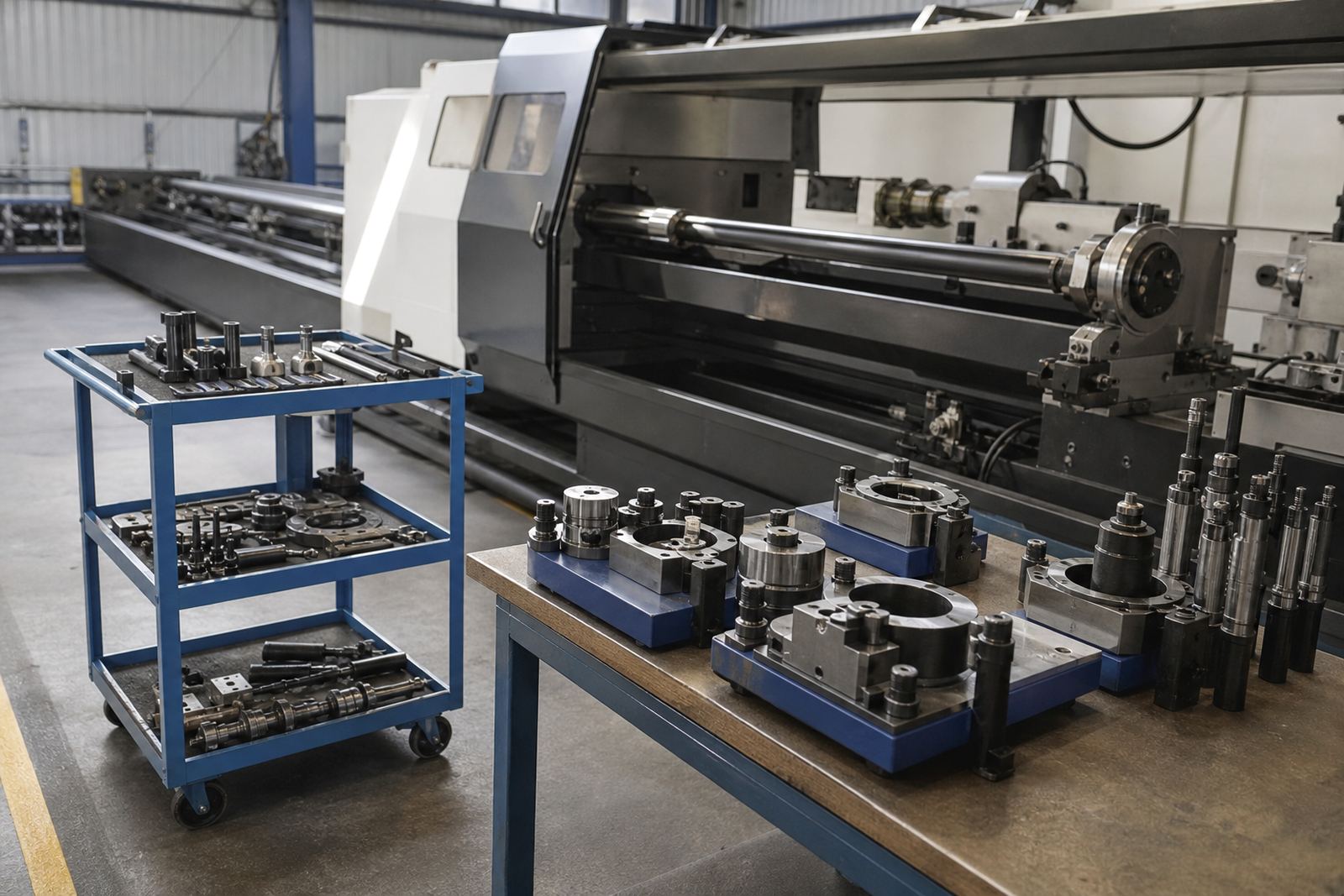
Start with a repeatable machine check before the first cut
Most setup delays start before the workpiece is even clamped. If the machine is not ready, every job takes longer because the operator is chasing small faults instead of setting the process. A simple pre-start routine helps in Benoni, Durban or Cape Town where the shop may have different humidity, dust levels and power interruptions from one week to the next.
Keep the same order every time. Check the machine condition, coolant level, filters, guide elements, alignment points and any tooling that is due for inspection. When this is done in the same sequence, the team spends less time thinking about what was missed and more time getting the machine into production.
- Confirm the machine is level and stable on the floor
- Check coolant delivery and flow before loading the first part
- Inspect tools, holders and wear parts for damage
- Verify the bore support and workholding setup
- Make sure all gauges and measuring tools are at hand
Use tooling that suits the job instead of forcing one tool to do everything
In deep-hole work, the wrong tool choice can create long setup delays because the operator keeps adjusting feeds, speeds and support settings to rescue the cut. A better approach is to match tooling to the material, hole depth and finish requirement from the start. That reduces trial runs and keeps the bore stable.
Tooling selection also affects how quickly a job can be repeated later. When the shop keeps a clear record of what worked on stainless, mild steel or alloy sections, the next setup starts with a known path rather than a fresh guess. That matters for manufacturers running short batches as well as engineering shops handling repair work.
- Keep commonly used tooling grouped by bore size and material type
- Label setting notes clearly so repeat jobs are easier to restart
- Replace worn consumables before they cause drift or poor finish
- Review whether the current tool path suits the part geometry
Reduce clamp changes by standardising workholding
Workholding is one of the biggest hidden time losses. If every part needs a different clamp arrangement, the operator spends too long measuring, packing and rechecking. Standardising fixtures where possible gives a shop a much faster start without cutting corners on process control.
For a local manufacturer in the East Rand supplying shafts and hydraulic components, a standard fixture plate can save far more time than a rushed drilling cycle ever would. The point is not to remove checking. The point is to make checking faster because the part sits in a familiar position each time.
- Use repeatable locating points for parts in the same family
- Keep fixture notes beside the machine, not in a separate office file
- Review clamping access so the operator can reach fasteners easily
- Allow enough clearance for coolant return and chip removal
Set the process once, then protect it during production
Setup time often grows because teams keep stopping to adjust a process that should have been locked in earlier. Once the bore is running correctly, the aim is to keep that condition steady. This means watching pressure, flow, alignment and tool condition without constantly changing settings unless there is a real reason.
Process control is not about adding paperwork. It is about knowing which values matter and keeping them visible. A trained operator should be able to see when a bore is drifting before the part is affected. That is especially useful when load-shedding disrupts schedules and the machine has to return to work quickly after a pause.
- Write down the correct setup sequence for each recurring job
- Record the critical values that must stay within range
- Check the first part carefully, then monitor at planned intervals
- Stop and correct the cause of variation, not just the symptom
Train the team to recognise the difference between delay and control
A setup becomes slow when only one person knows how to complete it. Cross-training helps the team work faster because the right person can handle the right task without waiting for instruction. That does not mean everyone should do everything. It means the machine technician, applications specialist and operator understand the same method.
At Deephole, support often starts with a quick review of the job route, then moves into tooling, machine setup and operator coaching. When the team understands why a step matters, they are less likely to skip it or repeat it. The result is quicker setup and better consistency across batches.
- Teach the sequence, not just the button presses
- Show operators how to spot early signs of chatter, wear or misalignment
- Keep training notes near the machine for new staff and relief operators
- Recheck training after service work, machine moves or process changes
Use local support to shorten downtime between jobs
When a shop in Johannesburg, Pretoria or Durban loses time during setup, the real cost is often not the job itself but the delay in getting help, parts or advice. Local support matters because machine installation, commissioning, alignment checks and breakdown support can be handled with fewer delays and less back and forth.
A Benoni-based operation can often respond more quickly to East Rand and Gauteng work, while still supporting Cape Town and Gqeberha through planned supply and service scheduling. That helps shops keep production moving when they need tooling advice, spare parts, coolant system service or process troubleshooting before the next batch starts.
Reducing setup time is not about rushing. It is about removing the avoidable stops that waste hours and leave the bore at risk. If the machine, tooling, fixtures and training are organised properly, the operator can move faster and still protect the process.