Start with the bar as received, not when it is already on the machine
Before a long bar enters the work area, inspect it on arrival. Check for dents, rust patches, burrs on the ends and any signs that the material was dropped during transport. If the stock is not clean and straight at the start, no amount of careful drilling will fully fix the result later.
Keep bars on proper racks that support them along their length. Do not leave them resting on bare floor or on narrow timbers where they can sag. In a Benoni workshop, where mornings can be cool and afternoons warm, temperature changes can also bring out moisture on stored steel. That is worth watching in the East Rand, especially in open bays and near roller doors.
- Wipe off protective oil only where clamping or measuring is needed.
- Tag each bar with material grade, length and job number.
- Separate new stock from cut-offs to avoid mix-ups at the machine.
- Reject any bar with bent ends or visible impact damage before setup starts.
Use safe lifting and transfer methods for long stock
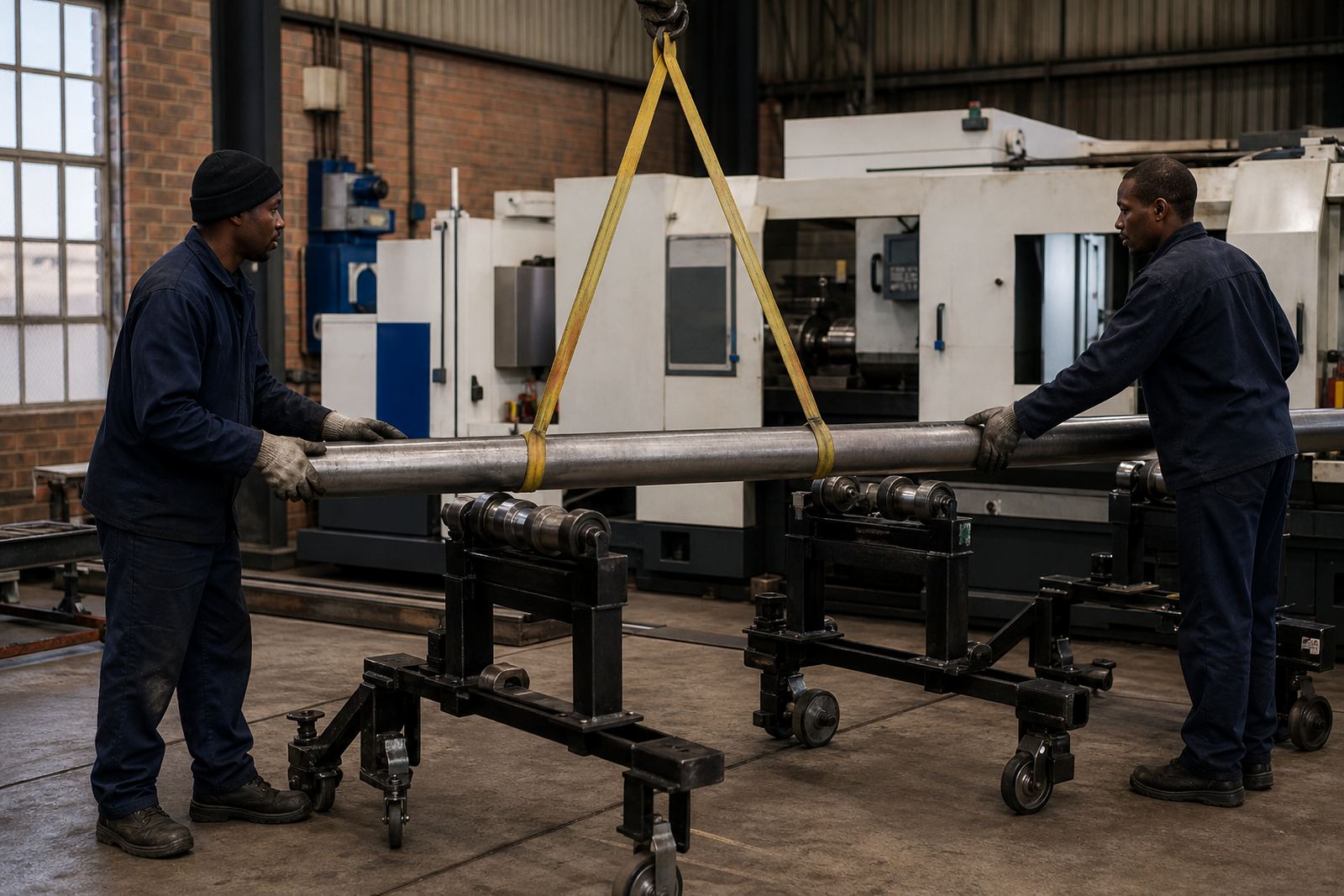
Long shafts can swing, twist or whip when moved by hand, so plan the route before lifting begins. Use a forklift, crane or roller support that suits the weight and length of the bar. One operator should never try to guide a heavy shaft alone while another is still adjusting slings. That is where injuries and accidental knocks happen.
For shops that work across Johannesburg, Pretoria and the wider Gauteng area, good transfer habits matter as much as good cutting practice. A bar that scrapes across a concrete edge can pick up a tiny burr, and that burr can start a problem during loading or first contact with the guide system. Keep lift points balanced and move slowly. If the workshop floor is uneven or crowded, clear it first.
- Check sling condition and lifting points before every move.
- Use end caps or soft covers where the job allows it.
- Never drag a finished shaft across steel rollers without support.
- Keep hands clear of pinch points when the bar is being lowered.
Prepare the ends properly before drilling or boring
End preparation is often the difference between a smooth start and a frustrating one. The leading end must be square enough for accurate loading, and the entry area should be clean, deburred and measured. If the face is rough, the drill can pick up early runout and the tool will spend the rest of the cut correcting a bad start.
For deep-hole work, a clean lead-in helps the coolant reach the cutting zone and keeps chips moving in the right direction. This is especially important where long bars are being machined for hydraulic, automotive or general engineering use. If the workpiece is already machined on the outside, protect those surfaces during clamping so marks do not carry through to final assembly. A minor slip at the loading stage can cost a full shift later.
- Deburr both ends before the bar reaches the machine.
- Check face squareness and centre condition before clamping.
- Use clean supports so chips do not get pressed into the surface.
- Confirm the bar length against the machine setup before cutting starts.
Control support points through the full length of the job
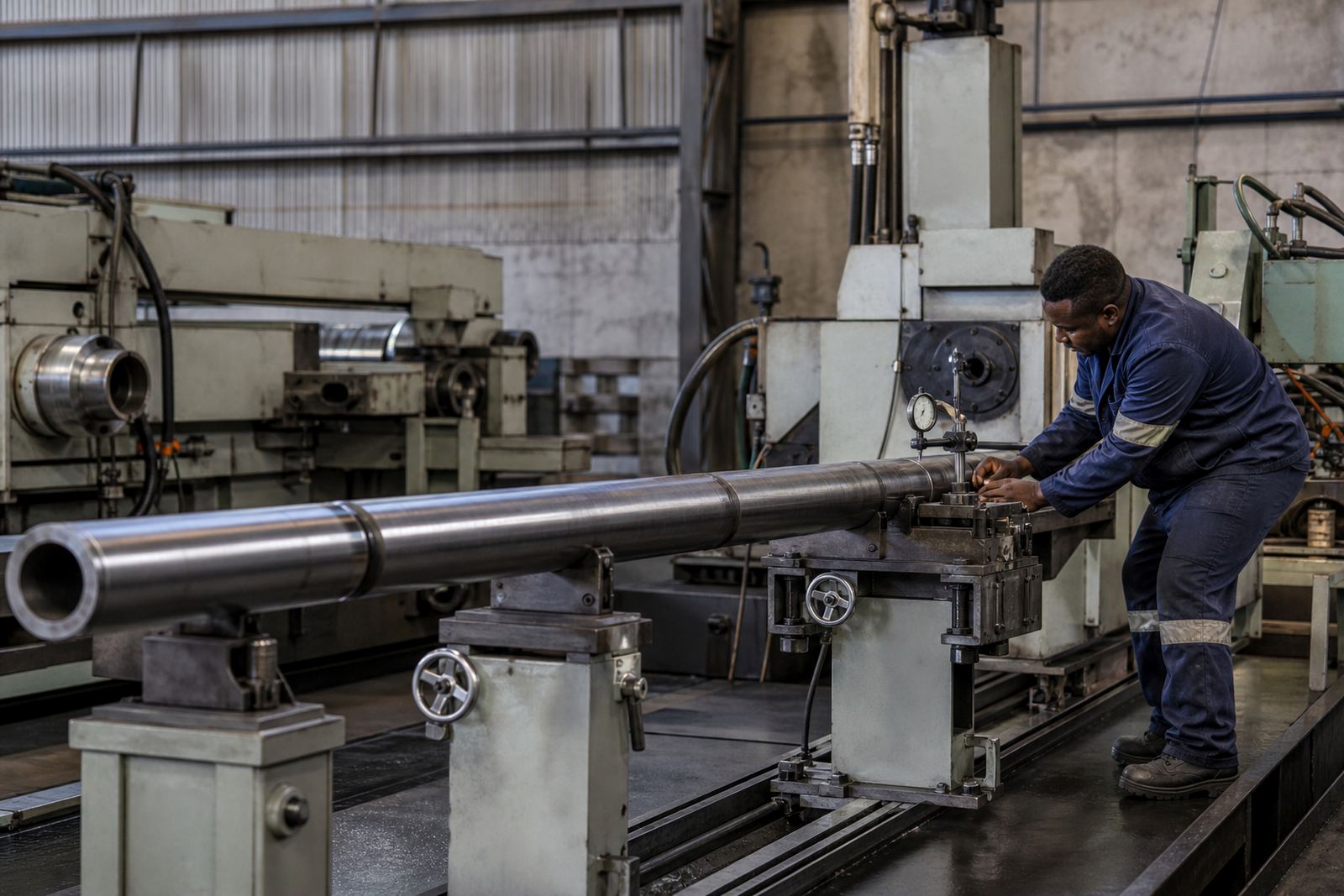
Long bars need steady support from entry to exit, not only at the chuck or headstock. If the free length is left hanging, the material can sag and create alignment problems. That puts extra load on the tooling and can affect bore straightness over the full depth of the part.
Set up rests, supports and transfer positions so the bar stays aligned as it advances. On longer jobs, check support spacing again after the first few metres are through. Vibrations from nearby machines, changes in coolant flow or repeated loading can shift the bar slightly. In Durban, where humidity can be high, surface rust can also build faster on unprotected sections if the job is left open between operations.
- Place supports where the bar will not bow under its own weight.
- Recheck alignment after the first setup cut or pilot hole.
- Keep support surfaces clean from chips and grit.
- Use the same support height along the job wherever possible.
Protect the machined surface after the cut is complete
Once the bar is machined, handling needs to become even more careful. The bore, outer diameter and any finished faces can pick up damage from straps, clamps or rough storage. Keep finished work away from raw stock and off the floor. If a part has to wait before final assembly, store it on padded supports and cover it against dust.
After machining, clean the part properly before it moves to inspection or packing. Chips left in a bore can scratch the surface if the part is tilted or shifted. Where machining has been done near the coast, for example around Cape Town or Gqeberha, it helps to apply protection quickly because airborne moisture can leave a mark faster than many shops expect. In that stage, care matters just as much as the cut itself.
- Do not stack finished shafts directly on each other.
- Use clean separators or padded racks for storage.
- Remove chips from bores and channels before moving the part.
- Protect exposed surfaces from dust, moisture and handling marks.
Build a handling routine that suits the workshop, not just the job
Long bar handling works best when the team follows one routine every time. The same loading point, the same support method and the same inspection steps reduce confusion and help operators spot trouble early. That matters in busy shops where several jobs may be running at once and one rushed move can affect the whole schedule.
A solid routine also helps during load-shedding or power interruptions, which many South African workshops know well. If power stops mid-process, secure the workpiece before anyone leaves the area. Confirm the bar is supported, the machine is safe and the floor is clear before restarting. Deephole supports manufacturers and engineering shops with machine installation, commissioning, tooling selection, setup optimisation, operator training and process troubleshooting, so the handling process fits the equipment on site rather than fighting it.
For a Johannesburg supplier sending long stock to a workshop in Benoni, the same principle applies: plan the move, protect the surfaces and confirm the setup before production begins. That is how good drilling results are kept consistent from the first cut to the final inspection.