
Start With the Part, Not the Machine
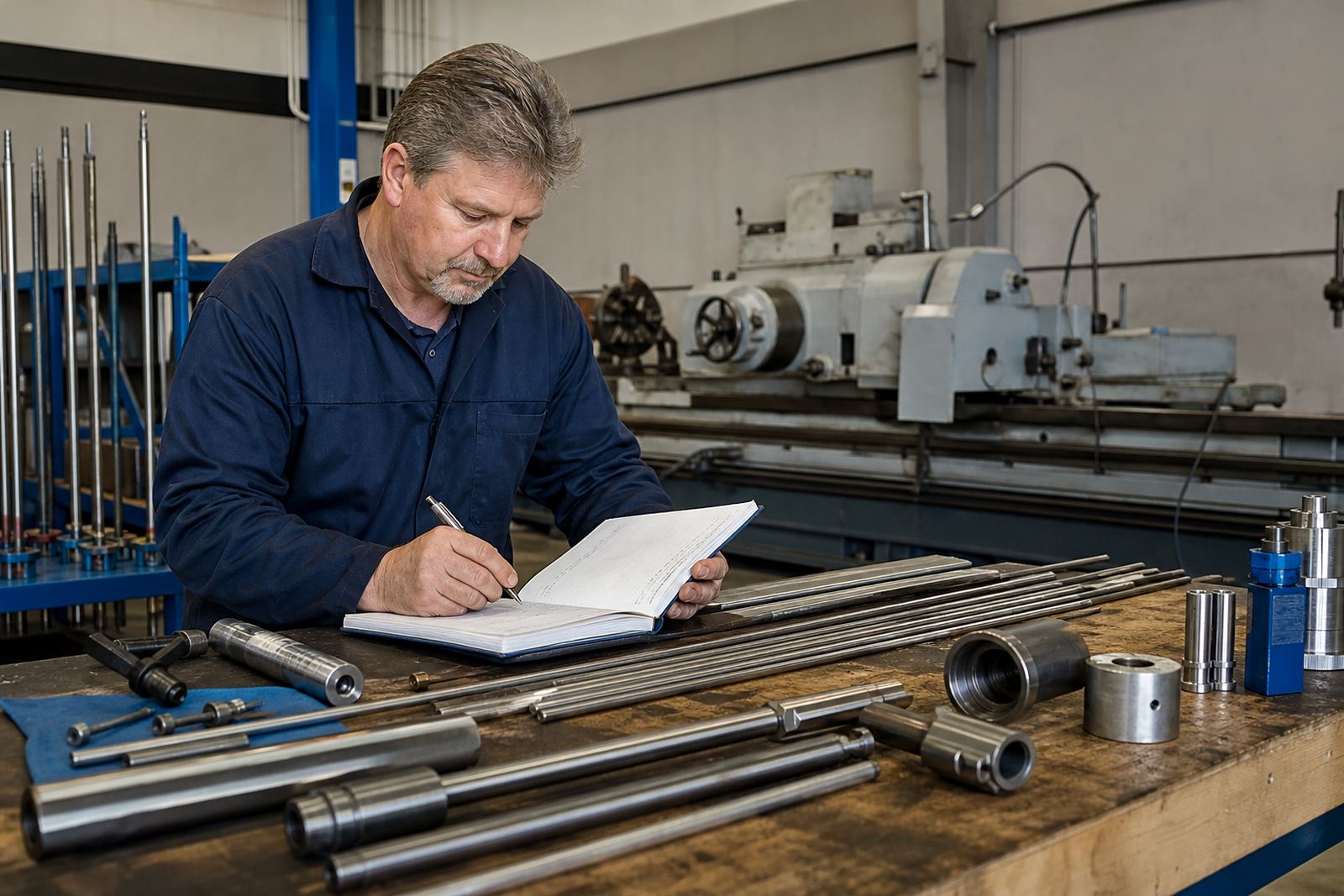
Straightness starts before the first cut. Check the job drawing, material condition and how the component will be held, because a part that moves or bends in clamping will send the drill off line before the hole is even established. On long drilling work, small errors at the start build up fast.
At Deephole, we see this in Benoni and across the East Rand all the time. A job may look simple on paper, but if the support points are wrong or the workpiece is stressed during clamping, the hole can wander over the full length. That is why setup should be treated as part of production, not a quick pre-start task.
- Confirm the datum and clamping points before loading the part.
- Make sure the workpiece is clean, free of burrs and seated properly.
- Check for bow, twist or casting movement before you start.
- Use the same setup method every time the job returns.
Tool Alignment Must Be Checked in More Than One Way
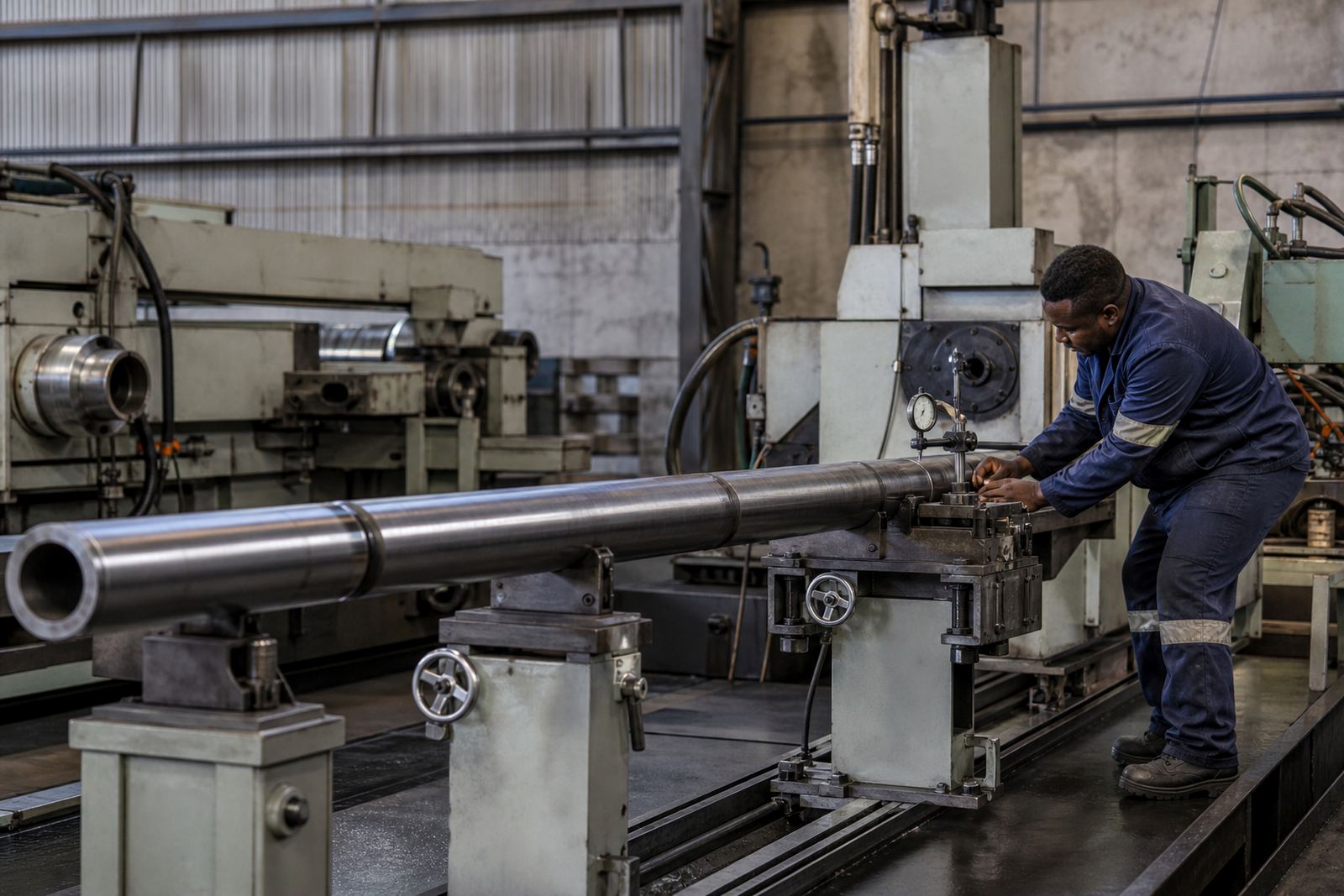
With gun-drilling and deep-hole boring, the first few millimetres matter more than most operators expect. If the tool starts off centre, the hole can still look fine for a short distance, then drift as the cut gets deeper. That is why alignment checks should include the machine, the fixture and the tool itself.
Do not assume a previous setup is still correct after a changeover, maintenance visit or tooling swap. A small shift in the workholding or guide system can affect the full run. In practice, it is worth checking alignment at the start of every long drilling job, even when the same part has run before.
- Verify the machine spindle and support points before loading the first piece.
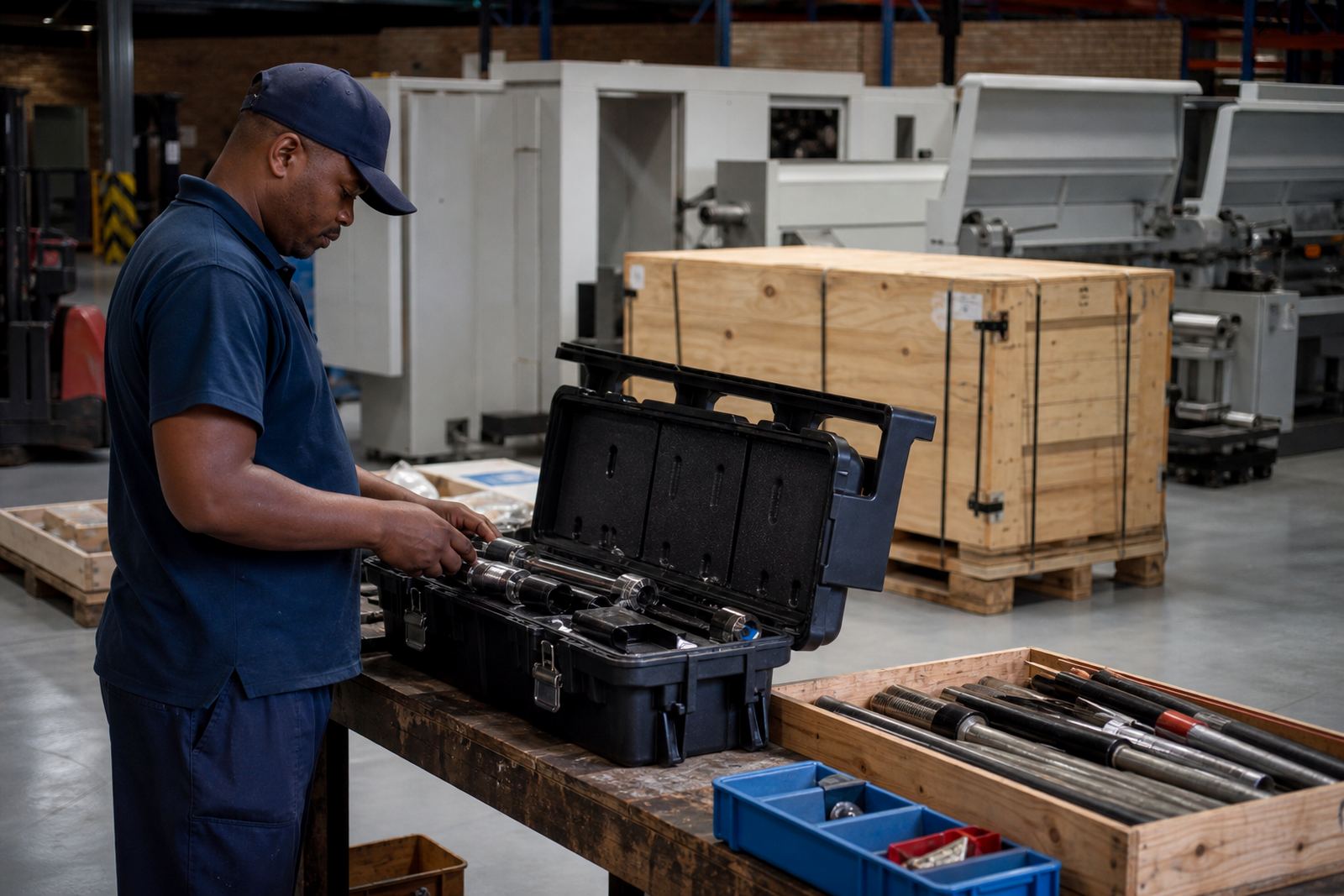
- Inspect the tool assembly for wear, run-out or damage.
- Recheck after tool changes, coolant changes or transport of the machine.
- Record any repeat correction so the next setup starts closer to target.
Choose Tooling That Matches the Material and the Depth
Straight holes need tooling that suits the job, not just tooling that fits the holder. Material type, hole depth, chip formation and coolant delivery all affect whether the drill tracks true. A tool that cuts well in one job may not behave the same on a longer or harder application.
Tooling selection also affects how much pressure the operator needs to apply and how the chips leave the cut. If chip evacuation is poor, the tool can rub, heat up and begin to pull off line. That is a common cause of wandering holes, especially on repeated production runs where the team is trying to save time.
- Match tooling to the material hardness and hole depth.
- Check coolant flow so chips clear cleanly from the hole.
- Replace worn guides, inserts or related components before quality drops.
- Keep a separate record for tooling that works best on repeat jobs.
Coolant Flow and Chip Control Keep the Cut True
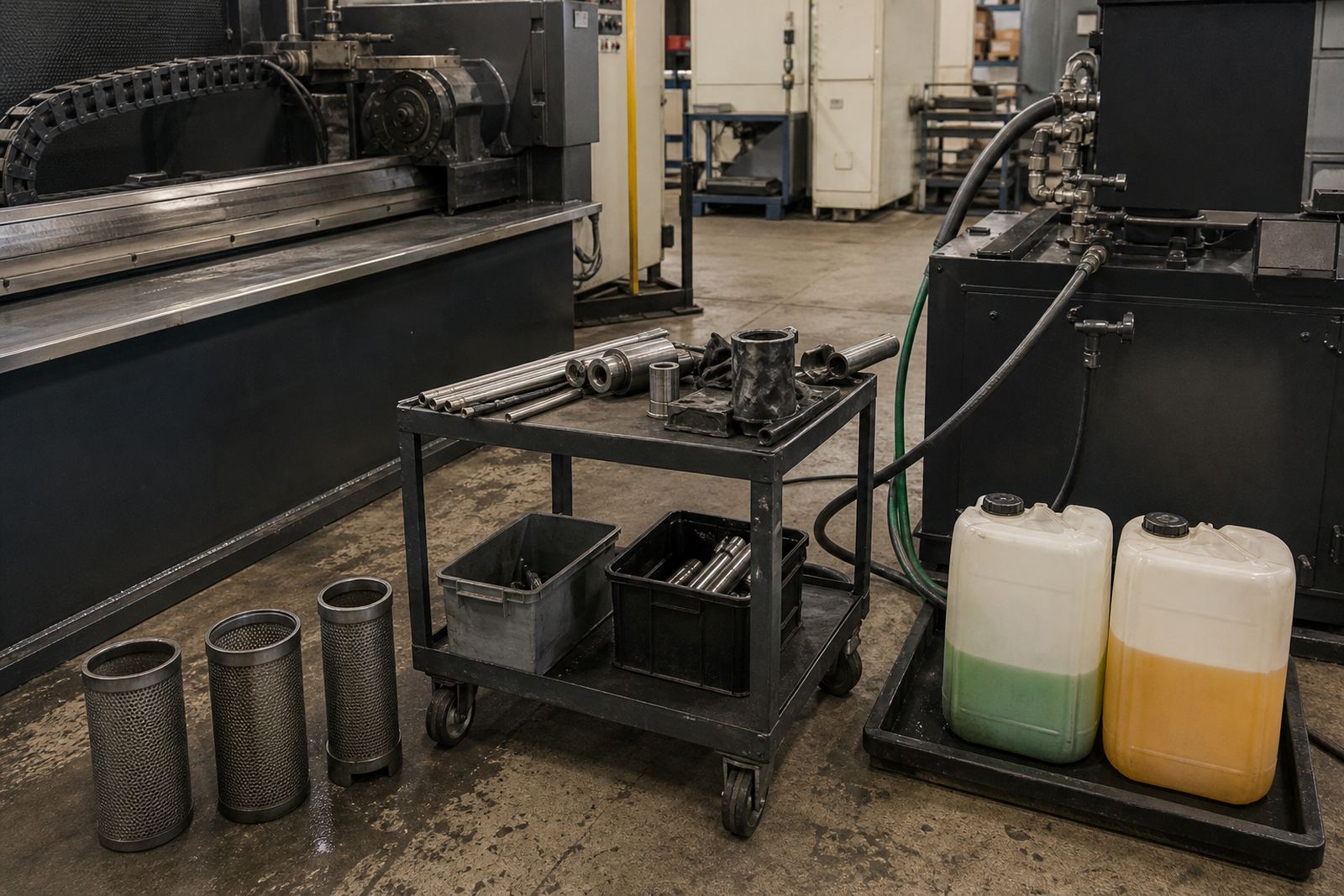
Good coolant is not only about temperature. It helps carry chips away, supports the cutting edge and reduces friction in the hole. When flow is weak, blocked or poorly aimed, the tool can start to chatter or deflect. That shows up as poor straightness, especially on longer jobs where the heat builds slowly.
In coastal areas like Durban and Gqeberha, coolant condition deserves extra attention because humidity and corrosion can affect both the machine and stored tooling. In Gauteng, dust and inconsistent power can also affect pumps and service intervals. A simple coolant check before shift start can save a lot of rework later.
- Inspect filters, hoses and nozzles before production starts.
- Keep coolant concentration within the supplier's working range.
- Watch for foam, sludge or contamination in the tank.
- Make sure chips are clearing, not recirculating through the cut.
Operator Habits Make or Break Long Hole Accuracy
Even a good machine and the right tooling will struggle if the operator rushes the job. Feed rate changes, skipped checks and poor chip control can all move the hole away from line. On long drilling work, the operator needs to read the cut and respond early, not after the part has already gone out of tolerance.
Training is especially important on jobs where the same component runs across shifts. A new operator may follow the written process, but if nobody explains what normal cutting sounds and feels like, they may miss the warning signs. That is where setup discipline and practical training go hand in hand.
Useful habits for the shop floor include:
- Stop and inspect if the cut sound changes suddenly.
- Check chip shape and colour during the run.
- Do not force the job if the tool starts to pull or vibrate.
- Hand over the setup notes clearly between shifts.
Support, Maintenance and Repeatable Production in South Africa
For manufacturers in Benoni, Johannesburg, Pretoria, Durban, Cape Town and Gqeberha, straight hole setup is also about keeping the machine ready to work. Preventive maintenance, alignment checks and proper commissioning all help reduce the small issues that become big ones on deep drilling jobs. A machine that is slightly out of line today can cost time on every job until it is corrected.
Deephole supports workshops with machine installation, commissioning, tooling selection, setup optimisation, operator training, process troubleshooting, preventive maintenance, breakdown support, spare parts support, coolant system service, alignment checks and production startup. That kind of support matters when a customer has to keep production moving through load-shedding, shift changes and tight delivery dates.
When the goal is a straight hole, the best approach is simple: keep the setup consistent, check the alignment, protect the tooling and treat the first cut with care. A clean start usually means less correction later.