
Why coolant cleanliness changes the drilling result
In deep-hole work, coolant does more than carry heat away. It flushes chips, supports tool life, and helps keep the hole straight as the drill works deeper into the material. If the coolant carries too much swarf, tramp oil, fines or air, the pressure and flow through the tool become less predictable, and that shows up in the bore.
That is why housekeeping around the sump, filters and pipework matters just as much as the machine setting. A dirty system can cause poor chip evacuation, erratic surface finish and more frequent stoppages for cleaning. In practical terms, the machine may still run, but it will not run as it should.
What dirty coolant usually looks like on the shop floor
Most shops notice the warning signs before they measure them. The coolant may smell off, foam more than usual, or leave a sticky film on the machine bed and fixtures. In some cases the operator sees chips hanging in the hole or a change in sound as the tool starts pushing harder through the cut.
- Visible sludge in the tank or settling around the pump intake
- Foaming, cloudiness or a sharp change in coolant colour
- Tool heat building up faster than normal
- Unstable chip flow from the hole
- Rust marks on stored parts or machine surfaces
These signs do not always mean the machine is at fault. Often, the coolant system is simply overdue for attention. A little routine care can prevent a lot of grief later, especially on jobs where the material is costly and the tolerances are tight.
The main housekeeping points to check every shift
Coolant care works best when it is done often and in small steps. The aim is not a full strip-down every day, but a steady routine that keeps the system stable and the fluid usable. On busy Gauteng floors, where machines may run through load-shedding interruptions and then restart under pressure, these checks become even more important.
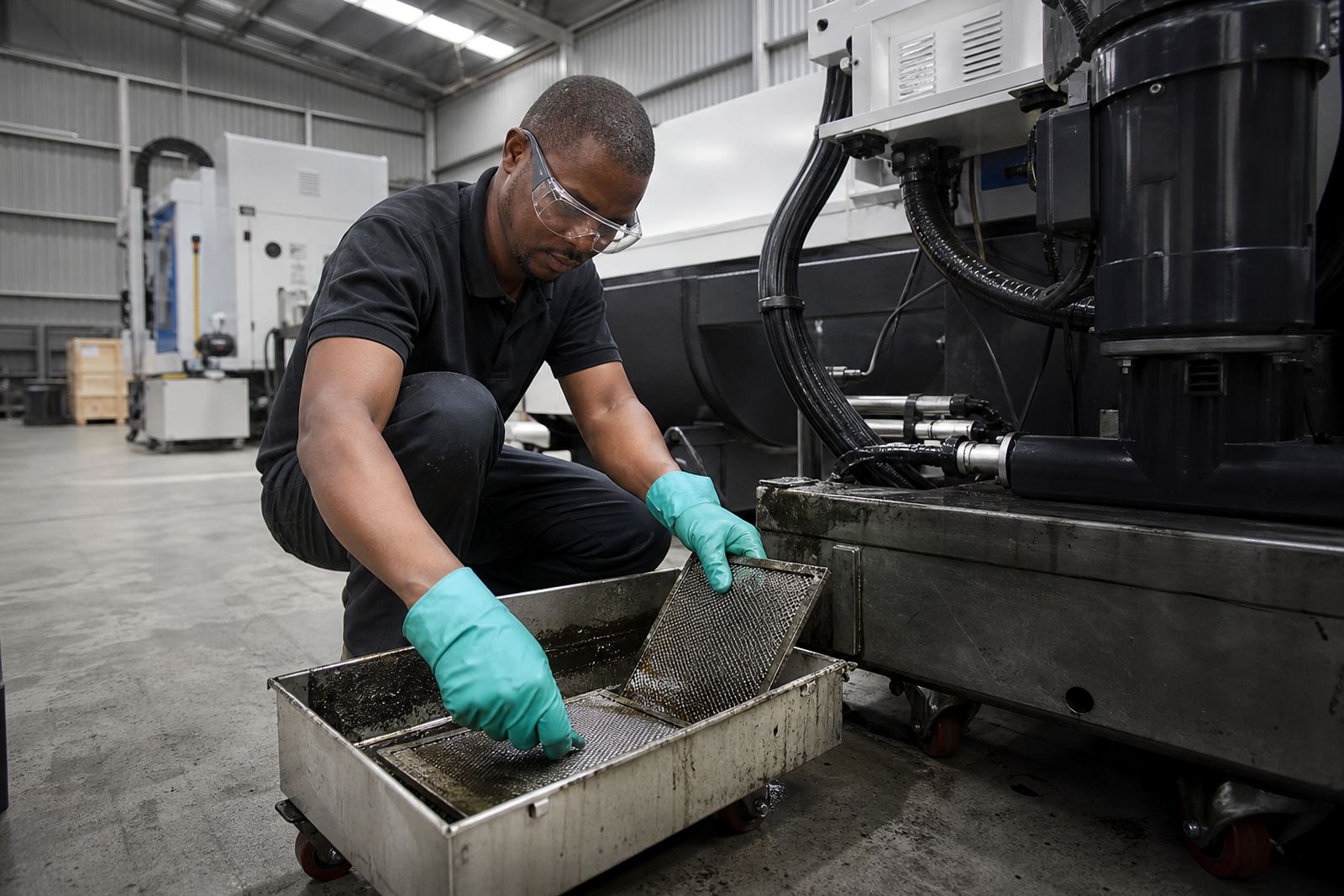
- Skim tramp oil from the surface before it builds up
- Remove swarf from the tank and chip traps before it compacts
- Check concentration with a simple refractometer or approved method
- Inspect hoses, nozzles and seals for leaks or contamination
- Top up with clean water and mixed coolant, not straight water
- Confirm the pump intake is not drawing sludge from the bottom
It helps to assign one person to log these checks at the start or end of shift. When responsibility is clear, small problems get spotted earlier and the coolant system stays easier to manage.
How coolant condition affects hole quality and tool life
Gun-drilling and deep-hole boring rely on controlled cutting conditions. When coolant is clean and at the right concentration, it clears chips properly and keeps the cutting edge more stable. That means less friction, better repeatability and fewer surprises when the drill reaches deeper sections of the workpiece.
Once coolant degrades, chip evacuation becomes less consistent. The drill can start to rub instead of cut cleanly, which raises temperature and increases wear. Surface finish can become patchy, and the machine may need more frequent adjustment. In a workshop, that can mean extra rework, more down time and a bigger risk of losing production time on a job that was already time-sensitive.
This matters especially on long runs or on jobs that use expensive stock. If the coolant is compromised, the cost is not only in the fluid itself. It also shows up in tool changes, labour and the pressure of recovering a delayed job.
A local example from a Benoni production bay
A typical case in the East Rand is a shop running deep-hole work on a batch of components for a Johannesburg customer. The machine is sound, the tooling is correct, and the program is fine, but the operator starts seeing chips gathering near the entry and a slight change in bore finish after a few parts. The issue turns out not to be the drill, but coolant that has not been filtered well enough after several shifts.
Once the sump is cleaned, the sludge is removed and the concentration is reset, the drilling settles again. The team does not have to change the whole process, only the condition of the coolant system. That is a common pattern in real production. Small faults in coolant housekeeping can create enough variation to throw off an otherwise steady process.
When to call for support before the problem spreads
Some coolant issues can be handled by the shop team, but others need a closer look at the machine, flow path or setup. If the same contamination keeps returning, or if the pump, seals, filters or heat control are not doing their job, it is better to deal with it early. Waiting usually means the problem reaches tooling, bore quality and machine uptime.
Our team supports manufacturers and engineering shops across South Africa with machine installation, commissioning, tooling selection, setup optimisation, operator training and preventive maintenance. We also assist with breakdown support, coolant system service, alignment checks, spare parts support and production startup. The aim is to keep the machine ready for consistent deep-hole work, not just keep it switched on.
- Recurring foaming or contamination
- Loss of pressure or weak coolant delivery
- Tool wear that appears too early
- Unstable chip evacuation in deeper bores
- Persistent pump or filtration issues
For shops in Benoni, Johannesburg, Pretoria, Durban, Cape Town and Gqeberha, good coolant housekeeping is a practical way to protect output. It is a small discipline, but it supports a steadier cut, cleaner bores and better control over the whole job. Sometimes the cleanest hole starts with the cleanest sump.