
Why service intervals matter before a fault shows up
With gun-drilling and deep-hole boring machines, small changes in alignment, coolant flow or tool condition can show up in the workpiece long before a machine stops completely. That is why service interval thinking is useful. It treats maintenance as part of production planning, not as a reaction after something goes wrong.
In many engineering shops, the first warning sign is not a breakdown but a gradual change in hole quality. Drill wear may increase, surface finish may fall away, or the operator may need extra time to keep a job on tolerance. Those changes can cost more than a scheduled visit, especially when the machine is carrying repeat work for a customer with tight delivery dates. A missed shift in Benoni or Midrand can easily affect the full week’s plan.
Service intervals should be based on usage, material type and the condition of the support systems around the machine. A shop running short batches in mild steel has different needs from one working long stainless jobs or repetitive production through the day. There is no single interval that suits every site, which is why a proper plan starts with the machine, the tooling and the job list.
Build the service plan around actual operating hours
Many shops still think in calendar time, for example a monthly check or an annual service. That can help, but it is not enough on its own. A machine that runs lightly on the East Rand may need far less attention than a unit in Durban running daily in warm, humid conditions. Heat, dust and coolant condition all affect how quickly wear builds up.
A better approach is to combine operating hours with condition checks. When a machine sees heavier use, the service interval can shorten. When it runs steady but not hard, the checks can be spaced further apart. This is practical service planning, not guesswork. It also helps the team avoid a situation where the service date arrives while a production job is already behind schedule.
- Record running hours for each machine, not only the workshop as a whole
- Note material changes, because harder jobs often need closer monitoring
- Track tool life and coolant condition alongside the service calendar
- Review alignment after any major adjustment, move or disturbance
What should be checked at each interval
A service interval is only useful if the checks are consistent. For deep-hole equipment, the main focus should stay on the parts that affect accuracy, flow and repeatability. That includes machine alignment, tooling condition, coolant delivery, wear on guides and any support system that keeps the process stable.
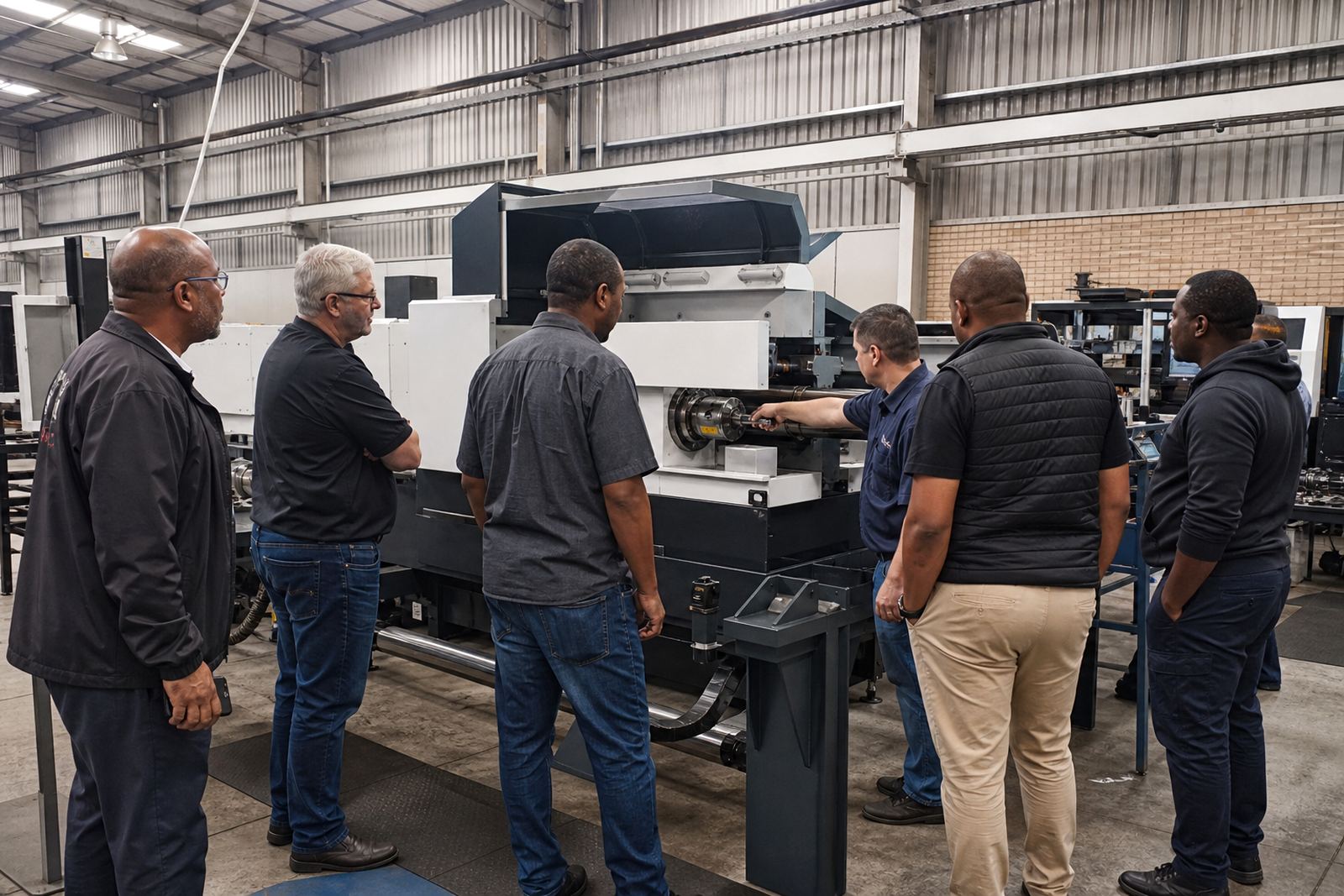
It also helps to divide the work into quick checks, scheduled inspections and deeper service work. Quick checks can be done by the operator at the start of a shift. Scheduled inspections can be handled by the internal maintenance team. Deeper work, such as alignment checks or commissioning after a setup change, should be handled with the right technical support. That keeps the machine in good shape without taking too much time away from production.
For shops in Johannesburg or Pretoria, where production windows are often tight, a clear checklist is often more useful than a vague instruction to “keep an eye on it”. It gives the team something measurable to work from and reduces the chance of missed details.
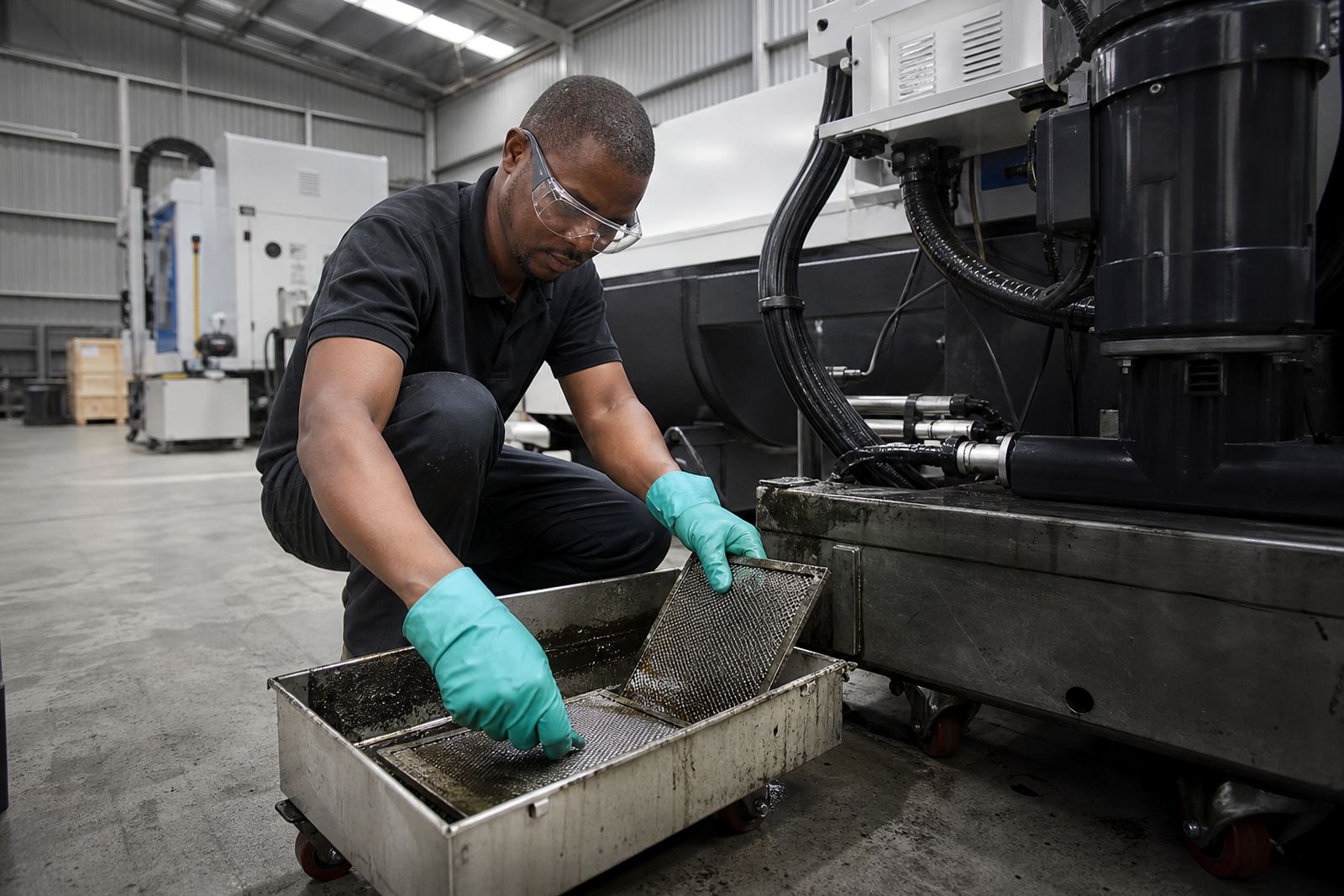
- Check coolant flow and filtration for restriction or contamination
- Inspect tooling for wear, damage or poor seating
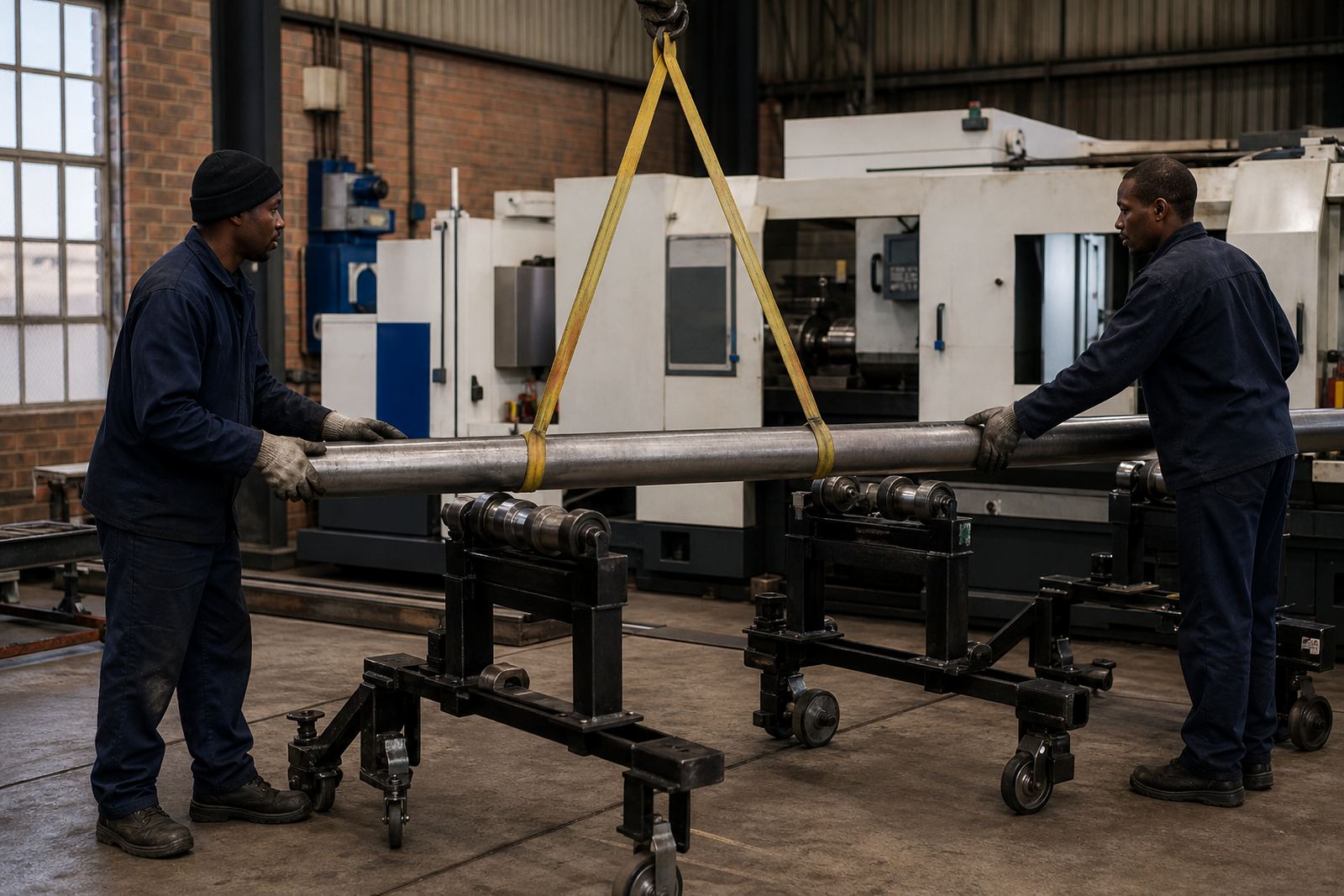
- Confirm alignment and setup after any machine move
- Look for unusual noise, vibration or temperature changes
- Review seals, hoses and fittings for leaks or soft spots
Why setup quality changes the service interval
A machine that was installed and commissioned correctly usually holds its condition better between services. Good setup lowers strain on the moving parts, improves repeatability and makes future troubleshooting easier. Poor setup does the opposite. It creates hidden stress that can lead to early wear, frequent adjustments and avoidable downtime.
This is where commissioning, setup optimisation and operator training matter. If the machine is level, aligned and properly configured from the start, the service interval becomes more predictable. The operator also knows what normal operation looks like, which makes it easier to spot when something has shifted. In practice, that can mean the difference between a planned adjustment and a full stoppage on a Friday afternoon.
In our experience, many service issues are not caused by one major event. They grow from a series of small setup errors that nobody had time to revisit. A slight misalignment here, a loose fitting there, and after a few weeks the machine starts to drift. This is why service interval thinking should include setup reviews, not only mechanical repairs.
A local example from a busy Gauteng workshop
Consider a mid-sized workshop in Benoni taking on repeated deep-hole work for a local manufacturing client. The team had been running the machine well, but the jobs started taking longer and the finish was not as even as before. No major fault had been reported, so the first instinct was to blame the tooling. After a proper inspection, the issue was found to be a combination of coolant delivery drift and a setup change that had not been checked after a shift in the production line.
The fix was not complicated, but the lesson was important. Once the shop moved to a clearer service interval plan, the operator checklist improved and the maintenance team knew exactly when to inspect the coolant system, alignment and tooling support. The machine stayed in production more consistently and the shop had fewer surprise interruptions. That matters even more when load-shedding, supplier delays or weekend production pressure are part of the week.
The same approach works in Durban where humidity can affect stored tooling and fluid condition, and in Cape Town where long production runs may be planned around fewer available service windows. The interval must suit the environment, not just the machine plate.
How Deephole supports maintenance planning across South Africa
Deephole supports manufacturers and engineering shops with machine installation, commissioning, tooling selection, setup optimisation, operator training, process troubleshooting, preventive maintenance, breakdown support, spare parts support, coolant system service, alignment checks and production startup. That support is useful when the aim is not only to fix a problem but to set a better maintenance rhythm for the months ahead.
The team works from Benoni and supports customers across Johannesburg, Pretoria, Durban, Cape Town and Gqeberha. That local reach matters because service needs are not the same everywhere. A workshop in the East Rand may need faster breakdown support, while another site may need help deciding whether a service interval should be tightened after a change in material mix or production pattern.
- Use service visits to confirm real machine condition, not just visible wear
- Link preventive maintenance to actual production demand
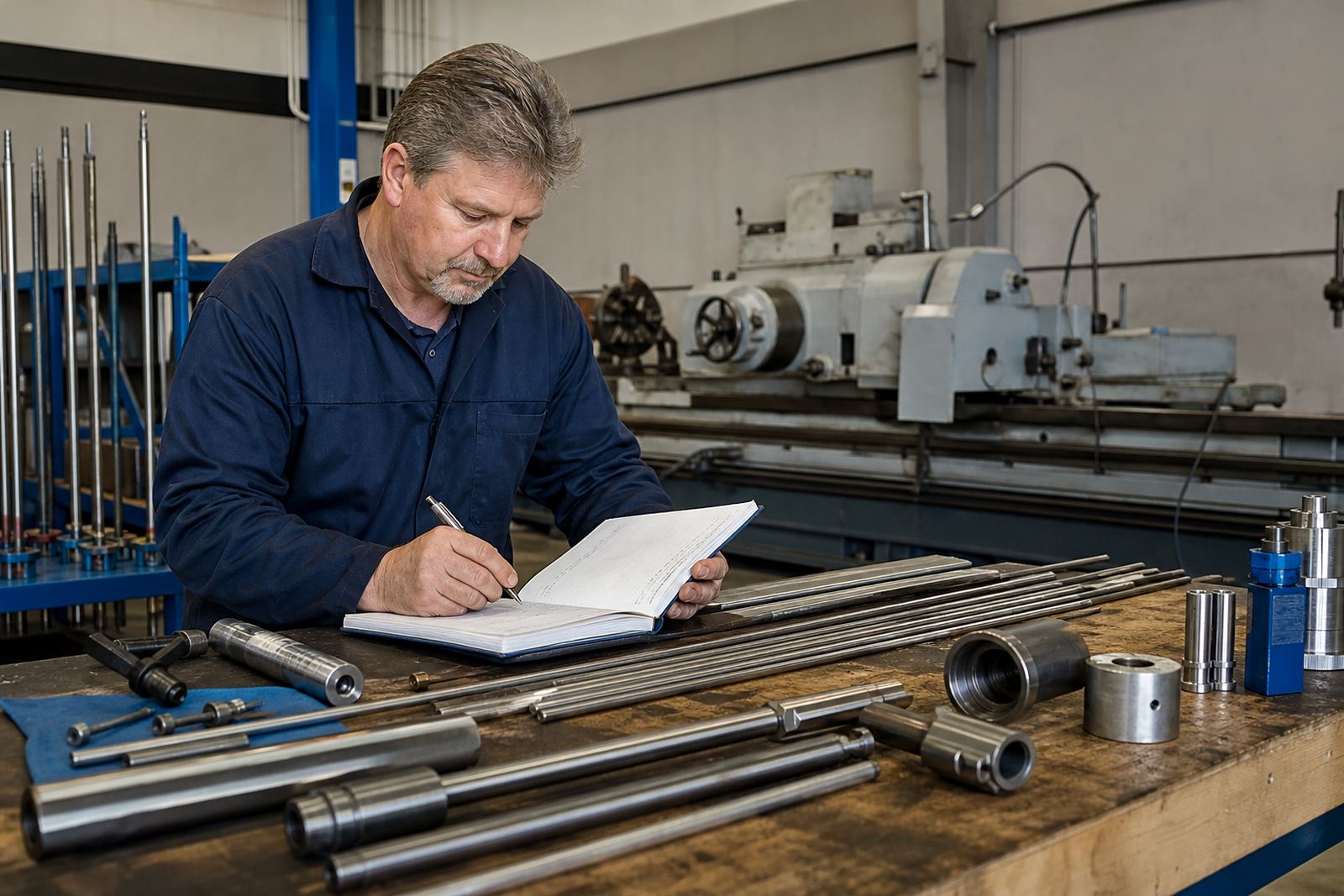
- Keep a simple record of recurring issues and fixes
- Plan training alongside maintenance so operators can spot early warning signs
When service intervals are treated as part of production planning, the machine lasts better, the team works more confidently and the workshop has fewer surprises. That is the practical value of maintenance thinking done properly.