What gun drilling does in a workshop
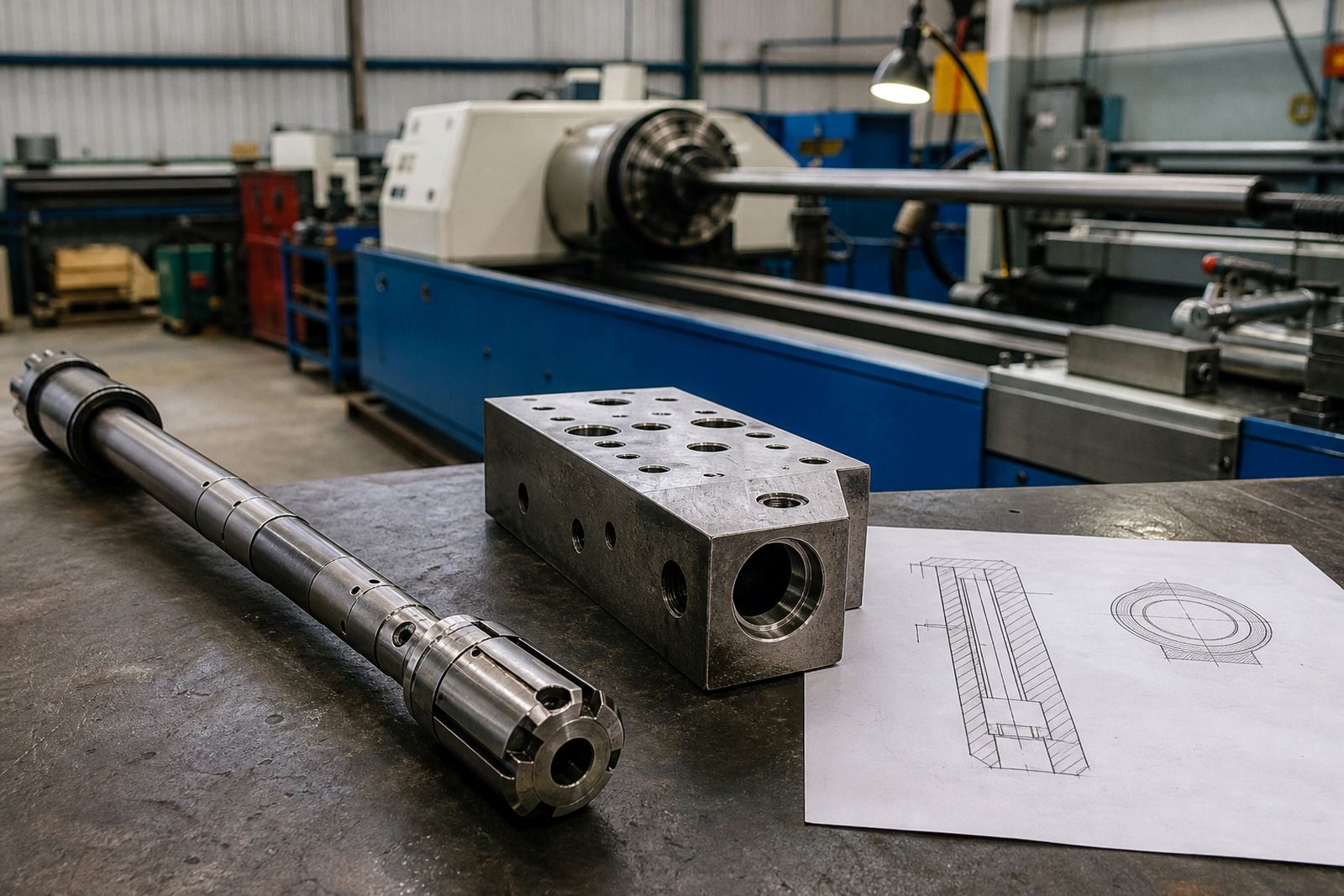
Gun drilling is used when a workshop needs a long, straight hole with a consistent result over many parts. It is common in engineering work where the hole has to stay true through a long section of metal, and where drilling from one end only is the practical choice.
Unlike general drilling, this process is built around control. The machine, tooling, coolant delivery and setup all work together so the hole tracks correctly and chips are cleared as the cut progresses. That matters on parts where a small deviation can affect assembly, sealing or final machining.
For many manufacturers, gun drilling is not an everyday operation. It is usually a specialist step brought in for parts that need more than a standard drill can reliably deliver. That is why the setup side is so important. If the job is handled carelessly, even good tooling will not save it.
Why deep-hole boring is used alongside gun drilling
Deep-hole boring is often discussed together with gun drilling because both are used to manage long internal holes, but they serve different needs. Boring is useful when the hole needs further sizing, correction or finishing after the initial cut. In practical terms, the workshop may use one process first and the other afterwards, depending on the component and the required finish.
In South African engineering shops, the choice is usually driven by part size, material and production flow. A shop in Benoni may need a setup that supports repeated runs on hydraulic components, while a Durban operation may be looking at corrosion-resistant parts for coastal conditions. The process must match the job, not the other way around.
- Use gun drilling when the priority is a straight deep hole from a controlled entry point.
- Use deep-hole boring when the hole needs correction, refinement or final sizing.
- Use both processes when the job needs a controlled roughing stage and a finishing stage.
What makes a good gun-drilling setup
A reliable setup starts with the machine, but it does not end there. The tooling must suit the material, the workholding must be stable, and the coolant delivery has to do its job properly. If any one of those pieces is wrong, the hole quality can suffer quickly.
Good setup work usually includes alignment checks, tool selection, coolant system service and a careful look at the first parts off the machine. That is where process issues show themselves early. A small adjustment at the start can save a lot of scrap later.
In workshops around Johannesburg and Pretoria, there is also the practical reality of load-shedding and production pressure. If a machine restarts without proper checks, or a job is rushed back into production, the process can drift. That is why setup optimisation and production startup support are worth having in place before the job is handed over to operators.
- Keep the machine level and aligned before starting a new job.
- Match tooling to the material and the hole requirement.
- Check coolant flow and filtration before production begins.
- Run a controlled first-off inspection before full output starts.
Common problems workshops try to avoid
Most gun-drilling problems show up in the same few ways: the hole wanders, the finish is inconsistent, chips are not clearing properly, or the process slows down more than expected. Sometimes the issue is mechanical, and sometimes it is simply a setup that has drifted over time.
Tool wear is another factor. In busy shops, tooling may be pushed too long between checks, especially when deadlines are tight. That can affect accuracy and surface condition, even if the machine itself is in good order. Preventive maintenance helps keep those problems from building up.
Coolant matters as well. In South African conditions, especially near the coast in places like Cape Town or Gqeberha, humidity and workshop conditions can affect equipment over time. A coolant system that is not serviced properly can lead to poor chip removal, inconsistent cutting and avoidable downtime. It sounds simple, but it is often where trouble starts.
How support helps keep production moving
For many manufacturers, the real value is not only in the machine but in the support around it. Installation, commissioning, operator training and process troubleshooting all help a workshop get from delivery to production with fewer delays. That is especially important where the team is new to the process or where a machine is being added to an existing line.
Support also matters after the job has started. When a process slips, a technician may need to check alignment, review tooling choices, or look at coolant delivery and spindle behaviour. If the issue is caught early, production can usually be restored without turning a small problem into a longer stoppage.
Deephole works from Benoni and supports manufacturers and engineering shops across South Africa, including Johannesburg, Pretoria, Durban, Cape Town and Gqeberha. The practical aim is simple: help the workshop keep making parts, not just keep the machine switched on.
A local example from an East Rand workshop
Consider an East Rand workshop taking on a part that needs a long internal hole through a metal component used in equipment assembly. The part is not unusually large, but the tolerance for error is small and the customer expects repeatable results. A standard drilling approach might get the hole started, but it will not always hold straightness and finish over the full depth.
In that situation, the workshop may need a gun-drilling machine, the right tooling, and a carefully planned setup before the first production run. That may include alignment checks, operator training and a review of the coolant system. If the process is stable, the workshop can move from trial parts to production with more confidence.
That is the practical side of gun drilling. It is not about making the job complicated. It is about controlling a difficult operation so the final part meets the drawing and the machine time is used properly.
What to ask before you choose a machine or process
If your workshop is looking at gun drilling or deep-hole boring, it helps to ask the right questions before buying equipment or starting a new job. The answer should not just be about the machine itself, but about the full process around it. That includes tooling, maintenance, setup and the support available after installation.
- What materials will you drill most often?
- How deep are the holes and what finish is required?
- Will the machine be used for one-off jobs or regular production?
- Who will handle setup, training and troubleshooting?
- What spare parts and support are available locally?
Those questions save time later. They also help a workshop choose the right route instead of forcing a process that does not suit the job. For many South African shops, that practical approach is the difference between steady output and repeated stoppages.