Why Long Parts Need A Different Holding Plan
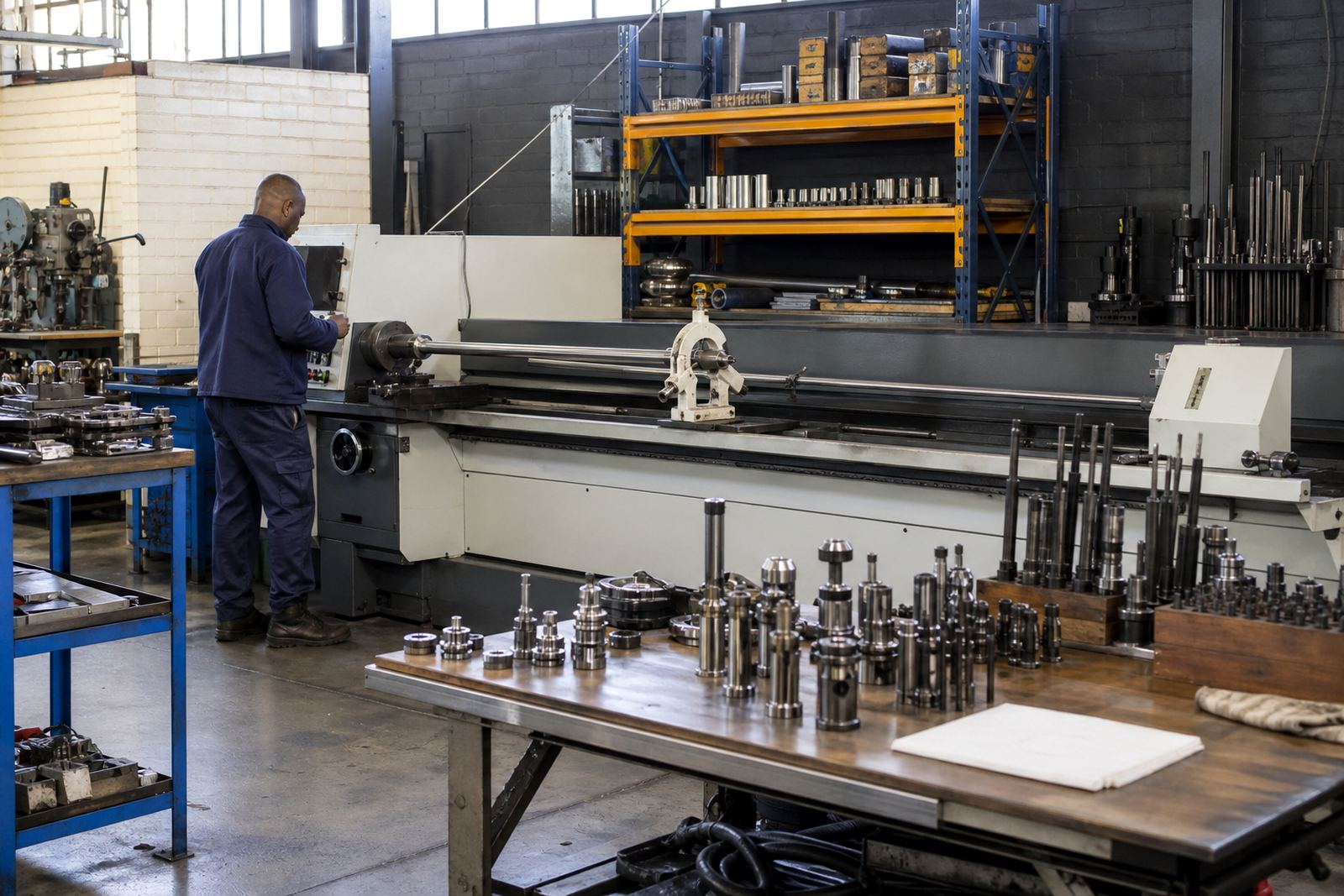
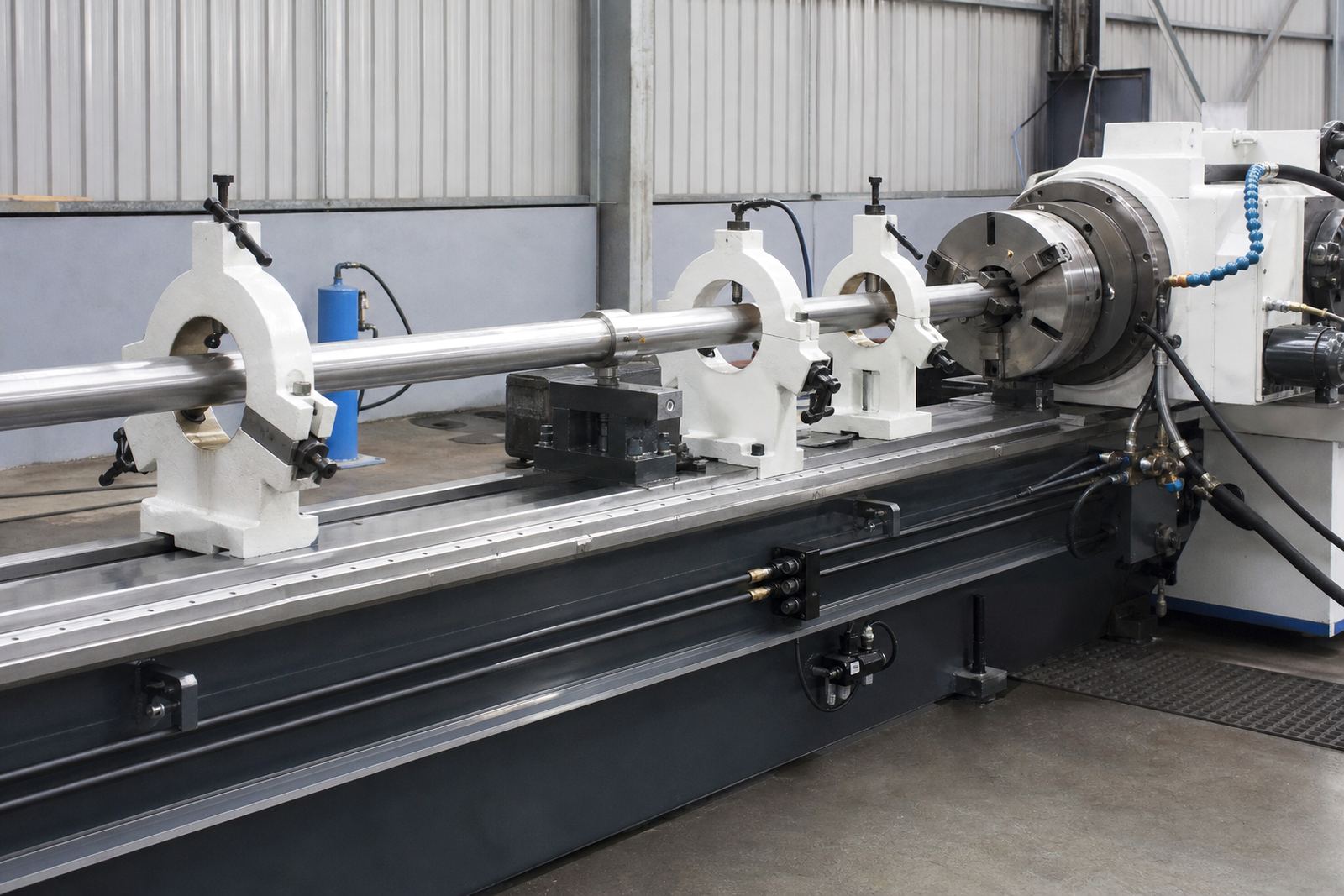
One of the most practical starting points is to treat the part like a shaft under load, not just a piece of stock waiting to be cut. If the job is long and slender, support is usually needed at more than one point. That can mean steady rests, rollers, guided supports or custom fixtures that hold the part while still letting it move through the machine in a controlled way.
Where the part is heavy, a rigid cradle can help with loading and unloading. Where the part is light but long, you may need finer control to stop flutter. The best choice depends on the job, but the aim stays the same: keep the bore line stable and make the operator's task predictable.
- Use support points that match the length and stiffness of the component.
- Keep the support surfaces clean so grit does not mark the workpiece.
- Check that the part can move freely through the fixture without binding.
- Make sure the loading method is safe for the operator and the machine bed.
Clamping Without Distorting The Part
Long parts are often hollow, thin-walled or precision machined before they reach the deep-hole machine. That means over-clamping can be as harmful as under-clamping. A tube can ovalise, a shaft can pick up a bend, and then the bore starts from a bad position.
Good clamping spreads force evenly and holds the part where it matters most. Soft jaws, shaped inserts and properly machined locating faces all help. If the component has a finished surface, you also want to protect it from marks that could affect later assembly. A small setup error here can become a bigger problem once the hole gets deep.
At Deephole, setup support often starts with the part itself. If the workholding is not suited to the material or the bore path, the machine will not do the job as it should. That is where practical guidance on fixture choice, tool entry and alignment becomes important.
Set-Up Checks That Save Time Later
Before drilling starts, the operator should confirm that the part is centred, level and repeatably positioned. On long workpieces, a small offset at the chuck end can become a much larger error by the time the tool reaches the end of the bore. That is why alignment checks matter at every stage of the setup.
It also helps to confirm coolant flow, chip clearance and tool access before the first cut. When the job runs long, any blockage or misfeed can cost a lot of time. In many shops, a second check after the first trial pass is worth the effort because it catches issues before production starts. One extra minute at setup can save an hour later, or more.
- Measure the starting position at both ends of the part.
- Confirm that the bore path is clear for coolant and chips.
- Check fixture bolts and locating points before each run.
- Recheck alignment after loading the first part in a batch.
Tooling, Coolant And Chip Control For Long Bores
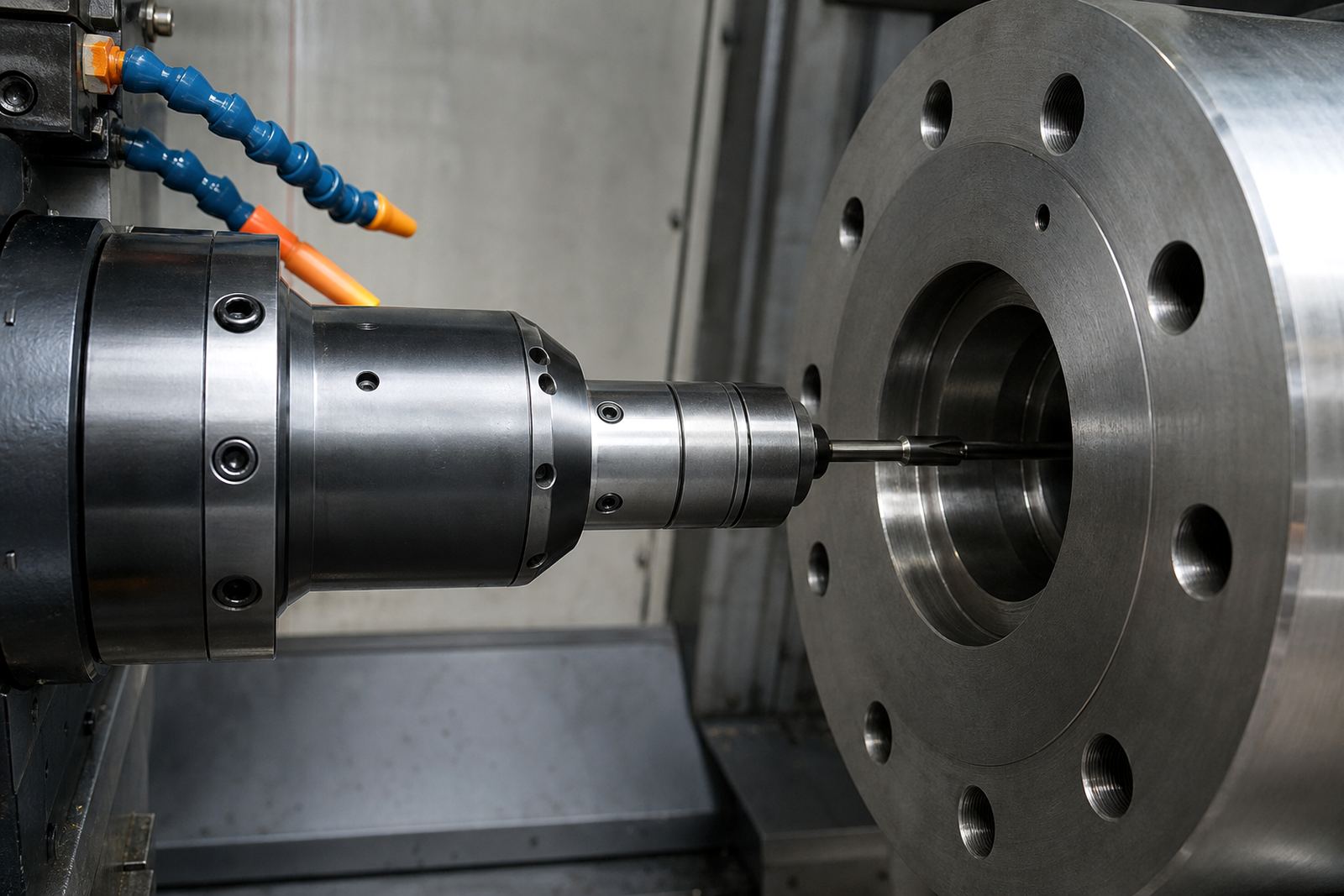
Workholding and tooling must work together. If the part is held well but the tool setup is wrong, the job still drifts off course. For long bores, stable tool guidance, correct coolant delivery and reliable chip evacuation are all tied to the fixture design and the way the component is presented to the machine.
Coolant system condition matters too. Thick chips, swarf build-up and poor flow can put extra load on the setup. In coastal areas like Durban or Gqeberha, moisture and corrosion can also affect stored tooling and fixtures, so upkeep becomes part of the workholding plan. In Gauteng, where many shops manage load-shedding and tighter production windows, it helps to have a setup that can be returned to quickly after a stop.
- Keep guide elements and support points clean and free of chip build-up.
- Check coolant lines for restriction before production.
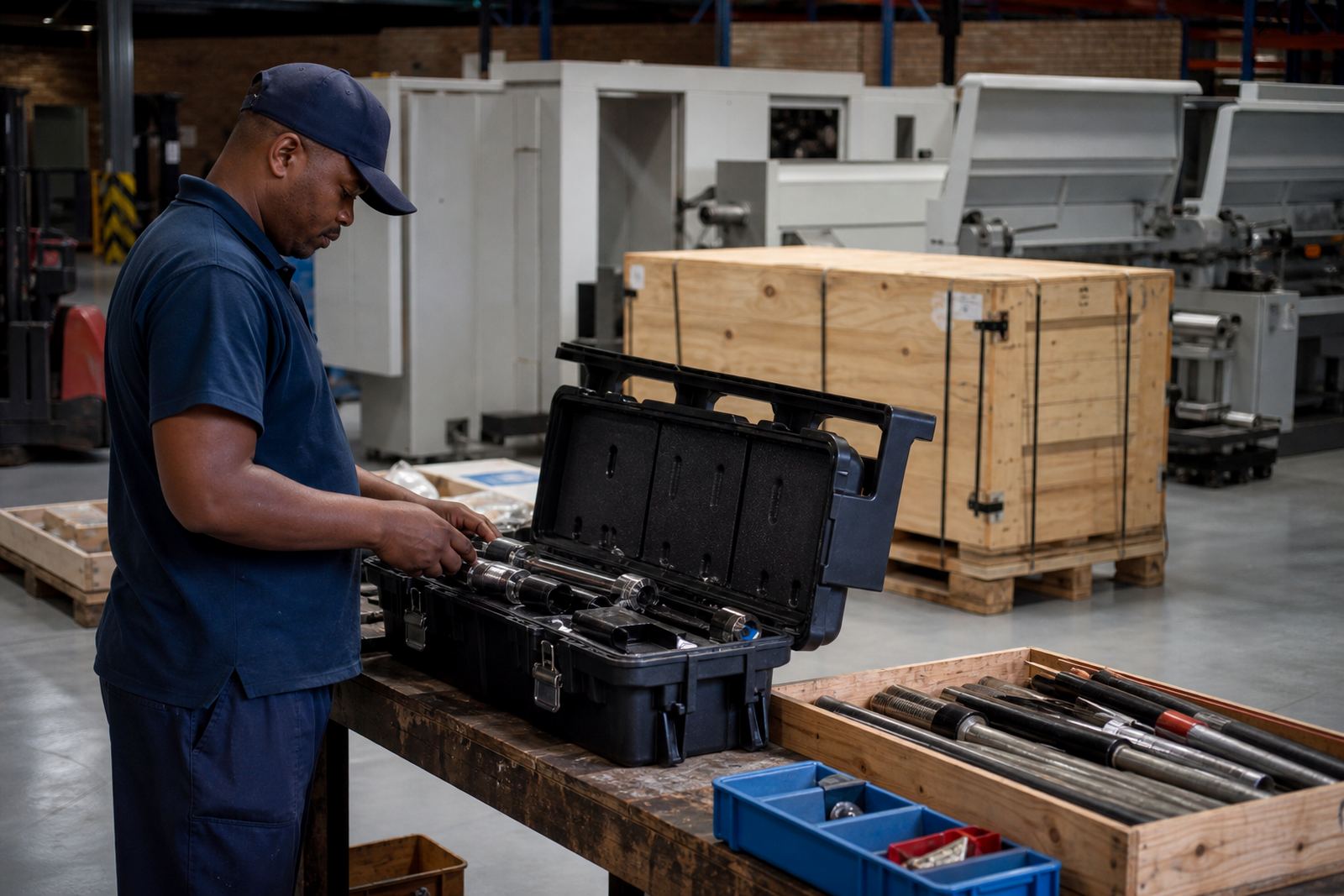
- Store fixtures and tooling where they will not corrode or get knocked out of square.
- Plan for restart after power interruptions so the job can resume safely.
A Local Example From A Gauteng Production Shop
A machining shop in the East Rand working on long shafts for general engineering came to us with repeatability issues on deep-hole work. The machine was capable, but the part was moving during setup and the first section of the bore was not holding centre. The problem was not the tool alone, it was the way the shaft was supported and located before drilling.
After reviewing the setup, the team changed the support arrangement, adjusted the locating method and rechecked the entry position before production. The result was a steadier start to the hole and less time spent correcting parts. That kind of improvement does not come from one big change. It comes from sorting the holding, the alignment and the process one step at a time.
For shops in Benoni, Johannesburg and Pretoria, that practical approach makes a real difference when schedules are tight and every rework job pushes back the next one.
Getting The Right Support For Long Part Jobs
If your work involves bars, shafts or other long components, the holding method should be planned as carefully as the drilling itself. The right fixture, a sensible support layout and proper alignment checks can improve consistency and reduce tool stress. It also makes production easier for the operator, which matters when the same setup has to run again next week.
Deephole supports manufacturers and engineering shops across South Africa with machine installation, commissioning, tooling selection, setup optimisation, operator training, process troubleshooting, preventive maintenance, breakdown support, spare parts support, coolant system service, alignment checks and production startup. If you need help with long part workholding for gun-drilling or deep-hole boring, use the enquiry form on our contact page and we can take it from there.