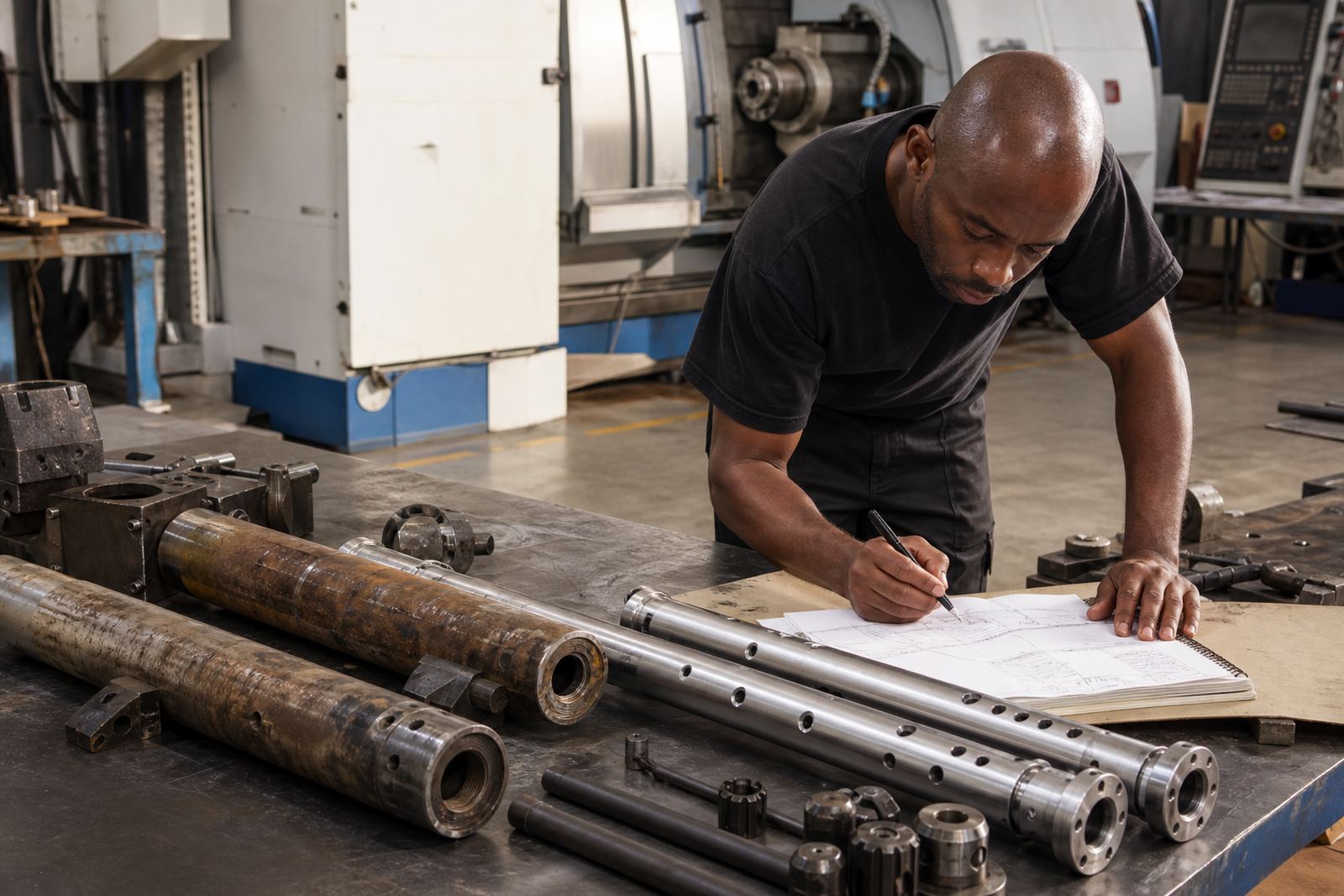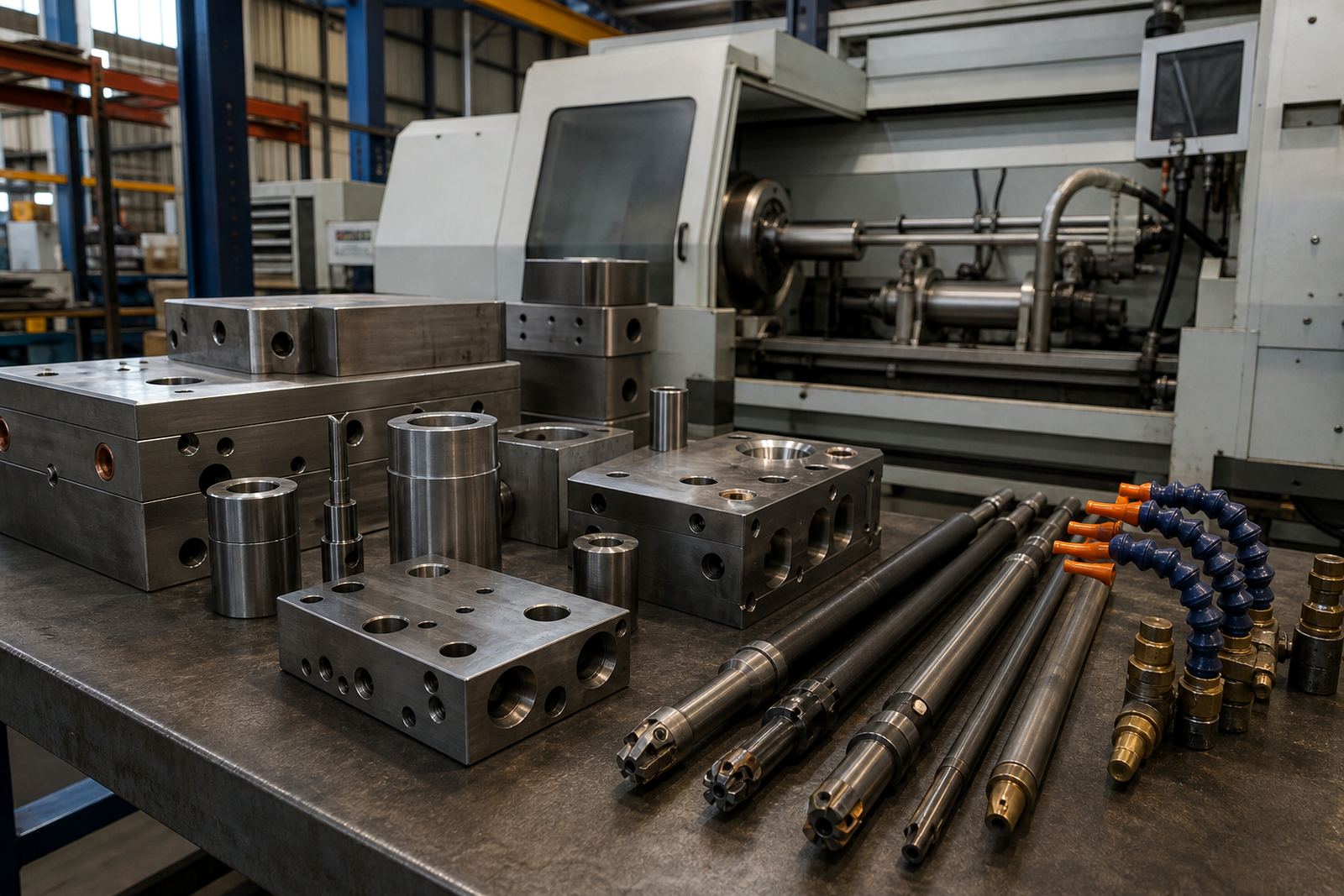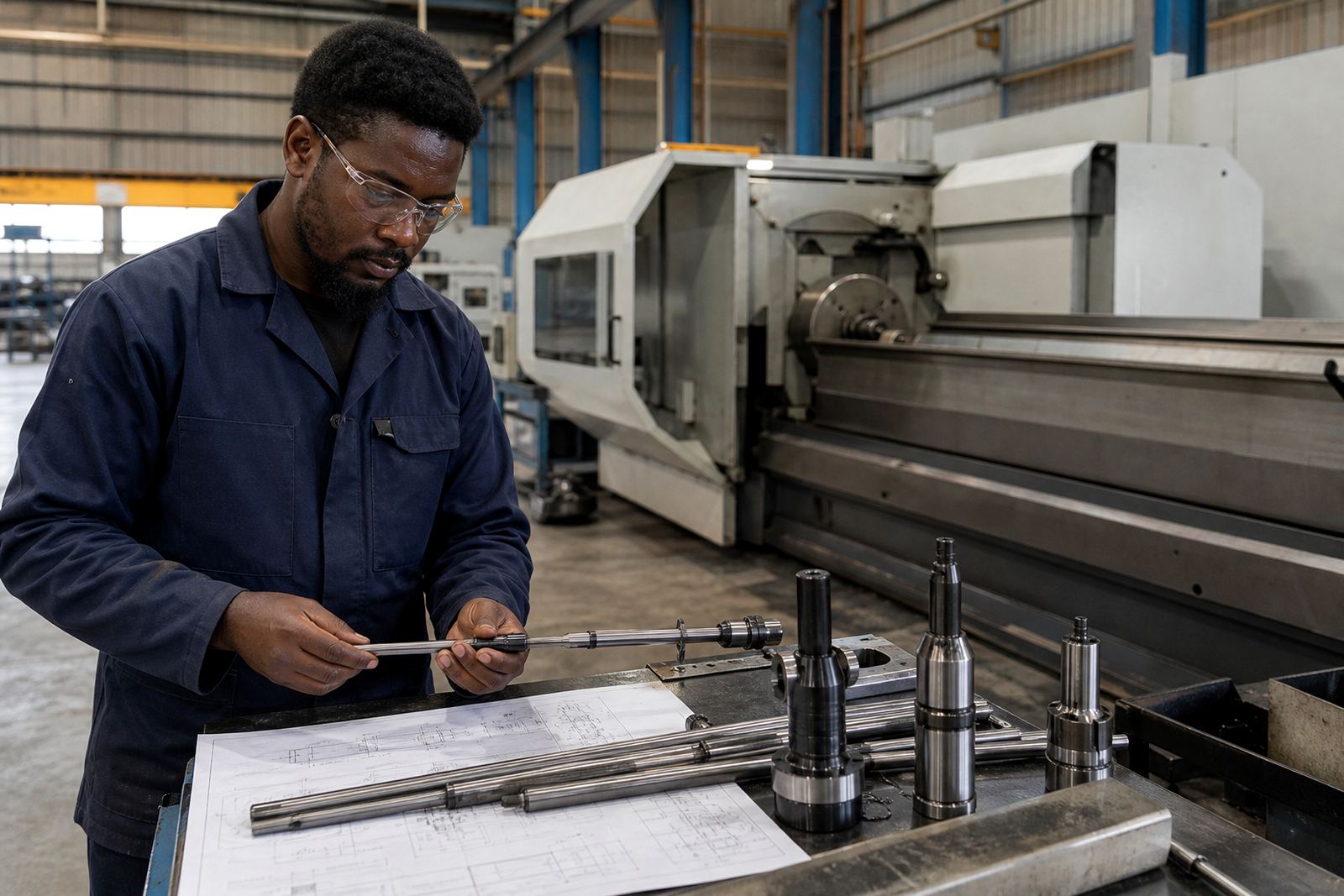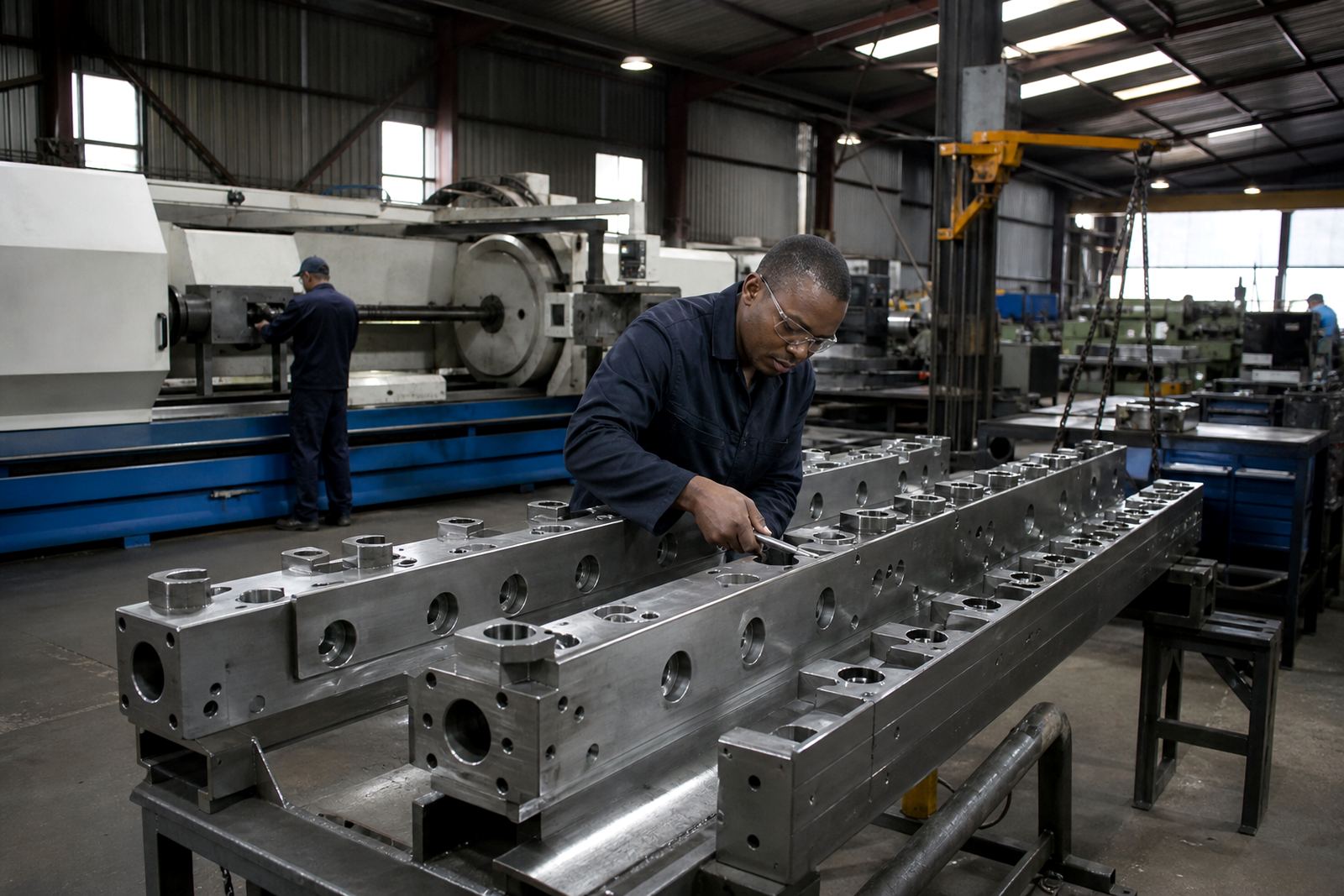
Project brief from a busy Cape Town fabrication shop
The job came from a fabrication business in Montague Gardens, Cape Town that was taking on more work involving deep, accurate holes in steel components. The parts were used in structural and mechanical assemblies where hole quality mattered just as much as size, because a small deviation can lead to fit-up problems during assembly.
The brief was simple in one sense and demanding in another: the shop needed a practical gun-drilling and deep-hole boring solution that could handle long holes, maintain alignment over the full length and fit into an active workshop without slowing down other jobs. They also needed proper setup support, not just a machine drop-off and a handshake.
- Client type: fabrication and engineering workshop
- Location: Montague Gardens, Cape Town
- Work type: long holes in structural and mechanical parts
- Core need: repeatable accuracy and stable production
Constraints on the floor and in production
The workshop had to work around mixed jobbing work, so the new process could not demand a full line shutdown. There was also the usual pressure that comes with Cape Town production sites: limited floor space, changing job priorities and the need to keep operators productive even when power interruptions or loading delays affect the day. The client needed a setup that was practical, not fussy.
Another constraint was the nature of the parts themselves. Long holes in heavy sections can drift if fixturing, cooling and tool choice are not handled properly. The team needed a process that could be repeated on different part lengths without constant rework, and the setup had to be clear enough for the operators to follow after the first run. That saves time and keeps scrap down, which matters when the month is already busy.
- Workshop space had to be used carefully
- Parts varied enough to need a flexible setup
- Cutting fluid control and alignment were important
- Operator handover had to be straightforward
What Deephole supplied and set up
We supplied the deep-hole drilling and boring solution as part of a complete workshop support package, with tooling guidance, installation support and commissioning. The focus was on getting the process right for the parts at hand, not forcing a generic setup onto a specific job.
Johan Smit handled the applications side, working through hole size, material behaviour and feed approach. Francois du Plessis supported the machine side during installation and setup, while Sibusiso Khumalo assisted with tooling selection and wear management. Noluthando Dlamini coordinated the schedule so the work could move in sequence, and Leanne Naidoo prepared operator training for the handover.
- Machine installation and commissioning
- Tooling selection and setup optimisation
- Alignment checks and production startup
- Operator training and process handover
- Support for spare parts and consumables planning
Setup decisions that made the difference
For this sort of work, the machine alone is only part of the answer. The support system around it matters just as much. We worked through fixturing position, hole entry control, coolant delivery and how the operator would manage each cycle during a normal shift. That reduced the chances of wandering holes and kept the process more predictable from one part to the next.
The training covered setup checks before each run, what to watch for during cutting, and how to spot early signs that tooling or alignment needed attention. Ayanda Mokoena stayed involved on the commercial side so the client had a clear route for future tooling and support needs. It was a straightfoward arrangement and it suited the workshop well.
- Better hole consistency across repeated runs
- Less time spent on trial and error
- Clearer operator checks before production
- Support path in place for future breakdowns
Timeline and rollout over three weeks
The project ran over three weeks from first site discussion to production handover. The first week was spent on understanding the job, the material mix and the hole requirements. In week two we handled installation support, setup checks and initial test pieces. Week three covered training, final adjustments and production startup on the actual work pieces.
That timeline worked because the site team stayed engaged and the scope was kept practical. We did not need to overcomplicate the process. We focused on getting the machine and tooling to perform on the job at hand, then making sure the operators knew what good looked like once the production runs began.
- Week 1: brief, part review and process planning
- Week 2: installation support and test runs
- Week 3: training, final alignment and startup
Results and what we would repeat
The main result was a workshop process that could produce deep holes with more confidence and less rework. The client gained a setup that fit the pace of a real fabrication shop, not a lab-style environment. Parts moved through more cleanly, the team had a clearer routine, and the support line was in place if the process needed attention later.
If we were doing the same kind of project again, we would keep the same approach: start with the part requirements, check the actual workshop constraints, confirm the fixturing early and train the operators before the pressure of production builds up. That is the safest way to get dependable results in a busy shop in Cape Town or anywhere else in South Africa.
- More repeatable long-hole production
- Cleaner handover to the workshop team
- Less dependence on guesswork during setup
- Support plan ready for maintenance and tooling needs
Key facts
| Project location | Montague Gardens, Cape Town |
|---|---|
| Client type | Fabrication and engineering workshop |
| Work carried out | Gun-drilling and deep-hole boring support |
| Scope | Machine installation, commissioning, tooling selection, setup optimisation, training and startup |
| Timeline | 3 weeks |
| Support team | Sales, applications, service, machine, training and tooling support |