What the Tooling Cart does in a deep-hole drilling workshop
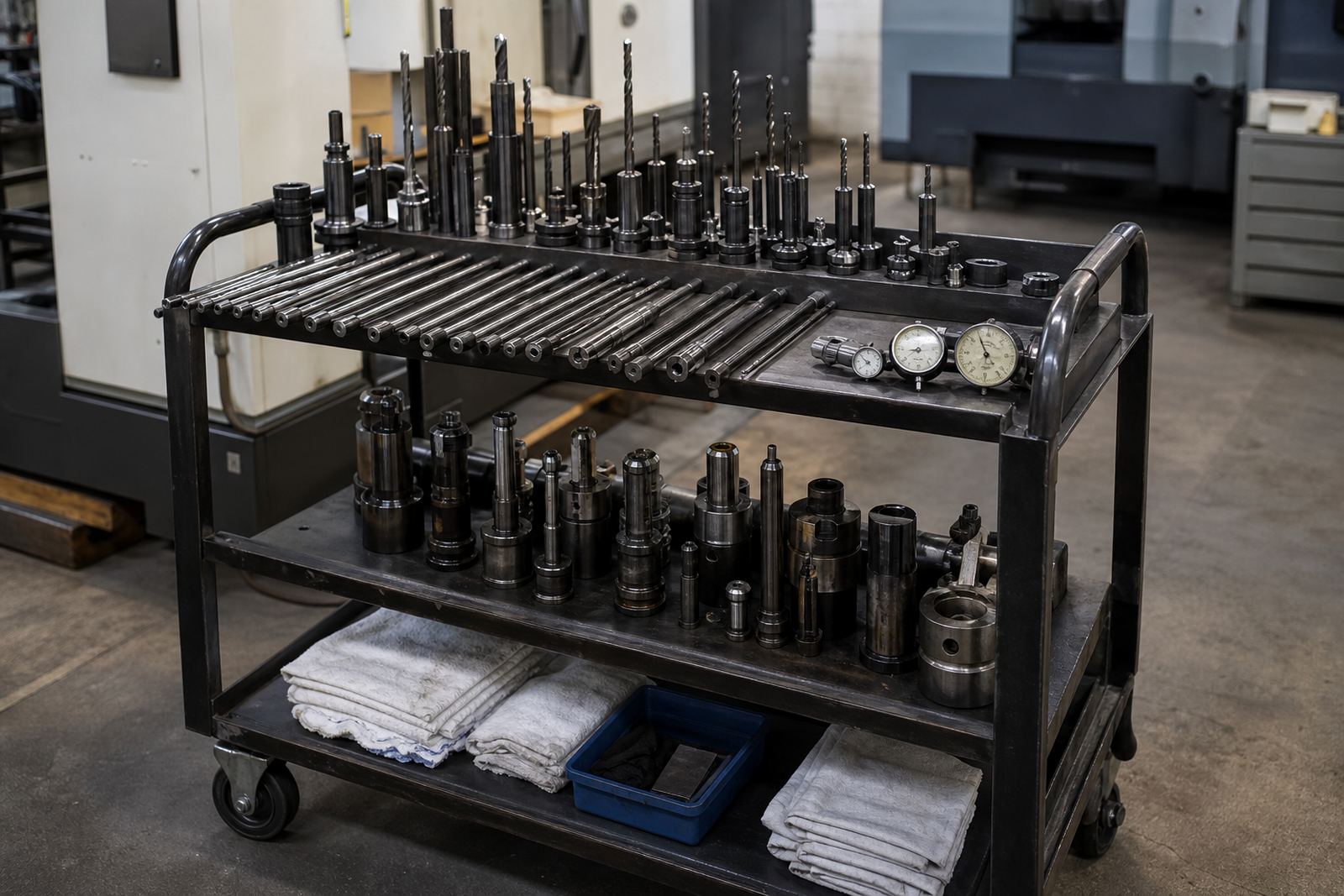
The Tooling Cart is a mobile storage and handling solution for the small but important items used around gun-drilling and deep-hole boring work. It helps keep tooling, adapters, gauges, setup parts and consumables grouped by job or machine, so operators spend less time looking for the right item and more time setting up correctly.
In busy South African workshops, that matters when jobs move between day and night shifts, when the same machine is used for different components, or when one team is supporting several lines. A dedicated cart also helps reduce damage from loose storage, mixed-up parts and tools being left on benches or trolleys that are meant for something else.
This is not a machine in the drilling sense, but it is part of the working system around the machine. For many shops, that means the cart becomes a fixed point for setup kitting, pre-checks and tool return after each run. It keeps things practical and tidy, especially where floor space is limited.
Sizes, layouts and storage options
The cart can be specified in different layouts depending on the number of tools, holders and measuring items you need to carry. Some users want a compact unit for one machine cell. Others need a larger cart that can move between a tool room and several deep-hole drilling stations in the same day.
- Single or multi-shelf layouts for grouped tooling
- Drawer or tray sections for gauges, small fittings and setup items
- Open shelving for frequent-use tools and consumables
- Lockable storage for controlled items and calibrated gear
- Mobility options for smooth movement across workshop floors
When choosing the size, it is worth thinking about aisle width, turning space and whether the cart will move over smooth concrete, pavers or slightly uneven shop floors. In a plant with narrow bays or loading areas, a cart that is too wide becomes a daily frustration. The right layout should fit your workflow, not force a change in it.
Where the cart suits best in South African production spaces
The Tooling Cart suits manufacturers, engineering shops and maintenance teams that handle precision drilling work and need a cleaner way to manage setup items. It is useful in Johannesburg and Benoni machine shops, Pretoria production areas, Durban factories with high humidity, and Cape Town or Gqeberha workshops where coastal air can affect stored tools if they are left exposed.
It also helps in places where more than one operator uses the same machine. A cart can hold the exact items needed for a specific job, then roll back to storage once the operation is done. That reduces mix-ups and supports better repeatability from one run to the next.
- Deep-hole drilling and boring cells
- Tool rooms and preset areas
- Prototype and short-run job shops
- Maintenance departments with shared equipment
- Production lines that need quick tool changeovers
Because the cart is mobile, it can be used as part of setup preparation at the machine or in the tool room. It gives teams one place to check, count and return items properly.
Installation, floor space and utility needs
The cart does not need fixed installation like a machine does. In most cases, it arrives ready for use once the shelving or drawer arrangement is set for your workshop. The main requirement is enough floor space for safe movement, parking and access to the items stored on it.
There are no gas connections required. Power is not usually needed for the cart itself, which makes it useful during load-shedding and in areas where power access is limited around the workshop. If you want added labelling, identification or tracking accessories, that can be discussed based on your internal process, but the cart itself is a manual storage unit.
Before ordering, check door widths, lift access, passages and the route from the receiving area to the machine bay. A cart that looks suitable on paper may still be awkward if it has to pass through tight doors, around columns or over thresholds. That is a small detail, but it matters in daily use.
Care, cleaning and servicing for long workshop life
Like all workshop handling equipment, the Tooling Cart works best when kept clean and inspected regularly. Wipe down surfaces after use, remove swarf or dust from shelves and check that moving parts roll freely. In coastal towns, occasional cleaning is especially useful because moisture and airborne salt can leave marks on stored metal parts if the cart is neglected.
If the cart carries precision gauges or setup items, keep those in protected compartments or cases. Do not overload shelves or leave heavy items loose during movement. A cart that is treated properly will stay easier to move and safer to use.
- Check wheels or castors for wear and free movement
- Inspect drawer runners or shelf fixings where fitted
- Keep the cart dry after wash-downs or coolant exposure
- Retighten fittings during routine maintenance intervals
- Store calibrated items separately where required by your process
For shops running long production hours, it helps to include the cart in the same care routine used for other workshop equipment. That can be part of planned maintenance, shift checks or end-of-week housekeeping.
What to check before placing an order
When ordering a Tooling Cart, start with the tools and setup items you want to store. List the lengths, widths and weights of the main parts so the cart layout can suit your actual day-to-day use. It is better to size the cart around the job than to try and make the job fit a cart that is too small.
Ask whether you need drawers, open shelves, lockable sections or a mix of all three. Consider how often the cart will move, whether it must be shared across shifts, and if any items need to stay separated for traceability or calibration control. If the cart will be used around coolant or in a dusty area, that should also be mentioned during selection.
- Type of tooling and setup items to be stored
- Approximate tool lengths and overall weight
- Required number of shelves or drawers
- Need for lockable storage or labels
- Workshop floor condition and movement route
- Any exposure to coolant, moisture or swarf
If you are unsure what format will work best, Deephole can help you match the cart to your machine room layout and your drilling process. That saves time during setup and helps the cart support the job properly from day one.
Key facts
| Product type | Mobile tooling cart for deep-hole drilling and boring support items |
|---|---|
| Use | Storage and movement of tools, gauges, holders and setup items |
| Layout options | Single or multi-shelf, drawer and tray combinations, lockable sections |
| Mobility | Workshop castors or wheels for floor movement |
| Installation need | No fixed machine installation required |
| Utilities | No power or gas connection required for standard use |